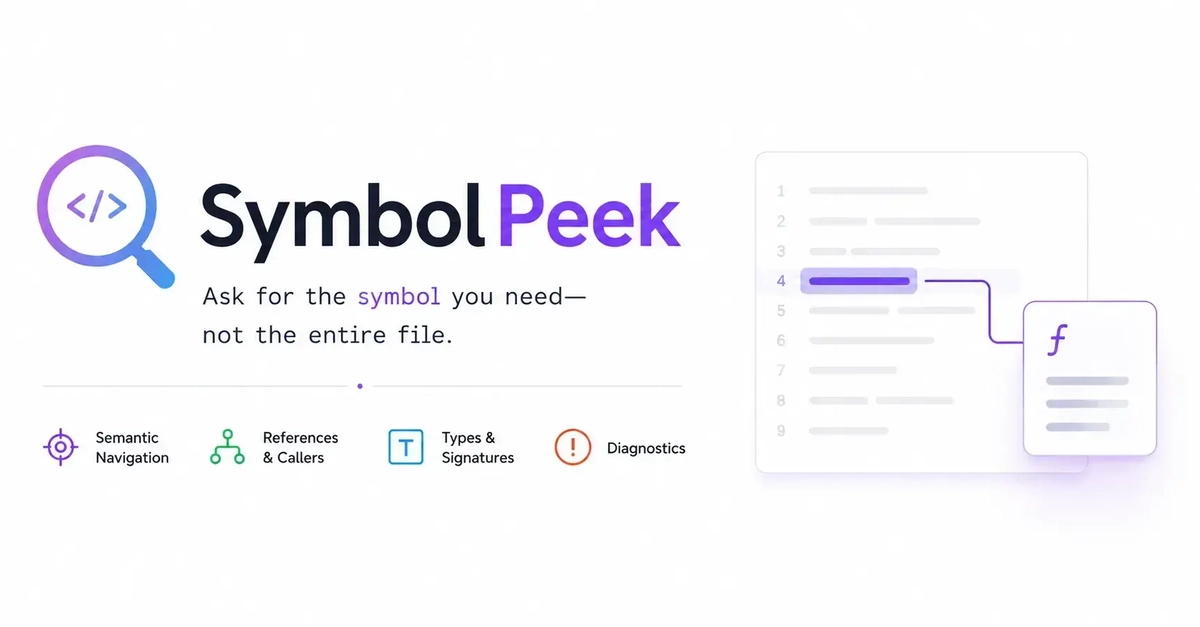
The Problem: AI Assistants Drowning in Code
AI coding assistants, while powerful, often suffer from a critical inefficiency: context bloat. Developers building on large TypeScript projects frequently observe AI tools requesting entire files to answer simple queries. A request like "Where is this hook defined?" or "Who calls this function?" can trigger the AI to load 50KB, sometimes 100KB of code, just to extract a single 30-line function. Multiply this across dozens of requests during a typical coding session, and the result is thousands of tokens wasted on irrelevant code. This inefficiency not only slows down the AI but also inflates associated costs.
This is akin to asking a librarian to pull the entire library's catalog to find a single book title. The information is there, but the retrieval method is wildly inefficient for the specific task.
Introducing SymbolPeek: Precision Code Access
To combat this, a new tool called SymbolPeek has emerged. SymbolPeek operates as an MCP (Microsoft Language Server Protocol) server, designed to provide AI coding agents with granular, symbol-level access to a codebase. Instead of the AI requesting entire files, SymbolPeek allows it to ask for precisely what it needs. This means an AI can request to read a single function, find all references to a specific symbol, or navigate directly to a definition, without loading extraneous code. This targeted approach drastically reduces the amount of data the AI needs to process for each query.
The core innovation lies in its ability to understand and expose the abstract syntax tree (AST) and other code structure information in a way that AI models can efficiently query. This moves beyond simple text retrieval to a more semantic understanding of code relationships.
How SymbolPeek Achieves 95% Reduction
SymbolPeek's efficiency stems from its architecture, which interfaces directly with code structure rather than raw file content for AI requests. When an AI coding assistant needs information—say, the signature of a function or the type of a variable—it sends a query to SymbolPeek. SymbolPeek, acting as a specialized language server, intercepts this query. Instead of fetching the entire file where that symbol resides, SymbolPeek analyzes the codebase's index or AST to locate only the requested symbol and its immediate context. It then returns just that specific piece of information to the AI.
Consider the difference between asking a chef to bring you one specific spice from a pantry overflowing with jars versus asking them to bring you the entire spice rack. SymbolPeek is the chef who knows exactly where the cumin is and brings only that, while the traditional approach is like bringing the whole rack, weighing down the process.
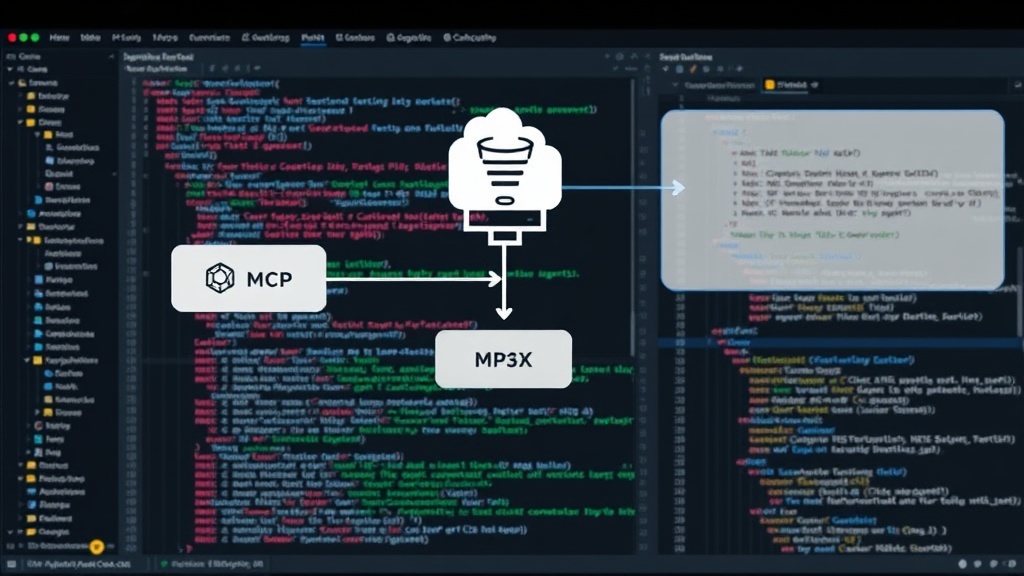
This symbol-level access means that for common queries like "what is the type of this variable?" or "where is this variable declared?", the AI receives only a few lines of relevant code or metadata. For more complex requests, like finding all references, SymbolPeek efficiently queries its index of symbol relationships rather than performing a brute-force text search across multiple large files. The cumulative effect of this precision over hundreds of interactions in a coding session is the dramatic reduction in token consumption, achieving the reported 95% savings.
Implications for AI Coding Tools and Developers
The impact of SymbolPeek extends to the development and deployment of AI coding assistants. By significantly reducing token usage per query, SymbolPeek makes AI coding tools more cost-effective to operate. For developers, this translates to faster response times from their AI assistants and a less intrusive user experience, as the AI is no longer bogged down by processing massive amounts of unnecessary code. This efficiency gain could democratize the use of advanced AI coding features, making them more accessible for smaller teams or individual developers who are sensitive to operational costs.
Furthermore, this approach highlights a potential future direction for how AI interacts with codebases. Moving from a file-centric view to a symbol-centric or AST-aware interaction model offers a more scalable and intelligent way for AI to understand and assist with complex software development projects. Developers building or integrating AI coding tools should consider how to leverage such symbol-aware interfaces to optimize performance and cost.
The Future of Context Management
SymbolPeek's success points to a broader trend in managing context for large language models, particularly in specialized domains like software development. The initial approach of feeding entire files or large code snippets to LLMs, while functional, proved unsustainable for large-scale projects. SymbolPeek demonstrates that by understanding the structure and semantics of the data—in this case, code—and providing targeted access, significant efficiency gains are possible. This principle could be applied to other complex data structures and domains where LLMs are being deployed.
What remains to be seen is how widely this symbol-level access pattern will be adopted by major AI coding assistant providers and IDEs. Will it become a standard feature, or will it remain a specialized tool for those grappling with the highest token costs and slowest response times? The broader ecosystem's response will shape the next generation of AI-assisted development tools.