
The Persistent Challenge of Postgres Scaling
For years, developers have grappled with scaling relational databases, particularly PostgreSQL. While lauded for its robustness, features, and reliability, Postgres has historically struggled with horizontal write scaling. Vertical scaling (throwing bigger machines at the problem) and read replicas offer solutions for read-heavy workloads, but write-bound applications eventually hit a ceiling. Manual sharding, the traditional answer for write scaling, is notoriously complex and operationally burdensome, often leading to significant engineering overhead and potential data integrity issues.
This persistent challenge has forced many to consider alternative database paradigms or endure the complexities of distributed relational databases. The announcement of Multigres v0.1 Alpha from Supabase offers a potential new path forward, directly addressing the long-standing Achilles' heel of Postgres: its write scalability.
Introducing Multigres: A Distributed Postgres Architecture
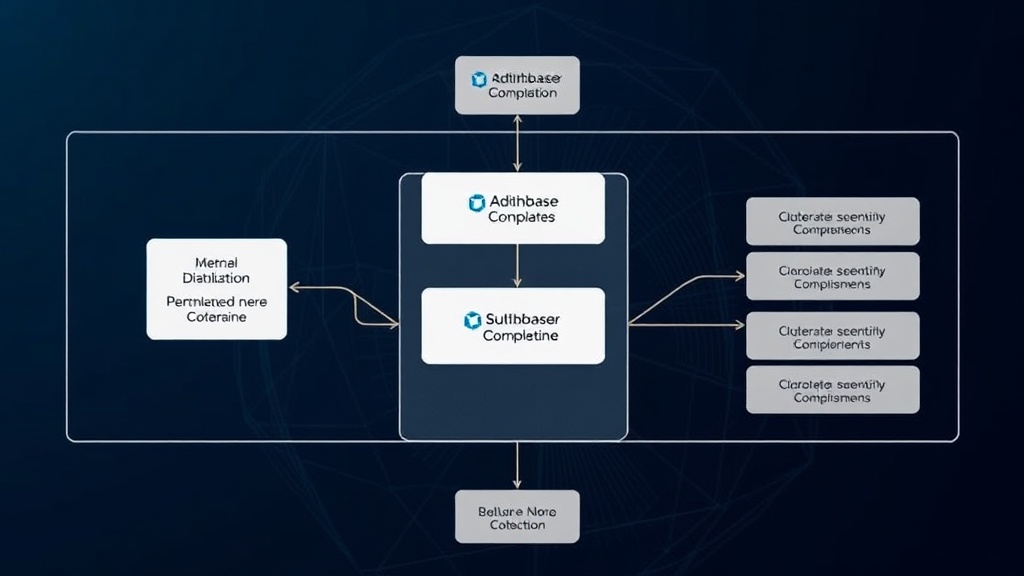
Multigres is Supabase's ambitious project to fundamentally re-architect Postgres for distributed environments. Unlike traditional sharding, which typically involves partitioning data across independent Postgres instances, Multigres proposes a more integrated approach. The core idea is to create a single, logical Postgres cluster that can scale horizontally by distributing data and query processing across multiple nodes.
The v0.1 Alpha release, while early, demonstrates the foundational concepts. It aims to provide automatic data distribution and query routing, abstracting away the complexity of manual sharding. This means developers can theoretically continue using familiar Postgres tools and SQL queries while benefiting from the ability to scale writes by simply adding more nodes to the cluster.
Key Concepts and Potential Benefits
Multigres appears to be built on several key principles:
- Automatic Data Distribution: The system is designed to automatically partition data across available nodes. This eliminates the need for developers to manually decide on sharding keys or manage data rebalancing.
- Distributed Query Processing: Queries are intelligently routed to the nodes containing the relevant data, and processing can be distributed across multiple nodes for complex operations.
- Single Logical Instance: From the developer's perspective, it should feel like interacting with a single, powerful Postgres instance, preserving the familiar SQL interface and ecosystem.
- Scalability by Addition: The vision is that scaling writes involves adding more nodes to the cluster, a process that should be significantly simpler than traditional sharding.
If Multigres lives up to its promise, the benefits for developers and organizations are substantial. It could mean:
- Reduced Operational Complexity: Eliminating manual sharding and complex replica management.
- Improved Write Performance: Enabling applications with high write throughput to scale seamlessly.
- Cost Efficiency: Potentially leveraging commodity hardware rather than expensive monolithic database servers.
- Preservation of Postgres Ecosystem: Allowing developers to continue using their existing tools, ORMs, and knowledge base.
The Alpha Release: What to Expect (and What Not to)
It is crucial to understand that v0.1 Alpha is an early-stage release. It serves as a proof of concept and a foundation for future development. Expect limitations in terms of performance, stability, feature completeness, and production readiness. Supabase is releasing this early to gather feedback and foster community involvement, a common practice for ambitious projects aiming to tackle hard problems.
This initial release is likely to focus on the core data distribution and query routing mechanisms. Advanced features such as sophisticated failure recovery, multi-region replication, and complex transaction handling in a distributed environment will undoubtedly be areas of focus for subsequent releases.
The Road Ahead for Multigres
Supabase has a track record of tackling complex database challenges, most notably with their managed Postgres offerings and associated tooling. Multigres represents a significant leap, aiming to solve a problem that has plagued Postgres users for decades. The success of Multigres will depend on its ability to:
- Achieve performance parity or superiority over traditional sharding solutions.
- Maintain data consistency and integrity across distributed nodes, especially during network partitions or node failures.
- Offer a developer experience that is genuinely simpler than existing solutions.
- Integrate seamlessly with the broader Postgres ecosystem.
The surprising detail here is not just Supabase's ambition, but their direct confrontation of Postgres's most fundamental scaling limitation. Many projects have attempted to build distributed Postgres solutions, but few have approached it with the integrated architectural vision that Multigres seems to embody.
If you run a high-traffic application that is hitting the write limits of a single Postgres instance, Multigres is a project to watch closely. While it's not ready for production today, its development trajectory could redefine how we think about scaling relational databases in the coming years.