The False Positive Problem in Fraud Prevention
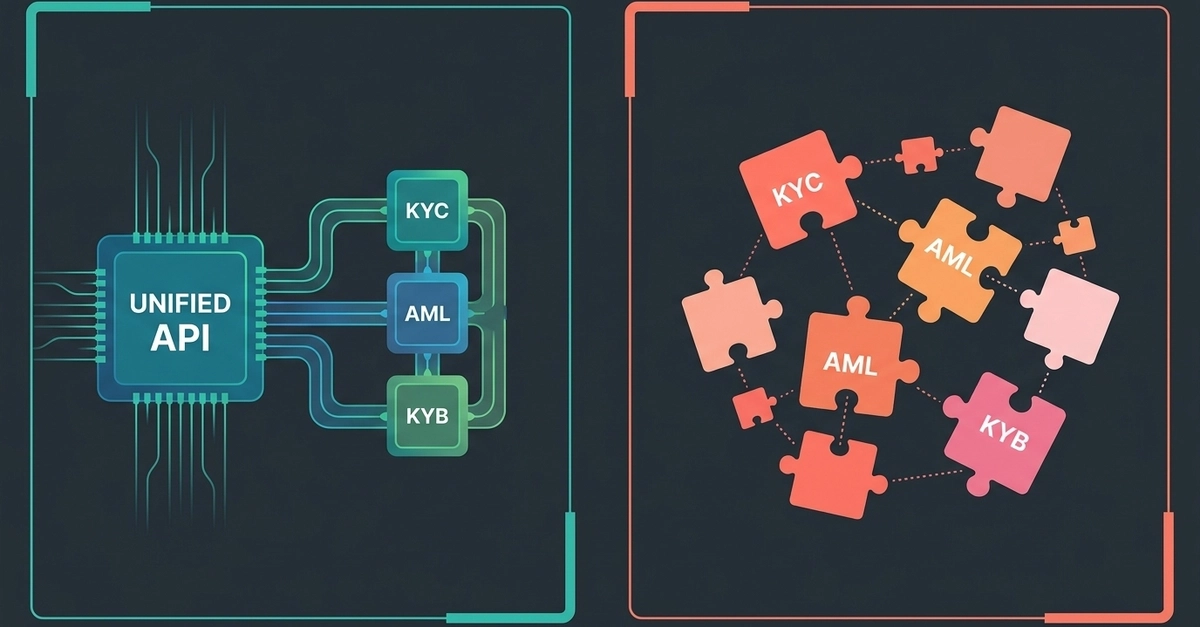
Traditional rule-based transaction monitoring systems generate an overwhelming number of false positives, often between 90% and 95%. This means fraud analysts spend the majority of their time investigating non-fraudulent activities. This inefficiency is driving a critical shift in the fraud prevention market, moving the focus from vendor branding to practical effectiveness: reducing manual review load without introducing new failure points.
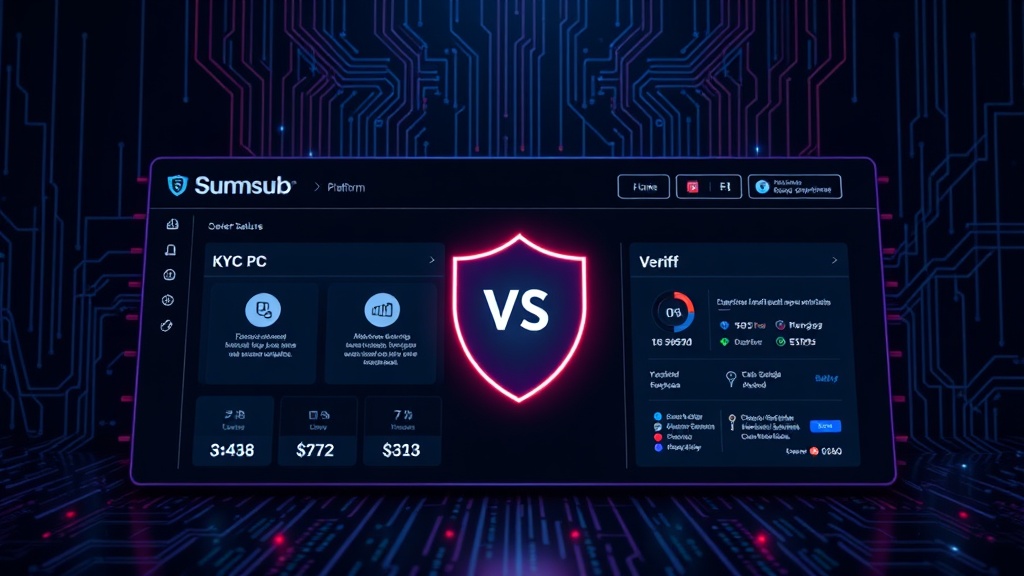
The current landscape presents buyers with two primary architectural philosophies, embodied by vendors like Sumsub and Veriff. Sumsub represents the consolidated compliance stack approach, aiming to provide a broad suite of identity verification and fraud prevention tools under one roof. Veriff, on the other hand, champions the specialized, high-accuracy point-solution, focusing intently on delivering best-in-class identity verification capabilities.
This comparison is part of ongoing vendor research at PrimeBiometry, where we evaluate KYC and fraud prevention stacks using a documented scoring methodology. Our aim is to provide clarity on which architecture best serves modern, high-volume operations.
Sumsub: The Consolidated Compliance Stack
Sumsub offers a comprehensive platform designed to handle multiple aspects of the customer lifecycle, from initial Know Your Customer (KYC) checks to ongoing fraud monitoring. The appeal of a consolidated stack lies in its potential for streamlined integration and management. By bringing together identity verification, anti-money laundering (AML) checks, and transaction monitoring under a single vendor, businesses can theoretically reduce the complexity of their technology stack and vendor relationships.
This approach can be particularly attractive to growing businesses that need to quickly implement a robust compliance framework without the overhead of integrating multiple specialized tools. Sumsub's platform aims to provide a single source of truth for identity data, which can then be leveraged across various fraud detection and compliance workflows. The advantage here is a potentially lower total cost of ownership and a simpler vendor management process.
However, the breadth of a consolidated offering can sometimes lead to compromises in depth. While Sumsub covers a wide array of features, each individual component might not achieve the same level of specialized performance as a dedicated, best-of-breed solution. The challenge for businesses adopting this model is to ensure that the aggregated capabilities meet their specific, and often demanding, requirements for accuracy and efficiency, especially under high load.
Veriff: The Specialized, High-Accuracy Point Solution
Veriff positions itself as a leader in identity verification, focusing on delivering exceptionally high accuracy rates for document verification, liveness detection, and biometric matching. The philosophy here is that by perfecting one critical component of the fraud prevention puzzle, businesses can build a more robust and reliable overall architecture.
Veriff's strength lies in its deep specialization. This focus allows them to invest heavily in advanced machine learning models, extensive identity document databases, and sophisticated liveness detection techniques. The result is a verification process that is both highly secure and efficient, capable of handling a large volume of verification requests with minimal human intervention. For organizations where the integrity of the initial identity verification is paramount—such as financial institutions, crypto exchanges, and gaming platforms—Veriff's specialized approach offers a compelling advantage.
The trade-off with a specialized solution is the need for integration with other systems. While Veriff excels at identity verification, businesses will likely need to integrate it with separate solutions for transaction monitoring, AML screening, and other compliance functions. This can lead to a more complex technology stack and potentially higher integration costs. However, the benefit is that each component of the fraud prevention architecture can be chosen for its best-in-class performance, leading to a potentially more resilient and accurate system overall. The question for businesses becomes whether the added complexity of integrating multiple specialized tools is worth the gains in accuracy and reduced false positives at the verification stage.
Architectural Philosophies and Their Implications
The choice between a consolidated stack like Sumsub and a specialized solution like Veriff is not merely a vendor selection; it's an architectural decision with significant implications for scalability, accuracy, and operational efficiency.
A consolidated stack offers the allure of simplicity. Imagine trying to assemble a high-performance PC: you could buy a pre-built system with all components from one manufacturer, or you could hand-pick the best CPU, GPU, RAM, and motherboard from different specialists. The pre-built system is easier to set up, but the custom-built one might offer superior performance for demanding tasks. Similarly, Sumsub aims to provide a cohesive, out-of-the-box solution that simplifies procurement and integration. This is particularly beneficial for companies prioritizing speed to market and ease of management.
Veriff, conversely, represents the custom-built approach. By excelling in identity verification, it provides a foundational layer of trust. When this specialized verification is coupled with equally specialized tools for fraud detection and transaction monitoring—potentially from different vendors—the resulting architecture can achieve a higher degree of accuracy and a lower false positive rate. This is critical for businesses facing sophisticated fraud attempts or operating in highly regulated environments where even minor inaccuracies can have severe consequences. The success of this approach hinges on the quality of integration between these specialized components.
The Referenced Sources