
The Summer Security Paradox: Vacation vs. Vigilance
The summer months, often synonymous with relaxation and extended vacations for IT professionals, present a critical paradox for cybersecurity. While human teams seek respite, the digital threat landscape shows no such seasonal slowdown. Attackers, far from taking a break, often intensify their efforts during periods when they anticipate reduced human oversight and potentially slower response times within organizations. This disparity creates a window of opportunity for malicious actors, exposing businesses to a heightened risk of breaches, ransomware attacks, and other cyber incidents.
The core of the problem lies in the fact that security operations are not a nine-to-five, Monday-to-Friday endeavor. Threats can emerge at any hour, on any day, regardless of whether the IT security team is on duty or enjoying time off. When staffing levels are thinned due to vacations, the ability to monitor systems, detect anomalies, respond to alerts, and perform critical incident triage is significantly diminished. This reduction in human bandwidth can mean the difference between a minor security event and a catastrophic data breach. Organizations that rely heavily on manual processes and human intervention for their security posture are particularly vulnerable during these periods.
The Vulnerability Gap Created by Reduced Staffing
When IT staff are on vacation, several key security functions can be compromised. Alert fatigue, already a significant issue in Security Operations Centers (SOCs), can be exacerbated. With fewer analysts to review incoming alerts, genuine threats might be overlooked or deprioritized amidst the noise. This is especially true for lower-severity alerts that, while not immediately critical, could be indicators of reconnaissance or the early stages of a larger attack. The ability to conduct timely threat hunting, proactively search for malicious activity that hasn't triggered an alert, also suffers. Threat hunters often rely on deep system knowledge and pattern recognition that requires dedicated, focused attention – a luxury scarce when teams are understaffed.
Furthermore, the speed of incident response is directly impacted. A delayed response to a detected intrusion can allow attackers to move laterally within a network, escalate privileges, exfiltrate data, or deploy destructive payloads. What might have been contained within minutes by a fully staffed team could, with reduced coverage, expand into a widespread compromise over hours or even days. This extended dwell time significantly increases the potential damage and the cost of recovery. The reliance on a few key individuals also creates a single point of failure; if a critical team member is on vacation and an incident occurs that only they can fully address, the organization is left in a precarious position.
The Role of Automation in Bridging the Gap
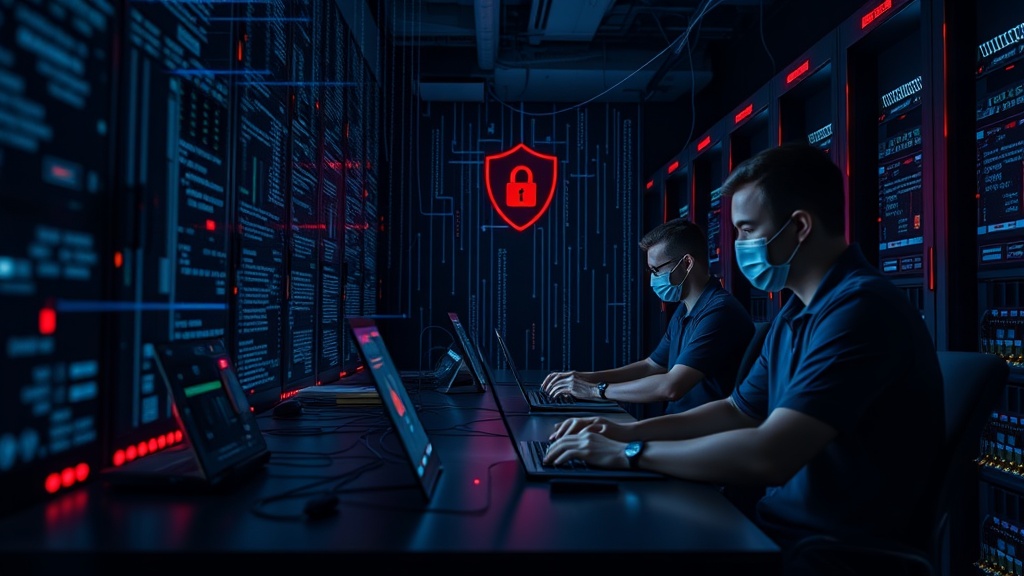
To combat the security risks associated with reduced summer IT coverage, organizations must increasingly turn to automation. Artificial intelligence (AI) and machine learning (ML) driven security tools can augment human capabilities and ensure that critical security functions remain operational even when personnel are unavailable. These technologies can automate the monitoring of systems, the detection of suspicious activities, and even initiate predefined response actions for common threats.
For instance, AI-powered Security Information and Event Management (SIEM) systems can correlate events from various sources, identify patterns indicative of an attack, and prioritize alerts more effectively than manual review alone. Endpoint Detection and Response (EDR) solutions, enhanced with AI, can autonomously detect and block malware, suspicious processes, and unauthorized system changes. Security Orchestration, Automation, and Response (SOAR) platforms can take this a step further by automating entire workflows. When a security alert is triggered, a SOAR platform can automatically gather context from multiple sources, enrich the alert with threat intelligence, and execute pre-approved actions like isolating an infected endpoint or blocking a malicious IP address, all without human intervention.
This automation doesn't aim to replace human analysts entirely but rather to offload repetitive, time-consuming tasks and handle immediate threats, allowing human experts to focus on more complex investigations and strategic security initiatives when they are available. It ensures a baseline level of security coverage that is consistent year-round, regardless of staffing levels. Kaseya, a provider of IT management and security solutions, highlights the importance of such automated capabilities in maintaining operational continuity and security resilience, particularly during periods of reduced IT staff availability.
Strategies for Maintaining Security During Vacation Periods
Beyond technological solutions, a strategic approach to staffing and preparedness is crucial. Organizations can implement on-call schedules to ensure that critical security functions are covered, even if not by the primary personnel. Cross-training team members on essential security tasks is also vital, reducing reliance on single individuals and building a more resilient team. Documentation and runbooks for common incident response scenarios should be thorough and readily accessible, enabling less experienced staff or even automated systems to follow established procedures.
A proactive security posture that minimizes the attack surface is also a strong defense. Regular vulnerability scanning and patching, strong access control policies, and robust employee security awareness training can reduce the likelihood of an incident occurring in the first place. Even when staff are reduced, a well-hardened infrastructure is less susceptible to exploitation. This includes ensuring that remote access solutions are secure, multi-factor authentication is enforced universally, and that critical systems have adequate backups that are regularly tested and stored offline.
Ultimately, the reduced IT coverage during summer vacations is not an insurmountable security challenge, but it is one that demands foresight and strategic planning. By leveraging AI-driven automation, implementing robust on-call and cross-training policies, and maintaining a strong proactive security posture, organizations can ensure that their defenses remain solid, even when their human guardians are away.