The Problem: Fragile AI Agent Workflows
Autonomous AI agents, designed to execute multi-step workflows, are critically dependent on the stability of upstream APIs like those from OpenAI and Anthropic. However, these major AI providers frequently experience latency spikes, 502 Bad Gateway errors, and aggressive 429 Too Many Requests rate limits. For typical consumer applications, these issues might manifest as minor annoyances. But for enterprise-grade autonomous agents, a single dropped API request mid-process can lead to the complete failure of an entire workflow loop. This often triggers runaway retry mechanisms that can rapidly consume significant API credits, sometimes costing hundreds of dollars before an alert is even generated.
The author, Selixes, driven by an obsession with system architecture and high availability, identified this specific edge case as a critical vulnerability in the burgeoning AI agent ecosystem. Over several months, Selixes dedicated time to engineering a solution, focusing on minimizing latency and maximizing reliability under adverse API conditions.
The Solution: A Sub-15ms Failover Proxy
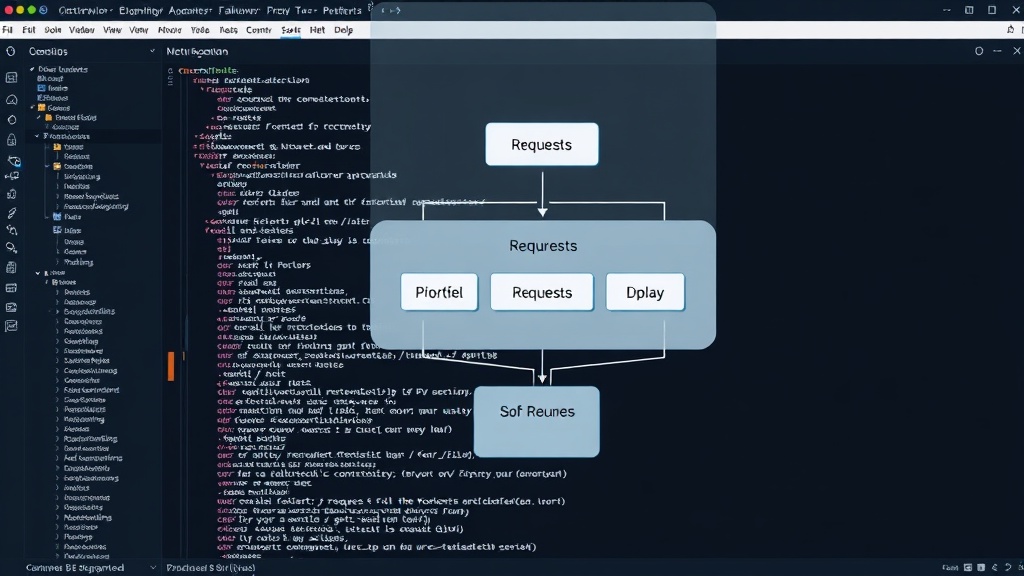
The core of the solution is a custom-built proxy designed to sit between the AI agent and the upstream LLM APIs. This proxy intercepts outgoing requests and manages incoming responses, implementing sophisticated failover logic to ensure workflow continuity. The primary goal was to achieve failover times measured in milliseconds, specifically targeting under 15ms, to prevent the agent's internal state from becoming corrupted or its workflow logic from breaking.
The proxy operates by maintaining connections to multiple LLM providers or different endpoints of the same provider. When an agent sends a request, the proxy forwards it to a primary API. If the primary API fails to respond within a predefined, extremely short timeout (crucial for the sub-15ms target), or if it returns an error code indicating instability (like a 502 or a 429), the proxy immediately reroutes the request to a secondary, pre-configured endpoint. This seamless redirection aims to mask the underlying API instability from the AI agent, allowing it to continue its execution without interruption.
Key to achieving the sub-15ms failover is the proxy's efficient handling of network requests and its intelligent decision-making logic. This involves:
- Low-Latency Connection Management: Maintaining persistent, healthy connections to backup API endpoints reduces the overhead of establishing new connections during a failover event.
- Optimized Request Forwarding: The proxy must be able to process incoming agent requests and forward them to the appropriate API endpoint with minimal added latency.
- Intelligent Error Detection: Rapidly and accurately identifying API errors or timeouts that necessitate a failover is paramount. This includes monitoring for specific HTTP status codes and response times.
- State Preservation: Ensuring that any context or state associated with the request is correctly passed to the failover endpoint is vital for workflow integrity.
The challenge lies not just in the speed but in the intelligence of the failover. Simply retrying a failing request might not work if the API is genuinely down. The proxy needs to intelligently select a different path, potentially to a different model or even a different provider, while ensuring that the agent perceives this as a continuous operation. This requires a deep understanding of how AI agents manage their internal state and how to replicate that state across different API interactions.
Engineering for High Availability in AI
Building a system that can reliably handle sub-15ms failovers requires meticulous attention to detail in every layer of the stack. This isn't just about writing code; it's about understanding network protocols, operating system intricacies, and the specific failure modes of cloud-hosted API services.
The choice of programming language and framework is critical. Languages offering high concurrency and low overhead, such as Go or Rust, are often preferred for such high-performance networking applications. These languages allow developers to manage thousands of concurrent connections efficiently without significant garbage collection pauses or thread contention, which could easily push failover times beyond the target.
Furthermore, the proxy needs robust health checking mechanisms. It can't just assume a backup endpoint is available. Regular, non-intrusive probes to backup endpoints ensure that when a failover is triggered, the backup is indeed ready to accept traffic. This involves sending small, benign requests and verifying successful responses. The frequency and nature of these checks must be balanced to avoid adding significant load to the backup APIs while still providing confidence in their availability.
The design also considers the different types of failures. A 502 indicates a server-side issue at the API provider. A 429 means the agent is sending too many requests. The proxy can potentially mitigate 429 errors by intelligently queuing requests or by directing traffic to less-congested endpoints, rather than just failing over. This adaptive behavior adds another layer of resilience.
Implications for AI Agent Development
The availability of such a proxy fundamentally changes the calculus for building and deploying autonomous AI agents. Developers can now architect systems with a much higher degree of confidence in their uptime, even when relying on services known for occasional instability. This enables the creation of more complex, multi-step workflows that are less prone to catastrophic failure due to transient network issues or API rate limiting.
For businesses, this translates to more reliable AI-powered operations, reduced wasted API spend, and a better user experience if the agent is interacting with end-users. It moves AI agents from a somewhat experimental, fragile technology to a more robust, enterprise-ready solution. The ability to guarantee near-continuous operation, even with imperfect upstream services, is a significant step towards making autonomous agents a ubiquitous part of business processes.
What remains to be seen is how major API providers will react to such solutions. Will they see them as a necessary layer of resilience, or will they introduce measures to detect and potentially block traffic from proxies that abstract away their rate limiting and availability metrics? The long-term adoption will depend on the interplay between proxy developers and the foundational AI service providers.