The Problem with Current AI Tutors
The landscape of AI-powered educational tools is crowded with chatbots that offer little more than a digital Q&A session. These systems, often masquerading as tutors, fail to grasp the nuanced reality of student learning. They lack the crucial ability to track a student's progress over time. This means they cannot identify if a concept mastered weeks ago has since decayed, whether a student is avoiding a difficult chapter out of disinterest or genuine struggle, or if a correct answer was merely a fortunate guess. For students navigating dense syllabi and rigorous exam schedules, such as those in ICSE/CBSE systems, this superficial approach is a significant drawback. The gap between a B and an A grade often hinges on identifying and reinforcing weak concepts well before the high-stakes exams arrive.
Introducing StudyMate AI's Adaptive Approach
StudyMate AI aims to rectify these shortcomings by building a voice-first adaptive learning engine. Unlike conventional Q&A bots, StudyMate AI is designed to continuously monitor and analyze a student's cognitive state. It doesn't just answer questions; it learns how a student learns. This adaptive engine tracks knowledge retention, identifies patterns of struggle or avoidance, and differentiates between genuine understanding and superficial recall. The system's voice-first interface is intended to lower the barrier to interaction, making it more natural and accessible for students to engage with their learning material.
The core innovation lies in StudyMate AI's ability to build a longitudinal profile of a student's knowledge. This profile evolves with every interaction, allowing the system to detect subtle shifts in understanding. For instance, if a student consistently answers questions correctly on a topic for several sessions, but then begins to hesitate or provide incorrect answers, StudyMate AI flags this as potential knowledge decay. Similarly, if a student consistently skips over a particular module or struggles with related concepts, the AI can infer that the material might be a point of difficulty, prompting targeted intervention rather than generic review.
This adaptive capability extends to the learning experience itself. Instead of a static curriculum, StudyMate AI dynamically adjusts the difficulty, pace, and content delivery based on the student's real-time performance and inferred cognitive state. If a student demonstrates mastery, the system can introduce more challenging problems or move on to the next topic. Conversely, if the student is struggling, StudyMate AI can provide additional explanations, break down complex concepts into smaller parts, or offer practice problems focused on the specific areas of weakness. This personalized approach ensures that each student receives the support they need precisely when they need it, optimizing their learning efficiency.
Beyond Chatbots: A Cognitive State Engine
The distinction between StudyMate AI and existing AI tutoring solutions is profound. Most AI tutors operate on a stateless, reactive model: they respond to direct queries. StudyMate AI, however, functions as a proactive, stateful engine. It maintains a dynamic model of the student's knowledge, confidence, and engagement. This is achieved through a sophisticated analysis of interaction data, including response times, accuracy, hesitation patterns in voice input, and the types of questions asked. The system effectively builds a cognitive map for each student, allowing for interventions that are not just timely but also contextually relevant to the individual's learning journey.
Consider the analogy of a human tutor. A good human tutor doesn't just wait for a question. They observe the student, notice furrowed brows, listen for hesitations, and recall previous struggles. They adapt their teaching method on the fly. StudyMate AI aims to replicate this human-like observation and adaptation, but at scale and with the advantage of precise data tracking. It's less like a digital textbook and more like a perceptive mentor who understands your unique learning fingerprint.
Technical Underpinnings and Future Potential
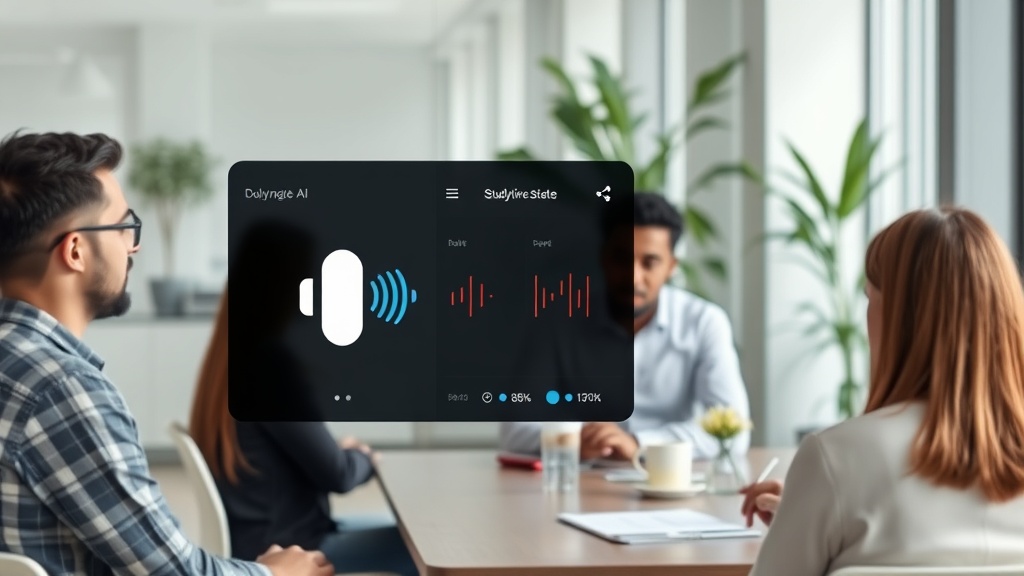
While the specifics of the implementation were part of a HackHazards '26 submission, the underlying architecture likely involves natural language processing (NLP) for voice input and query understanding, machine learning models for cognitive state inference and adaptive content delivery, and a robust data storage mechanism to maintain student profiles. The voice-first aspect suggests significant investment in speech-to-text technology and potentially speech analysis to detect nuances in student responses beyond mere accuracy.
The potential applications are vast. Beyond exam preparation, StudyMate AI could be integrated into corporate training programs, professional development platforms, or even lifelong learning initiatives. The ability to track and adapt to individual learning needs makes it a versatile tool for any domain requiring skill acquisition and knowledge retention. The system's focus on identifying the *why* behind a student's performance—whether it's a lack of understanding, disengagement, or simply a bad day—opens avenues for more empathetic and effective educational technology.
What remains to be seen is how StudyMate AI scales its cognitive modeling to accommodate the vast diversity of learning styles and potential edge cases. Furthermore, the ethical implications of such granular tracking of student cognitive states, including data privacy and the potential for misinterpretation of learning patterns, will require careful consideration as the technology matures and is deployed more widely.