Critical RCE in Google Cloud Logging
A severe Remote Code Execution (RCE) vulnerability, codenamed StubZero, has been discovered in Google Cloud's logging infrastructure. This flaw, which earned researcher Brutecat a $148,337 bug bounty, allowed for the execution of arbitrary code within the production environment of Google Cloud. The vulnerability stemmed from how Google Cloud's logging system handled specific, malformed log entries, enabling an attacker to inject and run their own commands.
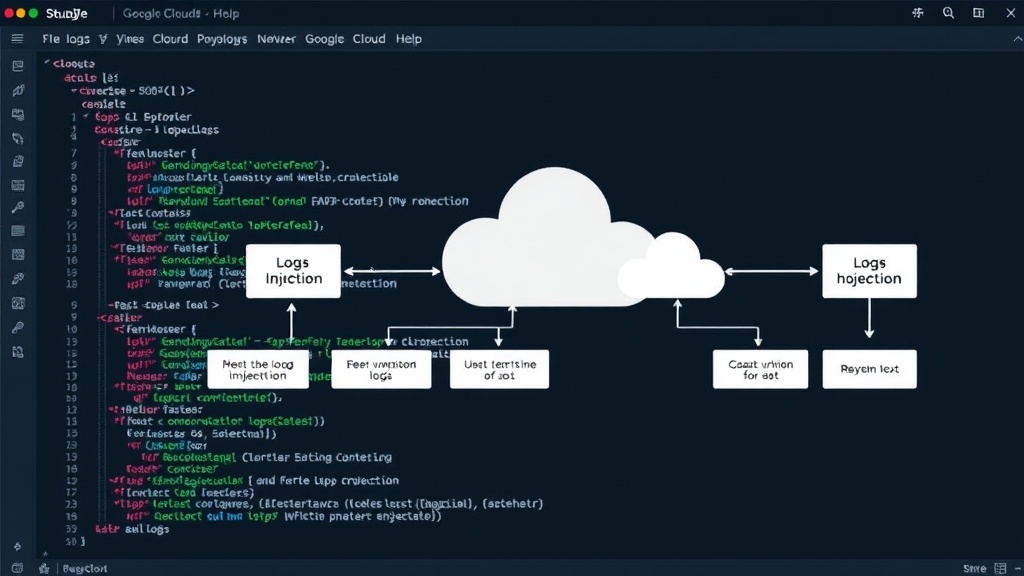
The core of the StubZero vulnerability lies in the complex, multi-component nature of Google Cloud's logging pipeline. Logs generated by various Google Cloud services are aggregated, processed, and stored. Brutecat discovered that by crafting particular log entries, they could exploit a weakness in a specific component responsible for parsing and handling these logs. This component, likely designed for efficiency and broad compatibility, failed to adequately sanitize or validate certain input fields.
When a specially crafted log entry was ingested, it could trigger a buffer overflow or a similar memory corruption vulnerability. This would allow an attacker to overwrite critical memory regions, ultimately leading to the execution of arbitrary code. The implications are profound: an attacker could potentially gain a foothold within Google's production infrastructure, impacting numerous services and customers that rely on Google Cloud.
Exploitation Details and Impact
The researcher meticulously documented the attack chain. It involved sending a series of specific log messages to a targeted Google Cloud project. These messages were designed to exploit a vulnerability in a component that processes these logs before they are sent to the main logging backend. The vulnerability allowed for the injection of commands that would then be executed in the context of the logging agent or service running on Google's infrastructure.
The success of the exploit meant that an attacker could, in theory, execute any command available on the compromised system. This could range from reading sensitive data, modifying configurations, deploying malicious software, or even pivoting to other systems within Google's network. The fact that this occurred in Google Cloud's production environment, rather than a sandboxed test environment, highlights the severity and potential blast radius of the vulnerability. It underscores the constant battle for security professionals to secure complex, distributed systems where a single overlooked input validation can have catastrophic consequences.
The $148,337 bounty awarded to Brutecat is one of the largest sums paid out through Google's bug bounty program, reflecting the critical nature of the vulnerability. Google's bug bounty program is known for its rigorous vetting and substantial rewards, incentivizing researchers to find and report such critical flaws before they can be exploited maliciously. This payout signifies Google's commitment to securing its platform and its acknowledgment of the significant effort and expertise required to uncover such deep-seated issues.
Mitigation and Google's Response
Upon discovery, Brutecat responsibly disclosed the vulnerability to Google through its bug bounty program. Google's security team acted swiftly to investigate, confirm, and patch the vulnerability. The company has not publicly detailed the exact technical fix, which is standard practice to avoid providing further information to potential attackers. However, the fact that a bounty was awarded indicates that the vulnerability has been addressed and the affected component is now secured against this specific attack vector.
For users of Google Cloud, the immediate impact of this specific vulnerability has been mitigated by Google's patching efforts. However, the incident serves as a stark reminder of the shared responsibility model in cloud security. While cloud providers secure the underlying infrastructure, customers must still manage their own configurations, access controls, and application-level security. The StubZero incident highlights the importance of rigorous input validation and secure coding practices, even within the most sophisticated cloud platforms.
What remains unaddressed is the broader question of how such a vulnerability, residing deep within the logging infrastructure that underpins so many services, could persist undetected for so long. The complexity of Google Cloud's internal systems, while a strength in many regards, also presents a vast attack surface where subtle flaws can hide. This discovery underscores the need for continuous, deep-dive security auditing and fuzzing across all layers of cloud infrastructure.
The StubZero vulnerability is a testament to the skill of security researchers and the vital role they play in enhancing the security of major technology platforms. It also emphasizes that even the most robust systems are not infallible and require constant vigilance and proactive defense.