
The Unseen Engine of AI Growth
Stripe, by processing payments for a vast swathe of the world's fastest-growing AI companies, possesses a unique vantage point. It sees the actual revenue data, the ebb and flow of capital, and the geographic spread of innovation. Maia Josebachvili, Chief Revenue Officer of AI at Stripe, shared these insights at a SaaStr AI session, painting a picture of an industry experiencing explosive growth, significant international reach, and a subtle but profound shift in how software services are consumed.
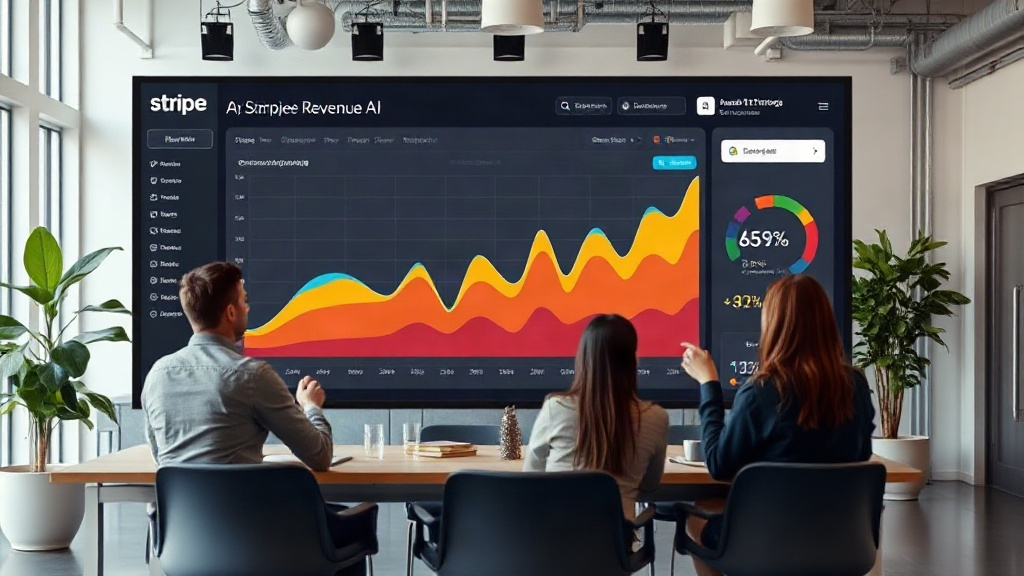
The most striking figure Josebachvili presented is the sheer velocity of growth. The fastest-growing AI companies on Stripe's platform are clocking in at a staggering 175% year-over-year revenue increase. This isn't incremental improvement; it's a hyper-growth phase indicative of a market that has, for many of these companies, suddenly clicked. This level of expansion suggests that AI solutions are moving beyond niche applications and into broader, more integrated use cases that are capturing significant market share and customer spend. This aligns with a broader trend of AI moving from experimental to essential across various business functions, from customer support to data analysis and content creation.
This rapid ascent isn't confined to a single geographic hub. Josebachvili highlighted that 48% of revenue for these high-growth AI companies comes from outside their home market. This statistic is critical. It signals that AI solutions are not merely a domestic phenomenon in the US, but are finding global appeal and adoption. This internationalization suggests that the underlying problems AI is solving are universal, and that companies are successfully navigating the complexities of global payment processing, localization, and market entry. For founders, this means the addressable market for AI solutions is inherently global from day one, provided they can build scalable infrastructure and understand diverse customer needs.
The implication for Stripe is clear: they are the financial backbone for a significant portion of the future tech landscape. Their ability to process these payments efficiently and securely, while providing valuable data insights, becomes a competitive advantage not just for Stripe, but for the AI companies they serve. The fact that Stripe is privy to this revenue data means they can identify emerging trends and high-potential companies before they become widely known, informing their own product development and go-to-market strategies.
The Shifting Landscape of Software Consumption
Beyond the raw growth and geographic reach, Josebachvili pointed to a more subtle, yet potentially more transformative, trend: the increasing reliance on AI agents to interact with software. She posited that soon, AI agents will be reading more Stripe documentation than humans. This statement, while perhaps hyperbolic, captures a fundamental shift in how users will engage with complex software platforms.
Historically, developers and business users would pore over lengthy technical documentation to understand how to integrate, configure, and utilize software services. This process is often time-consuming, error-prone, and requires a significant learning curve. The rise of sophisticated AI agents, capable of understanding natural language queries, interpreting complex technical specifications, and even generating code snippets, is set to change this paradigm. These agents can act as intermediaries, translating human intent into machine-readable instructions and extracting relevant information from documentation far more efficiently than a human can.
For Stripe, this means their documentation, APIs, and developer portals will need to be optimized not just for human readability, but for machine consumption. This involves structured data, clear and unambiguous language, and potentially agent-specific APIs or endpoints. The challenge and opportunity lie in ensuring that these AI agents can accurately interpret the nuances of financial transactions, compliance, and platform capabilities. If an AI agent misinterprets a Stripe API’s functionality, the consequences could range from failed transactions to significant compliance breaches.
This trend has broader implications across the SaaS landscape. Companies that provide complex technical services will increasingly find their primary users are not humans directly, but the AI agents that represent those humans. This necessitates a re-evaluation of user experience design, developer relations, and support strategies. The focus will shift from building intuitive graphical interfaces for humans to building robust, predictable, and well-documented APIs and data structures that AI agents can reliably interact with.
The Future: AI-Powered Business Operations
The confluence of hyper-growth, global expansion, and AI-driven interaction points towards a future where AI is not just a product feature, but the core operating system for many businesses. Stripe's position as a payment processor for these companies makes them a critical infrastructure provider in this emerging ecosystem.
Josebachvili's observations suggest that the companies leading the AI revolution are already global, scalable, and increasingly reliant on automated agents for their operations. This presents a clear signal for founders and product leaders: to compete in the AI space, a global mindset and a strategy for AI-agent interaction are no longer optional, but essential. The ability to process payments efficiently across borders and to provide a platform that AI agents can easily integrate with will become key differentiators.
What remains to be seen is how quickly traditional businesses, not born in the AI era, will adapt to this new paradigm. The transition from human-centric software interaction to agent-centric interaction will require significant investment in training data, API development, and a fundamental rethinking of operational workflows. Stripe, by observing and enabling the fastest-growing AI companies, is providing a powerful case study for what the future of business operations might look like.