
AI's Slow March on Employment
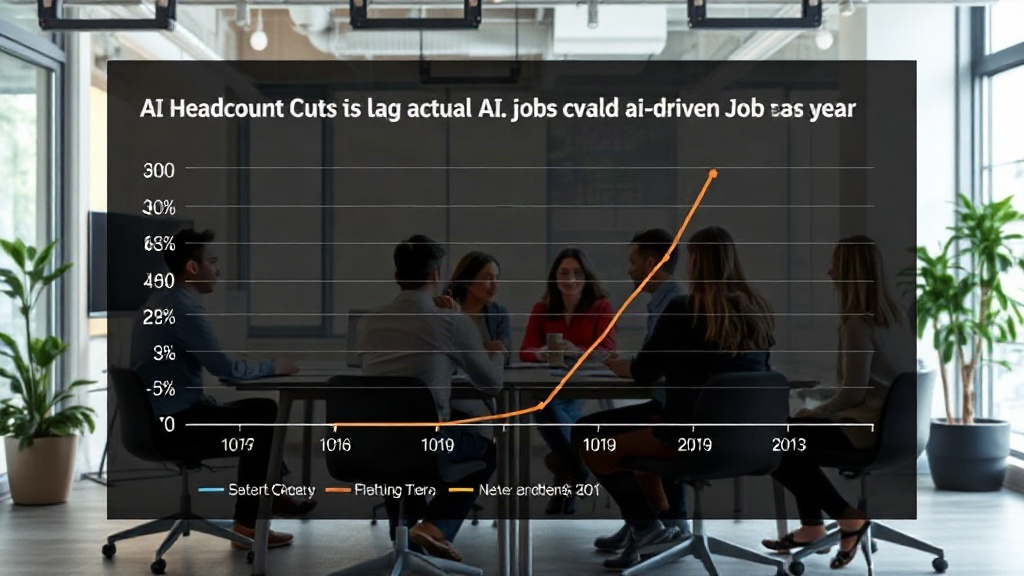
When companies surveyed by McKinsey a year ago looked into their crystal balls, a significant portion—32%—predicted that artificial intelligence would lead to a reduction in their overall workforce within the next 12 months. The reality, however, has been far less dramatic. Upon re-examination, only 14% of AI-using organizations reported that the technology had actually contributed to a decline in their total headcount. This figure represents less than half of the workforce reductions that companies had anticipated.
This discrepancy between prediction and reality suggests that the integration of AI into business operations has not, thus far, translated into the widespread, immediate job losses that some feared. While AI tools are undoubtedly transforming workflows and boosting productivity, their direct impact on overall employment numbers has been more gradual. This slower-than-expected materialization of AI-driven job cuts offers a temporary reprieve for many sectors, but it does not signal an end to the discussion.
The reasons for this lag are likely multifaceted. Some companies may still be in the early stages of AI adoption, focusing on pilot programs and integration rather than large-scale deployment that would necessitate significant workforce adjustments. Others might be reallocating employees to new roles created by AI implementation, such as AI trainers, data annotators, or AI ethics officers, rather than eliminating positions entirely. Furthermore, the ongoing skills gap in AI expertise may mean that organizations are not yet equipped to fully leverage AI to the point where it can replace human workers at scale.
Shifting Expectations for the Future
Despite the slower-than-anticipated impact of AI on job cuts over the past year, the outlook for the future is changing. The latest McKinsey survey reveals a notable increase in expectations for future workforce reductions. Now, 39% of respondents anticipate that AI will lead to a reduction in headcount in the coming year, a significant jump from the 32% who held this view in the previous survey. This suggests a growing confidence among businesses that AI capabilities are maturing to a point where they can indeed displace human labor more broadly.
Conversely, 43% of companies expect little or no change in their workforce composition due to AI. This indicates a divided sentiment, with a substantial portion of organizations still viewing AI as a tool for augmentation rather than replacement, or perhaps for roles that are less susceptible to automation. The greatest expectations of AI-driven reductions are concentrated in specific sectors: service operations and supply-chain management. These areas often involve repetitive tasks, data processing, and logistical coordination, making them prime candidates for AI-powered automation.
However, even within these sectors, respondents frequently anticipate stability rather than outright cuts in many functions. This nuanced perspective highlights that AI's impact is not monolithic. It is more likely to reshape specific roles and tasks within these industries rather than lead to a complete decimation of the workforce. The current trend suggests a period of adjustment, where AI will increasingly automate certain tasks, leading to a redeployment of human capital rather than mass layoffs.
What This Means for the Workforce
The data from McKinsey paints a picture of AI's evolving relationship with employment. The initial fears of rapid, widespread job displacement appear to have been somewhat overstated, at least in the short term. This provides a crucial window for individuals and organizations to adapt. For employees, it underscores the importance of continuous learning and upskilling, focusing on skills that complement AI, such as critical thinking, creativity, emotional intelligence, and complex problem-solving. The ability to work alongside AI systems, manage them, and interpret their outputs will become increasingly valuable.
For businesses, the message is clear: the AI race is not just about deploying technology, but about strategically integrating it. Companies that successfully leverage AI will likely do so by enhancing their existing workforce, creating new roles, and redesigning business processes. Those that view AI solely as a cost-cutting tool for headcount reduction may miss out on the broader opportunities for innovation and growth that AI can unlock. The increasing expectation of future cuts suggests that the strategic planning for AI integration needs to be forward-looking, anticipating not just the technological advancements but also the necessary organizational and workforce transformations.
The surprising detail here is not just the lag in AI-driven job cuts, but the increasing anticipation of them in the near future. It suggests a growing maturity in how businesses perceive AI's potential to reshape their operational landscape. Companies are moving beyond the initial hype and are developing more concrete strategies for leveraging AI, which increasingly includes its capacity to streamline operations by automating tasks previously performed by humans. This shift in perspective is critical for anyone involved in workforce planning, talent development, or strategic business operations.
The Unanswered Question of Transition
While the McKinsey survey provides valuable insights into the current state and future expectations of AI's impact on employment, a critical question remains largely unaddressed: what will be the nature of the transition for workers whose roles are automated? As companies increasingly anticipate workforce reductions, the focus needs to shift from mere prediction to proactive management of this transition. How will organizations support employees through this shift? What reskilling and upskilling initiatives will be implemented, and will they be sufficient to absorb the displaced workforce into new, AI-augmented roles?
The survey indicates a growing trend towards automation in service operations and supply chains, but it doesn't detail the mechanisms by which affected employees will be supported. Will there be robust internal mobility programs, or a reliance on external retraining initiatives? The societal implications of such a transition are profound, touching upon economic stability, educational systems, and the very definition of work. As AI capabilities continue to advance, understanding and actively managing the human element of this technological evolution will be paramount for ensuring a sustainable and equitable future of work.