
The Illusion of Patterns
My friend, a casual stock trader, pointed to a chart. "Head and shoulders," he declared. "Classic reversal pattern. I'm out." I saw price movement; he saw a narrative, a pre-defined pattern. This divergence highlights a core challenge in complex systems: the subjective interpretation layer versus objective reality. In the world of AI, particularly Large Language Models (LLMs), this distinction is critical. Part 1 of this series explored how LLMs, like human brains, function as rendering engines. Part 2 argued that simply increasing compute power won't lead to emergent consciousness. This final piece delves into StratCraft, a novel approach that uses principles inspired by quantum physics to maintain the integrity of an AI's core logic by strictly isolating its 'render layer' – the part that interprets and presents information.
The problem StratCraft addresses is the inherent distortion that occurs when a system's interpretation layer interacts too closely with its foundational processing. Think of a finely tuned scientific instrument. If the display showing the readings is also the mechanism that directly influences the sensor, the readings themselves will be compromised. The instrument would be measuring its own output, not the external phenomenon it's designed to observe. Similarly, if an LLM's 'understanding' (its rendering of information) directly feeds back into its core knowledge retrieval or reasoning processes without a robust separation, the output can become self-referential and inaccurate.
Introducing StratCraft: Quantum Principles for AI Integrity
StratCraft conceptualizes the AI's core logic as a quantum system and its rendering layer as a classical observer. In quantum mechanics, the act of observation can collapse a waveform, fundamentally changing the state being observed. Applied to AI, this means that if the 'rendering engine' (the observer) is too tightly coupled with the core processing (the quantum state), the very act of rendering can alter the underlying information or reasoning process.
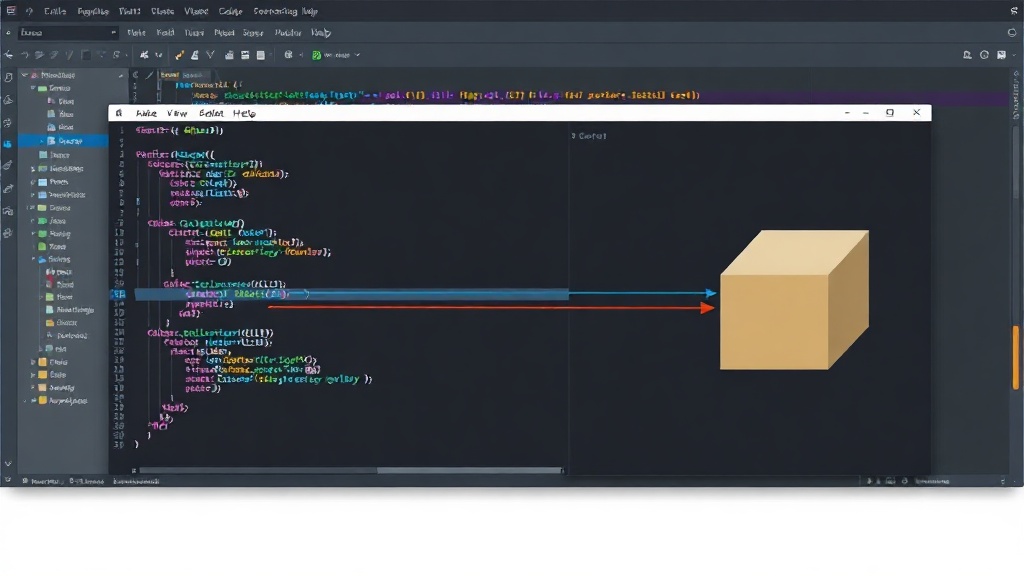
The framework proposes a strict separation, analogous to the measurement problem in quantum physics. The core logic operates in a state that is not directly influenced by the rendering process. The rendering layer, conversely, receives information from the core logic but does not have the ability to modify it. This is achieved through carefully designed interfaces and data flow controls that enforce a one-way street for information, from core to render, never the other way around.
The 'Physics' of Quant: Maintaining an Uncollapsed State
The 'physics' in StratCraft refers to the rules and constraints that govern this separation. It's not literal quantum physics, but an analogy to maintain the integrity of the core logic. The goal is to keep the core logic in a state that is as close as possible to its 'uncollapsed' or 'pure' form, free from the biases and interpretations introduced by the rendering layer.
Consider an LLM tasked with summarizing a complex scientific paper. The core logic retrieves and processes the factual information. The rendering layer then constructs a human-readable summary. If the rendering layer, perhaps due to a bias towards conciseness or a predefined narrative structure, starts to subtly alter the emphasis or omit critical nuances from the core information before presenting it, the summary is no longer an accurate reflection of the paper's content. StratCraft aims to prevent this by ensuring the rendering layer can only 'observe' the output of the core logic, not 'interfere' with its internal state or the source data it processed.
This separation is particularly crucial in domains where distortion is costly. Financial trading, medical diagnostics, and critical control systems all demand high fidelity. Introducing a subjective or interpretive layer that can inadvertently alter the foundational data leads to cascading errors. StratCraft’s architectural pattern acts as a safeguard, much like a sealed laboratory environment protects a sensitive experiment from external contamination.
Architectural Implications and Future Directions
Implementing StratCraft requires a modular design. The core logic component is responsible for data processing, knowledge retrieval, and fundamental reasoning. The rendering component handles tasks like natural language generation, data visualization, or user interface presentation. Communication between these components is strictly mediated through defined APIs that enforce read-only access for the rendering layer to the core logic's internal states or outputs.
This architecture has significant implications for AI safety and reliability. By preventing the rendering layer from influencing the core, StratCraft mitigates risks associated with model drift, hallucination amplification, and adversarial manipulation that targets the interpretation process. If an attacker tries to 'trick' the AI by feeding it misleading prompts, the core logic's integrity is better preserved, making it harder for the rendering layer to produce confidently incorrect outputs.
The challenges lie in defining the precise boundaries and communication protocols. What constitutes 'core logic' versus 'rendering'? How are updates and feedback loops managed without compromising the separation? StratCraft offers a theoretical framework, but its practical implementation will require careful engineering. The analogy to quantum physics, while powerful, needs to be translated into robust software engineering principles. What nobody has fully explored yet is how to dynamically adjust the strictness of this separation based on the criticality of the task, allowing for controlled interaction when necessary without sacrificing the fundamental integrity of the core processing unit.
Ultimately, StratCraft proposes a paradigm shift in how we architect complex AI systems. By drawing inspiration from the fundamental principles of physics, it offers a path toward more robust, reliable, and interpretable AI, ensuring that what we see is a faithful representation of what the AI truly knows and reasons, not a distorted reflection shaped by the act of presentation itself.