
The Problem: Interactivity vs. Indexability
Many developers face a common dilemma: how to imbue a static website with the dynamic, engaging feel of a modern web application without alienating search engine crawlers. The excerpt highlights a critical failure point: interactive elements, often built with JavaScript, that create a rich user experience are invisible to search engines if not properly handled. This means content that users interact with, such as dynamic results or detailed explanations that appear after user input, might never be indexed. The consequence is a beautiful, responsive site that fails to rank because the core content, from a crawler's perspective, is absent.
Consider a quiz site. A user taps an answer, and the next question smoothly slides in. A results card animates into view, perhaps with a satisfying flip. These elements create 'game feel' – the intangible sense of responsiveness, weight, and delight that makes an application feel alive. However, if the descriptions of the results, the scoring logic, or even the answers themselves exist solely within JavaScript and aren't rendered into the initial HTML, a crawler with JavaScript disabled will see an empty page. This is not a content problem; it's an architectural one. The part you built for humans never existed in a format the crawler could understand.
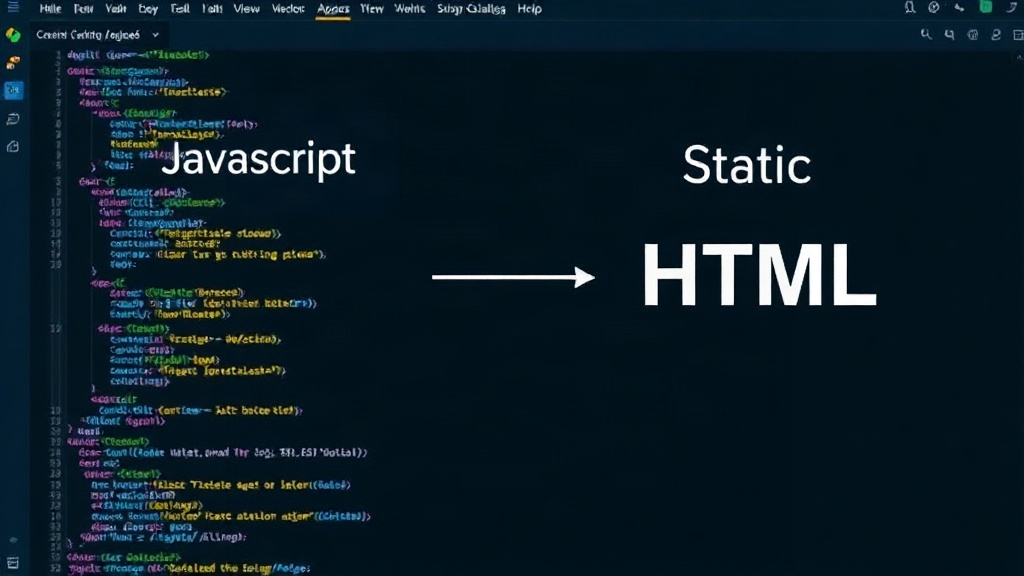
Rendering Strategies for SEO-Friendly Interactivity
The solution lies in ensuring that all critical content, especially that which contributes to user engagement and information, is accessible to search engine crawlers. This doesn't mean abandoning JavaScript-driven interactivity; it means employing rendering strategies that bridge the gap between dynamic front-end experiences and static HTML. The core principle is that the content must be present in the initial HTML payload, even if JavaScript enhances its presentation or behavior.
Server-Side Rendering (SSR)
Server-Side Rendering is a powerful technique. When a user (or a crawler) requests a page, the server processes the JavaScript and renders the full HTML on the server before sending it to the client. This ensures that the initial HTML received by the crawler is complete, containing all the text, links, and structured data. Frameworks like Next.js (for React) and Nuxt.js (for Vue) are built around this concept. Even for static sites, you can leverage SSR during the build process to pre-render dynamic content into static HTML files. This effectively pre-loads the 'game feel' elements into a format crawlers can digest.
Static Site Generation (SSG) with Dynamic Data Fetching
For static sites, the goal is to generate all possible pages at build time. If your 'game feel' elements depend on dynamic data (e.g., user scores, personalized results), you can fetch this data during the build process and inject it into the static HTML. This creates a static snapshot of the content. For elements that truly require client-side interaction to reveal, ensure that fallback content is present in the initial HTML. For example, instead of a result description only appearing after an animation, the description text itself can be present in the HTML, perhaps hidden by default, and then revealed and animated by JavaScript.
Dynamic Rendering
Dynamic rendering involves serving different content to bots than to human users. This is often employed by sites that rely heavily on JavaScript to render content. A server or proxy detects if the request is from a search engine bot and, if so, serves a pre-rendered HTML version of the page. Otherwise, it serves the JavaScript-heavy version. While effective, this approach can be complex to implement and maintain, and Google has stated it prefers content to be rendered directly rather than through dynamic rendering. However, for specific, complex cases where SSR or SSG is not feasible, it remains an option.
Implementing 'Game Feel' Without Sacrificing Accessibility
The key is to decouple the content from its dynamic presentation. Think of it like a stage play. The script (HTML) contains all the dialogue and stage directions. The actors and set design (JavaScript) bring it to life. If the script is empty, the play cannot be performed, regardless of how elaborate the sets are.
When building interactive elements for a static site:
- Ensure Core Content is in HTML: Any text that is crucial for SEO, like result descriptions, article content, or product details, must be present in the initial HTML. This can be achieved through server-side rendering or by pre-rendering during the build process.
- Use JavaScript for Enhancements, Not Core Content Delivery: JavaScript should be used to animate elements, handle user interactions, fetch supplementary data, and create smooth transitions. It should not be the sole delivery mechanism for essential information.
- Progressive Enhancement: Build your site with progressive enhancement in mind. The core functionality and content should work with JavaScript disabled, and then JavaScript layers on additional features and polish. This ensures that even if JavaScript fails to load or execute, the user (and the crawler) still gets the essential information.
- Semantic HTML: Use semantic HTML tags appropriately. This helps crawlers understand the structure and meaning of your content, even before JavaScript kicks in. For example, use `
`, ` `, ` ` to `
`, `
`, `
- `, `
- ` tags correctly.
- Lazy Loading for Non-Critical Assets: For elements that are purely for visual flair and not essential for understanding the content, consider lazy loading them after the initial page load. This improves initial load times and ensures critical content is prioritized.
- `, `
The Unanswered Question: The Developer's Workflow Shift
What nobody has adequately addressed yet is how these rendering strategies fundamentally change the developer workflow for building static sites. Traditionally, static site generators (SSGs) focused on pure client-side rendering, assuming SEO would be handled by the simplicity of the output. Now, teams must integrate build-time data fetching, server-side logic (even if simulated), and a deeper understanding of how crawlers parse content. This shift requires a new mental model and potentially new tooling or configurations that are not always intuitive for developers accustomed to simpler SSG setups.
Conclusion: A Unified Approach
By prioritizing content accessibility in the initial HTML and using JavaScript to enhance, rather than solely deliver, content, developers can achieve both a highly engaging user experience and robust SEO. This approach ensures that the 'game feel' elements delight users while the 'hidden' content remains visible to search engines, leading to better engagement and higher rankings. The future of static sites lies in this harmonious blend of interactivity and indexability.
Referenced Sources
- verified
Share this intelligence