The Pitfalls of Basic Stablecoin Payments
The initial approach to integrating stablecoin payments like USDT into e-commerce platforms often appears deceptively simple: display a wallet address, await a blockchain transaction confirmation, and then update the order status to 'paid'. This method might suffice for basic demonstrations or very controlled environments, but it quickly proves inadequate when faced with the unpredictable behavior of real customers in a live production setting.
The true challenge of stablecoin checkout design lies not in generating a payment request, but in maintaining an accurate and consistent order state amidst the complexities of actual user interactions. Customers, unlike automated systems, introduce a range of potential issues that a naive implementation cannot handle:
- Incorrect Network Selection: Users may send funds on the wrong blockchain network (e.g., sending USDT on BSC when the request was for Ethereum).
- Partial Amount Sent: A customer might send less than the exact amount requested, leaving the order in an ambiguous state.
- Late Payments: Transactions can be initiated after the order's designated expiry time has passed.
- Duplicate Transactions: A user might accidentally send two separate transactions for the same order.
- Session Interruption: Customers may close the checkout page and return later, expecting their order state to be preserved.
- Webhook Delays or Retries: The backend system responsible for confirming payments might experience delays or receive duplicate confirmation signals due to network issues.
These scenarios highlight a critical requirement: a stablecoin checkout system must provide a clean, definitive answer for the order status. The possible states should be unambiguous, including 'pending', 'paid', 'expired', 'underpaid', or 'overpaid'. Achieving this requires more than just presenting a QR code and waiting for a blockchain event; it necessitates a robust state machine.
Designing a Resilient Payment Intent State Machine
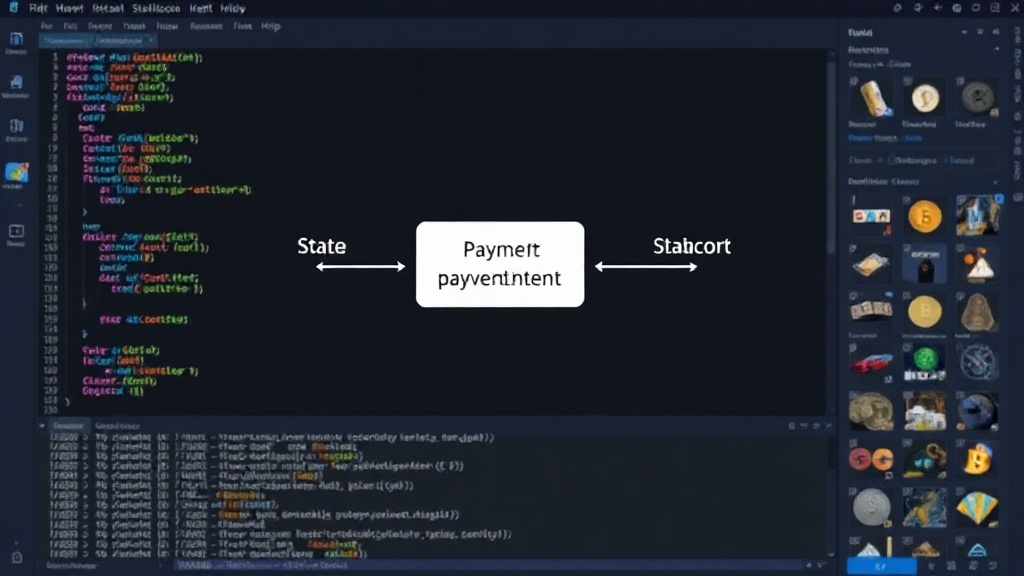
The preferred pattern for building a stablecoin checkout involves creating a dedicated payment intent for each checkout session. This intent acts as the central authority for tracking the payment process and resolving potential ambiguities. Each payment intent should be associated with several key pieces of information:
- Requested Amount: The precise value of the stablecoin required for the order.
- Target Network: The specific blockchain network on which the payment must be received.
- Target Address: The unique wallet address generated for this specific payment intent.
- Payment Intent ID: A unique identifier for this specific payment request, crucial for reconciliation.
- Order ID: The reference to the corresponding e-commerce order.
- Status: The current state of the payment intent (e.g., 'created', 'pending', 'confirmed', 'expired', 'failed').
- Expiry Timestamp: The deadline by which the payment must be successfully processed.
- Received Amount: The total amount of stablecoin actually received for this intent.
When a customer initiates a checkout, the system generates a new payment intent. This intent is then used to display the necessary payment details to the customer—the amount, the network, and the target address. The system begins monitoring the blockchain for incoming transactions directed to this specific address.
Handling Real-World Transaction Scenarios
The core of a robust stablecoin checkout lies in how it processes incoming transactions and updates the payment intent's status. This is where the state machine logic becomes critical. Consider the following scenarios and how the state machine would manage them:
Partial Payments
If a transaction arrives with an amount less than the requested amount, the system should not immediately mark the order as 'paid'. Instead, the payment intent's status might transition to 'partially paid', and the 'received amount' field is updated. The system can then wait for additional funds to arrive at the same address, summing them up until the total requested amount is met. If the order expiry time is reached before the full amount is received, the intent transitions to 'expired' or 'underpaid', depending on the business logic. This prevents orders from being prematurely fulfilled with insufficient payment.
Late Payments
When a transaction is detected, the system first checks if the current time is past the 'expiry timestamp' associated with the payment intent. If it is, the transaction is considered late. Depending on the business rules, this might result in the payment intent being marked as 'expired' or 'failed'. The system might offer the customer a chance to create a new payment intent for the current price, or it might simply cancel the order. This prevents old, potentially stale payment requests from causing confusion.
Multiple Transactions
If multiple transactions are sent to the same address, the system should aggregate the amounts received. The 'received amount' field accumulates funds from all valid transactions. The intent only transitions to 'confirmed' or 'paid' once the aggregated amount meets or exceeds the 'requested amount' and the transaction is within the expiry window. If the total exceeds the requested amount, the excess can be logged, and the order marked as 'overpaid', potentially triggering a refund process or simply confirming the order as paid.
Network Mismatches
The system must actively verify that incoming transactions occur on the specified 'target network'. If a transaction is detected on a different network, it should be flagged. Such transactions typically cannot be automatically reconciled. The system should log these events and potentially flag them for manual review or inform the customer of the error, guiding them to resend the payment on the correct network. The payment intent remains in a 'pending' or 'error' state until corrected.
Webhook Reliability
While blockchain explorers provide transaction data, relying solely on a single webhook from a payment processor can be fragile. A robust system should ideally have multiple layers of confirmation. This could involve directly querying the blockchain for transaction status using the transaction ID provided by the webhook, or even maintaining a cache of recent blockchain events. If a webhook is delayed or retried, the system should have mechanisms to deduplicate confirmations and ensure the payment intent state is updated accurately only once.
The Order State Transition
With a well-defined payment intent state machine in place, the e-commerce platform can reliably determine the final state of the order. The order's state transitions based on the final state of its associated payment intent:
- Pending: The payment intent is still active and awaiting sufficient funds within the expiry window.
- Paid: The payment intent has successfully received the full requested amount (or more) within the expiry window. The order can now be fulfilled.
- Expired: The expiry timestamp for the payment intent has passed, and the full amount was not received. The order is cancelled.
- Underpaid: The expiry timestamp has passed, and the total received amount is less than the requested amount. The order is cancelled or flagged for manual intervention.
- Overpaid: The total received amount exceeds the requested amount, but the order is still considered paid. Business logic will dictate handling of the excess.
This detailed state management ensures that the order state in the e-commerce system accurately reflects the reality of the blockchain transaction, even when faced with user errors, network latency, or system delays. It transforms a simple QR code display into a resilient financial transaction system.