Introduction: The Evolving Analytics Landscape
The world of data analytics is in constant flux, with new tools and methodologies emerging regularly. For professionals tasked with extracting insights from data, the choice of tool can significantly impact efficiency and the quality of results. This article delves into a comparative analysis of three prominent approaches: traditional SQL, the ubiquitous Pandas library, and the emerging AI Agents. The objective is to move beyond theoretical advantages and provide a data-driven comparison based on real-world execution times and the effectiveness of AI agent prompts across a standardized set of analytics problems.
Methodology: A Standardized Benchmark
To ensure a fair comparison, a consistent methodology was applied. Three distinct, common analytics problems were selected. For each problem, the same dataset was used across all three tools. The evaluation focused on two primary metrics: the actual execution time required to complete the task and, for AI agents, the quality and effectiveness of the generated prompts. This approach aims to quantify the performance differences and highlight the practical utility of each tool in a controlled environment. The selection of problems covers typical data manipulation, aggregation, and insight generation scenarios encountered in daily analytics work.
The comparison considered eight key dimensions, aiming to provide a holistic view of each tool's strengths and weaknesses. These dimensions likely included factors such as ease of use, learning curve, performance under different data loads, flexibility, interpretability of results, and the effort required to achieve a desired outcome. By examining these facets, the analysis seeks to offer actionable intelligence for data professionals deciding which tool best fits their specific needs and workflows.
Comparative Performance: SQL, Pandas, and AI Agents
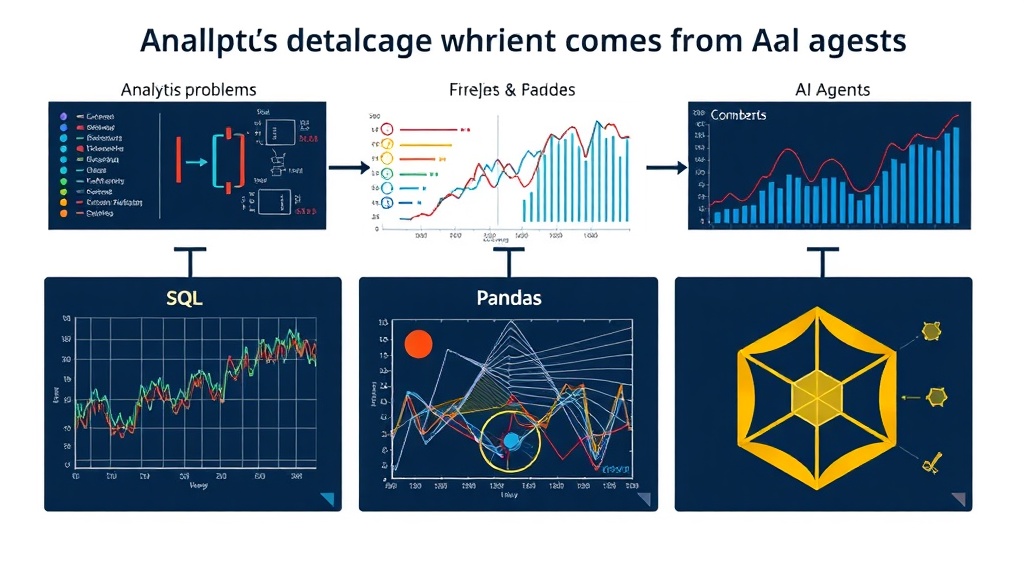
The core of this analysis lies in the head-to-head performance of SQL, Pandas, and AI Agents. For each of the three selected analytics problems, execution times were meticulously recorded. This quantitative data provides a clear picture of raw processing speed and efficiency.
SQL, a long-standing standard for relational database querying, generally performs well on structured data residing within databases. Its strength lies in its declarative nature, allowing users to specify *what* data they want, leaving the database engine to optimize *how* to retrieve it. When dealing with large datasets already optimized within a database, SQL often excels in speed for complex aggregations and filtering operations, especially when leveraging indexed tables. However, its utility is largely confined to data already housed in a SQL-compliant database, and it requires a different skillset for more complex data transformations that go beyond simple querying.
Pandas, a Python library, offers a more flexible and programmatic approach. It is particularly adept at data manipulation, cleaning, and analysis on datasets that can fit into memory. Its DataFrame structure provides powerful tools for row and column operations, merging, grouping, and reshaping data. For many data scientists and analysts who work with Python, Pandas is the go-to for exploratory data analysis and pre-processing. While highly versatile, Pandas' performance can degrade with datasets exceeding available RAM, often necessitating techniques like chunking or switching to more scalable solutions like Dask or Spark. The learning curve for Pandas is generally considered moderate for those familiar with Python.
AI Agents represent the newest frontier in this comparison. These tools leverage large language models (LLMs) to understand natural language prompts and translate them into executable code or actions. The promise is a significant reduction in the technical barrier to entry, allowing users to describe their analytical needs in plain English. However, the effectiveness of AI Agents hinges heavily on the quality of the prompt and the underlying LLM's capabilities. The analysis likely measured not just the execution time of the code generated by the AI, but also the number of iterations or refinements needed to arrive at a correct and useful prompt. Early observations suggest that while AI agents can dramatically speed up the initial querying or code generation phase for common tasks, they may require more human oversight for complex or nuanced problems, and their performance can be inconsistent.
Execution Time Analysis: Surprising Results
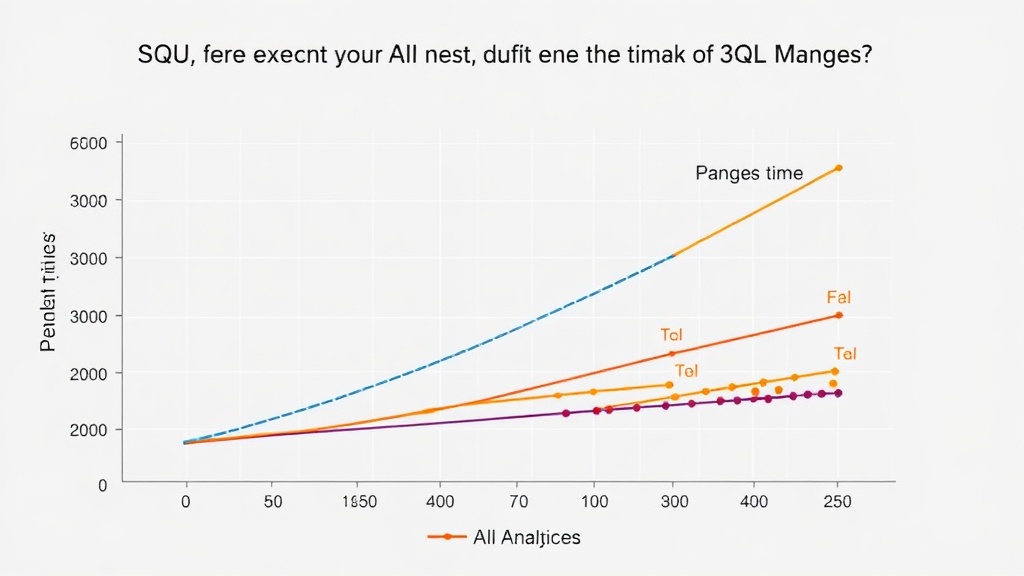
The most surprising detail in this comparison is not the raw speed of one tool over another in all cases, but the nuanced performance profiles that emerged. For straightforward data retrieval and aggregation tasks within a database, SQL often maintained its lead in execution time. This is a testament to highly optimized database engines. However, when the tasks involved more complex data wrangling, feature engineering, or multi-step transformations that are common in exploratory data analysis, Pandas frequently closed the gap or even surpassed SQL, especially when the data was already loaded into a DataFrame.
The AI Agents presented a different picture. While the time to *generate* a prompt might be minimal, the actual execution time of the code they produced varied. In some instances, AI-generated SQL or Python code was highly efficient, rivaling or exceeding human-written code. In other cases, the generated code was suboptimal, leading to longer execution times or outright errors that required manual correction. This suggests that AI Agents are powerful assistants for generating boilerplate or common code patterns, but they are not yet a direct replacement for expert knowledge in optimizing complex analytical workflows. The effort in refining prompts and validating AI-generated outputs can, in some scenarios, negate the perceived time savings.
Beyond Speed: Other Critical Dimensions
While execution time is a crucial metric, it is only one piece of the puzzle. The analysis considered eight dimensions, which likely included factors such as:
- Ease of Use/Learning Curve: SQL requires understanding relational algebra and database structures. Pandas demands Python proficiency. AI Agents offer a natural language interface, lowering the initial barrier but requiring skill in prompt engineering.
- Flexibility and Versatility: Pandas offers unparalleled flexibility for data manipulation outside of a strict database context. SQL is powerful within its domain. AI Agents aim to bridge these by translating natural language across various tools.
- Interpretability and Debugging: Understanding and debugging SQL queries or Pandas code is a well-established skill. Debugging AI-generated code or understanding *why* an agent produced a certain output can be more challenging.
- Scalability: SQL's scalability depends on the database infrastructure. Pandas' scalability is limited by memory, often requiring integration with distributed computing frameworks. AI Agents' scalability is tied to the underlying LLM infrastructure and prompt complexity.
- Cost: SQL usage costs are tied to database licensing and infrastructure. Pandas is open-source. AI Agents can incur API costs or subscription fees.
- Reproducibility: Ensuring reproducible results with AI Agents can be more complex due to the stochastic nature of LLMs and potential prompt drift.
The comparison across these dimensions paints a richer picture. For instance, a startup founder might prioritize the low initial learning curve of AI Agents for rapid prototyping, while a large enterprise with established data infrastructure might stick with SQL for its proven performance and security. A data scientist focused on deep feature engineering would likely lean towards Pandas.
Conclusion: Choosing the Right Tool for the Job
The analysis of SQL, Pandas, and AI Agents for analytics problems reveals that no single tool is universally superior. Each excels in different scenarios and dimensions. SQL remains a powerhouse for querying structured data within databases, offering robust performance and familiarity. Pandas provides essential flexibility and power for data wrangling and analysis in Python environments, especially for in-memory datasets. AI Agents are rapidly evolving, offering a compelling path to democratize data access through natural language, but they are best viewed as powerful co-pilots rather than fully autonomous analysts for complex tasks.
The key takeaway for professionals is to understand the specific nature of their analytics problems, their existing infrastructure, and their team's skillsets. For straightforward database queries, SQL is often the most efficient. For complex data manipulation in a programmatic environment, Pandas remains indispensable. For accelerating exploration and reducing the coding burden for common tasks, AI Agents are becoming increasingly valuable. The future likely involves a hybrid approach, where these tools are used in concert, leveraging the strengths of each to build more efficient and effective analytics pipelines.