The Agent-Written SQL Dilemma
An incident involving a generated UPDATE statement with a missing key predicate and a wide sequential scan highlights a critical problem in modern data workflows. The statement, which reached staging without passing through a parser gate, blocked a checkout transaction for thirty-one seconds. It also waited behind an autovacuum worker. This scenario isn't a unique postmortem; it's an illustration of a pervasive challenge: how to safely manage SQL generated by AI agents.
The core of the debate centers on two primary control mechanisms: parser gates and runtime guards. Parser gates, also known as static analysis, examine SQL before it's executed. They look for syntactic correctness, adherence to predefined rules, and potential performance pitfalls like missing predicates or full table scans. Runtime guards, conversely, monitor SQL as it executes. They can detect and halt problematic queries based on actual performance metrics, resource consumption, or adherence to real-time policies. The question for teams leveraging SQL agents is which, or what combination, best prevents outages and ensures data integrity.
Parser Gates: The Static Defense
Parser gates act as the first line of defense. They are typically implemented as part of a CI/CD pipeline or a pre-commit hook. Their strength lies in their ability to catch obvious errors and enforce coding standards before any database resources are touched. For agent-written SQL, this means checking for:
- Syntactic validity: Ensuring the SQL is correctly formed.
- Schema adherence: Verifying that tables and columns referenced exist.
- Basic predicate presence: Requiring WHERE clauses on UPDATE and DELETE statements.
- Prohibited commands: Blocking DDL statements or commands that could be destructive.
Think of parser gates like a bouncer at a club checking IDs at the door. They prevent clearly unauthorized individuals from entering the premises. For SQL, they stop malformed queries or those that violate fundamental security and correctness rules from even reaching the database engine. However, their limitation is that they operate on the code alone, without knowledge of the current database state or the actual runtime performance characteristics. A query that looks perfectly fine syntactically and adheres to basic rules might still be catastrophic in a specific production context.
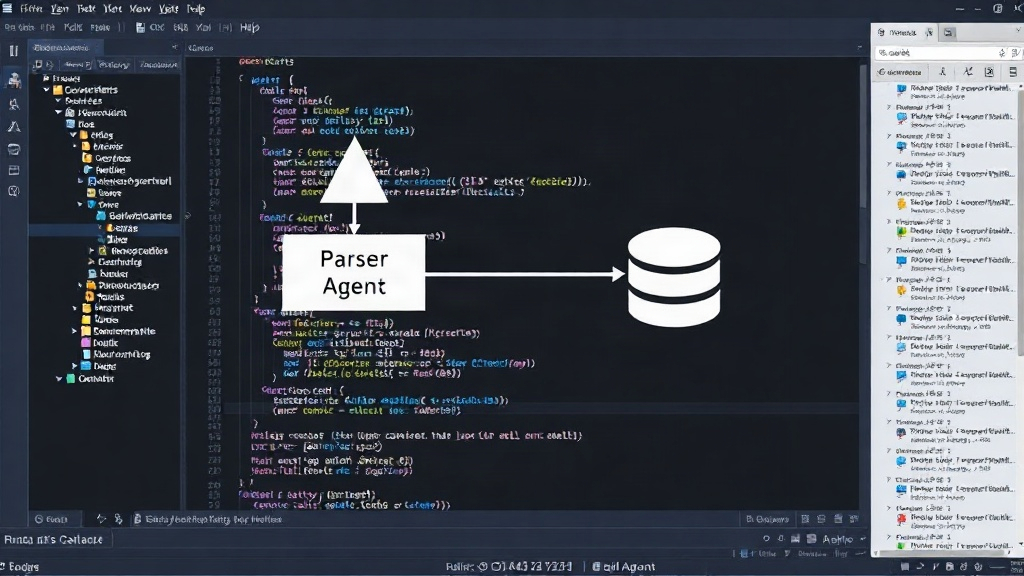
Runtime Guards: The Dynamic Sentinel
Runtime guards offer a more adaptive approach. Instead of analyzing the SQL code in isolation, they observe its behavior during execution. This allows them to catch issues that static analysis would miss. Examples include:
- Excessive row scans: Detecting queries that scan millions of rows unnecessarily.
- Long execution times: Identifying queries that exceed a predefined latency threshold.
- Resource contention: Monitoring for queries that hog CPU or memory.
- Data integrity violations: Catching attempts to modify data in unexpected ways, even if syntactically correct.
If parser gates are the bouncers, runtime guards are like security cameras and on-site security personnel monitoring activity within the club. They can identify a patron causing trouble, even if they were allowed in initially. For agent-written SQL, this is crucial. An agent might generate an UPDATE statement that, due to current data distribution, results in an accidental full table scan. A runtime guard, observing the query's slow progress and massive row read count, can terminate it before it impacts other critical operations or incurs significant costs.
The Limitations of Each Approach
Neither parser gates nor runtime guards are perfect on their own. Parser gates can be bypassed or prove insufficient for complex queries. An agent could generate syntactically correct SQL that is still logically flawed or performance-prohibitive. For instance, a query might correctly join two tables, but if one table is massive and the join condition is poor, the parser gate won't flag it. Conversely, runtime guards can be reactive. They only intervene after a query has begun executing and potentially caused some level of disruption or cost. Tuning runtime guard thresholds can also be challenging, leading to either too many false positives (blocking legitimate queries) or too many false negatives (letting bad queries through).
The incident described at the beginning exemplifies this. The query likely passed a basic parser gate, but its lack of a key predicate and its sequential scan nature only became apparent and problematic during runtime. The runtime guard, if present and adequately configured, could have caught the thirty-one-second block. However, if the guard's threshold was set too high, or if it was not monitoring UPDATE statements with full table scans, it would fail.
A Combined Strategy for Agent-Written SQL
The most effective approach is a layered defense, combining both parser gates and runtime guards. This strategy acknowledges that agent-generated code requires a multi-faceted safety net. The workflow would look something like this:
- Agent Generates SQL: The AI agent produces a SQL statement.
- Parser Gate Check: The SQL first passes through static analysis. This gate enforces syntax, schema, basic predicate rules, and blocks obviously dangerous commands. If it fails here, the agent is prompted to regenerate.
- Staging/Test Execution: If the SQL passes the parser gate, it's executed in a staging or testing environment. This is where more sophisticated static analysis can occur, potentially including query plan analysis.
- Runtime Guard Monitoring: For critical or production deployments, the SQL is then subject to runtime guards. These guards monitor execution time, resource usage, and row scans. They can set strict limits.
- Production Deployment: Only after passing all preceding checks is the SQL deployed to production. Even then, continuous monitoring is essential.
This layered approach ensures that obvious errors are caught early by parser gates, while potential runtime issues are contained by dynamic guards. It's akin to having both building codes (parser gates) and regular safety inspections (runtime guards) to ensure structural integrity.
The Path Forward: Reproducible Workflows
The critical takeaway is not just about choosing between two mechanisms, but about implementing a reproducible review workflow. This workflow should be automatable and require no production credentials for initial validation. For developers and teams using SQL agents, this means:
- Defining Clear Rules: Establish explicit policies for what constitutes acceptable SQL, both statically and dynamically.
- Automating Checks: Integrate parser gates into CI/CD pipelines and consider tools that can simulate or analyze query plans without live execution.
- Configuring Runtime Guards: Set up and rigorously test runtime guards in non-production environments, tuning thresholds based on historical data and anticipated workloads.
- Continuous Monitoring: Implement robust logging and alerting for production SQL execution, allowing for rapid detection of anomalies.
By adopting a dual-layered security strategy, organizations can harness the power of agent-written SQL while mitigating the risks of costly outages and data integrity issues. The debate isn't about picking one guard; it's about understanding how to deploy both effectively.