%22%20%2F%3E%0A%20%20%3C%2Fsvg%3E)
The Real Bottleneck: Data Aggregation, Not Prose
The common complaint about AI summarization is that it's good at summarizing but bad at judgment. While this is often true, it fundamentally misunderstands the core challenge of generating effective sprint reviews. The real hurdle isn't crafting eloquent prose; it's the laborious process of data aggregation. Developers spend far more time pulling information from disparate sources than they do actually writing the review.
Consider the typical sprint review preparation. A developer must consult multiple platforms: GitHub for what shipped versus what remains open, Slack for critical incident discussions that never spawned a formal ticket, and internal ticketing systems for linear progress tracking. Each of these sources requires manual extraction and synthesis. This is not a task that a smarter language model, confined to a single data stream, can solve. A more powerful AI doesn't magically gain the ability to cross-reference a Slack channel with a Jira board and a GitHub commit log simultaneously.
The fundamental issue is that current AI summarization tools operate in silos. They can process text from one source exceptionally well, but they lack the contextual understanding to connect data points across different systems. A more intelligent model might write a better summary of a single GitHub commit, but it cannot infer that a specific Slack conversation directly relates to a bug ticket that was never filed, or that a particular commit addresses a point raised in a historical incident discussion.
Bridging the Gap: Unified Data Access
The breakthrough for effective sprint reviews comes not from AI model upgrades but from data integration. The critical shift involves moving the review generation process to a platform that can access and process data from multiple sources concurrently. When a tool can read from GitHub, Slack, and ticketing systems simultaneously, it can begin to stitch together a coherent narrative. This unified view allows the system to identify connections, track deploy statuses, and correlate discussions with actual code changes.
The impact of such integration is not necessarily on the *quality* of the prose, but on the *timeliness* and *completeness* of the review. Instead of spending hours manually collating data, a developer can leverage a tool that presents a drafted review, complete with deploy statuses already integrated. This drastically reduces the time spent on manual data pulling, freeing up the developer to focus on refining the narrative and adding critical judgment, rather than just assembling the facts.
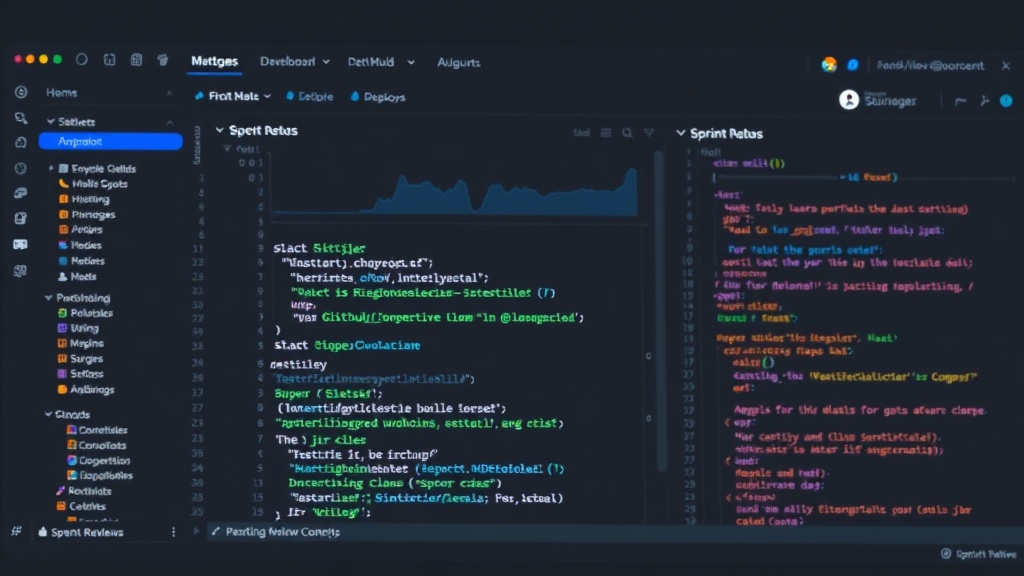
The key differentiator is having a system that can understand the *relationships* between data points across different tools. A model that sees a deployment status in GitHub and a related discussion in Slack, and then correlates it with a ticket in Jira, provides far more value than a model that can only summarize the text within Slack. This requires an architectural approach that prioritizes data connectors and APIs over raw linguistic prowess.
The Developer Experience Dividend
For developers, this shift means transforming a dreaded, time-consuming chore into a streamlined process. The frustration of sprint reviews stems from the friction of data retrieval, not the act of writing itself. By automating the data stitching, the time commitment plummets. What used to be an hour of pulling and twenty minutes of writing can become minutes of review and minor edits.
This also has implications for accuracy. Manual data aggregation is prone to human error and oversight. A developer might miss a critical Slack thread or misinterpret a commit message. A system designed for data integration can provide a more comprehensive and accurate picture, reducing the chances of overlooking key developments or issues. The approval step becomes crucial here; it allows human judgment to be applied to the automatically generated draft, ensuring that the final output is both accurate and insightful.
The true value proposition of AI in this context lies not in replacing human writers, but in augmenting their ability to access and interpret information. It's about building tools that act as intelligent data aggregators, providing a foundation upon which developers can easily build accurate and timely sprint reviews. The focus must shift from 'smarter writing' to 'smarter data connection'.
Beyond Sprint Reviews: A Broader Data Challenge
This problem extends beyond sprint reviews. Many knowledge work tasks involve synthesizing information from disparate systems. Project status reports, incident post-mortems, and even internal documentation often suffer from the same data aggregation bottleneck. The solution is analogous: build platforms that can ingest and correlate data from multiple sources, providing a unified view that humans can then interpret and act upon.
The AI revolution is not just about more powerful models; it's about smarter data pipelines and more effective integration strategies. For companies struggling with the administrative overhead of reporting and documentation, the path forward involves investing in tools that can bridge the gaps between their existing software stack. The intelligence isn't solely in the LLM; it's in the architecture that feeds it.