SpikeForge Decouples for Enhanced Modularity
SpikeForge, initially conceived as a monolithic Python toolkit for building and testing spiking neural networks (SNNs), has undergone a significant architectural transformation. In its latest release cycle, the project has intentionally moved away from a single, large codebase. It now operates as a collection of separate, yet interconnected, packages and applications. This strategic decoupling includes the core toolkit, target adapters, a model hub, and the SpikeForge Dashboard, each now advancing independently.
This architectural shift is more than just a refactor; it represents a fundamental change in how the project is developed and consumed. By segmenting the codebase, the development team aims to improve maintainability, accelerate release cycles for individual components, and provide a more streamlined experience for users who may only need specific parts of the ecosystem.
The core project, now encompassing releases 0.4.0 and 0.5.0, has laid the groundwork for this modular approach. Smaller, more focused package releases are now standard, making the entire ecosystem more accessible and easier to integrate into existing workflows. Significant improvements have been made to the event path, which now features a proper train/test split. Quantization work has been integrated into the drift checks, providing more robust analysis capabilities. Furthermore, shared logging infrastructure has been established through the capsize-commons package, ensuring consistent logging across all SpikeForge components. The continuous integration (CI) pipeline has also been optimized, introducing a fast leaf lane for components that do not require the full workspace, thereby speeding up build and test cycles.
Core Toolkit and Training Workflow
The primary spikeforge package now serves as the central hub for training and experiment workflows. This component is responsible for the core logic of building and testing SNNs. Developers can leverage this package to define network architectures, configure training parameters, and manage experimental runs. The focus here is on providing a stable and powerful foundation for SNN research and development. The separation ensures that updates to the training engine do not necessarily impact the deployment or model sharing aspects of the project, allowing for more targeted development and testing.
Target Adapters and Conversion Utilities
Complementing the core toolkit, the spikeforge-targets package addresses the critical need for compatibility with various hardware and software platforms. This package contains target-specific conversions, enabling users to adapt their SNN models trained within SpikeForge for deployment on different systems. This might include converting models to specific hardware accelerators, optimized inference engines, or even different simulation environments. This modularity is crucial for the practical application of SNNs, as it allows researchers and engineers to bridge the gap between development and deployment without extensive manual re-engineering of their models.
Model Hub for Sharing and Discovery
The spikeforge-hub package introduces a dedicated space for sharing and discovering pre-trained SNN models. This component aims to foster a collaborative environment within the SNN community. Researchers can upload their trained models, along with their configurations and performance metrics, making them accessible to others. Conversely, users can browse and download models that suit their specific needs, significantly reducing the time and resources required to start new projects or benchmark existing work. This model hub acts as a central repository, accelerating innovation by enabling easy access to a diverse range of SNN implementations.
SpikeForge Dashboard for Visualization and Monitoring
Rounding out the ecosystem is the SpikeForge Dashboard. This application provides a user-friendly interface for visualizing training progress, monitoring network performance, and analyzing experimental results. Instead of relying solely on command-line outputs or complex logging files, the dashboard offers an intuitive graphical representation of key metrics. This visual feedback loop is invaluable for understanding the behavior of SNNs, identifying potential issues during training, and making informed decisions about model adjustments. The dashboard is designed to work seamlessly with the other components, pulling data from experiments and models to provide comprehensive insights.
Practical Implications of the Decoupling
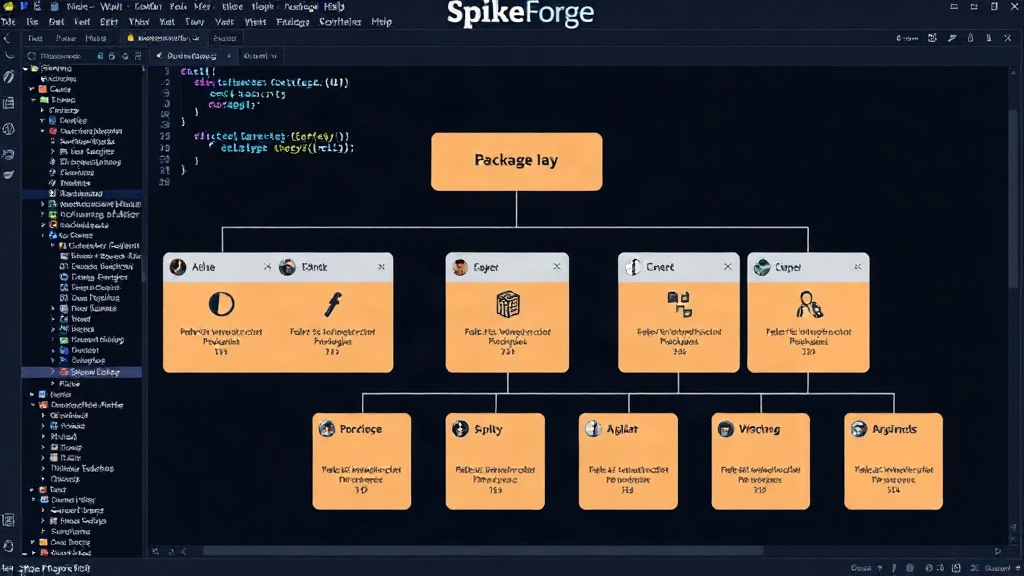
The decision to decouple SpikeForge into these distinct components offers several practical advantages. Developers can now install only the packages they need, reducing dependency bloat and simplifying project setup. For instance, someone solely interested in training SNNs might only install the core spikeforge package, while a user looking to deploy existing models might focus on spikeforge-targets. This granular approach also means that each component can be developed, tested, and released more rapidly and independently. The CI path, with its fast leaf lane, exemplifies this, allowing for quicker iteration on specific parts of the codebase. The overall package layout now serves as a clear map of the project's functionality, making it easier for new contributors to understand the architecture and contribute effectively. This move positions SpikeForge not just as a toolkit, but as a comprehensive and adaptable ecosystem for the SNN community.