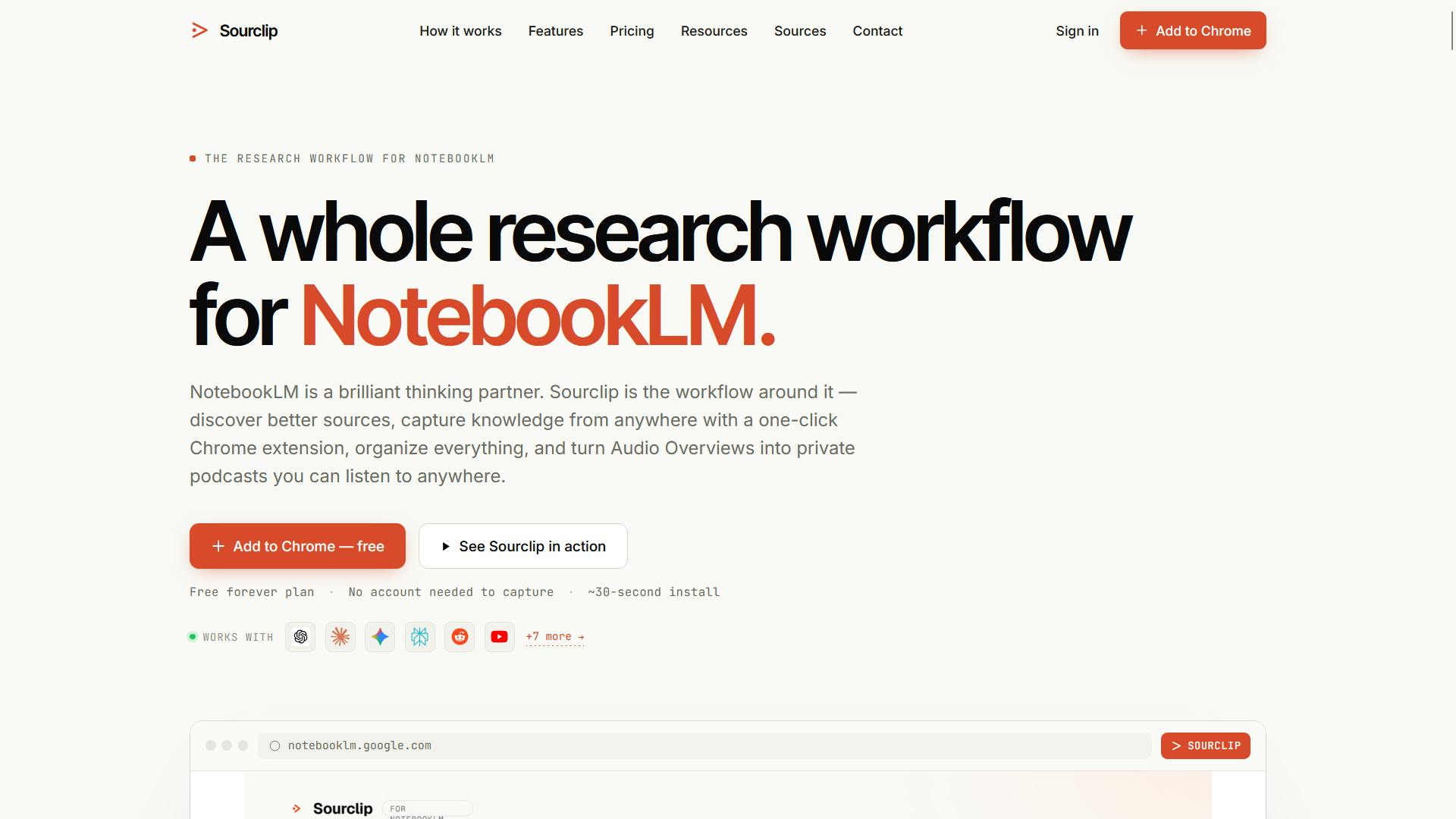
Transforming Research with Sourclip and NotebookLM
The research process, particularly for academics, students, and professionals working with large volumes of information, is often fragmented. It involves gathering sources, synthesizing notes, drafting content, and managing citations. Google's NotebookLM has emerged as a powerful tool for summarizing and interacting with documents, acting as a 'co-pilot' for understanding complex information. However, its standalone capabilities can leave users needing to bridge the gap to a complete research workflow. Enter Sourclip, a new tool designed to integrate NotebookLM into a more comprehensive research ecosystem.
Sourclip's core proposition is to extend the functionality of NotebookLM, transforming it from a powerful note-taking and summarization engine into the central hub of an end-to-end research workflow. The tool aims to address the common pain points researchers face when moving from initial document analysis to final output. By connecting NotebookLM with other critical research components, Sourclip seeks to create a more seamless and efficient experience for users.
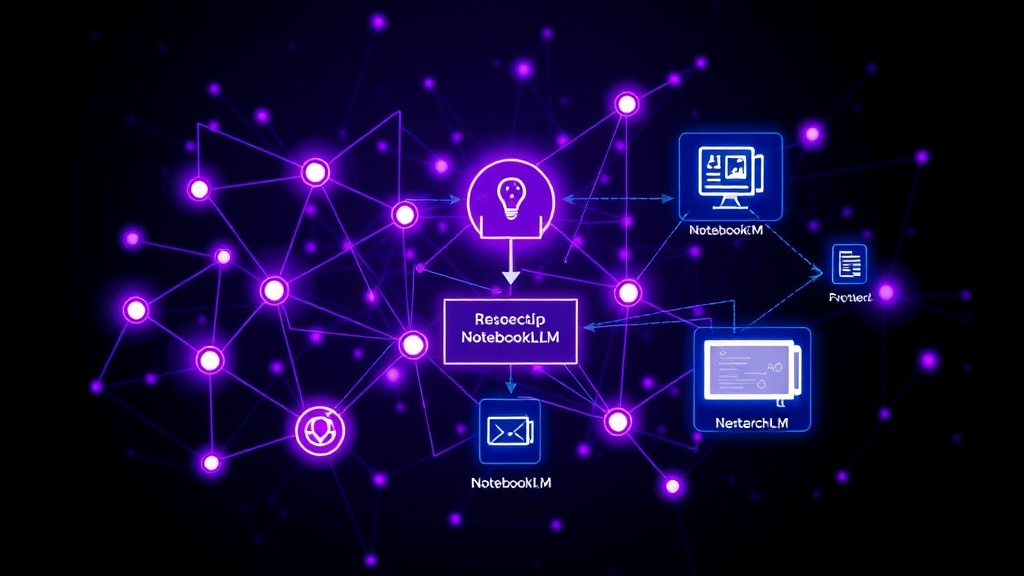
Bridging the Gap: From Notes to Output
NotebookLM excels at ingesting various document types—PDFs, text files, web pages—and allowing users to ask questions, generate summaries, and identify key themes. This capability is invaluable for quickly grasping the essence of dense material. However, the output from NotebookLM often needs to be transferred to other applications for further editing, citation management, or integration into larger projects. Sourclip steps in to automate and simplify this transition.
The tool focuses on enabling users to export their NotebookLM summaries and insights into formats compatible with popular writing and research applications. This includes direct export to note-taking apps, word processors, and potentially even citation managers. The goal is to reduce the manual effort involved in copying and pasting, reformatting, and cross-referencing information, thereby saving researchers significant time and minimizing the risk of errors.
Key Features and Workflow Enhancements
While specific technical details of Sourclip's integration are still emerging, its value proposition centers on several key enhancements to the research workflow:
- Seamless Export: The primary function is to allow users to easily export generated notes, summaries, and Q&A sessions from NotebookLM into various file formats (e.g., Markdown, TXT, DOCX). This ensures that the synthesized information is readily available for use in other contexts.
- Integration with Writing Tools: Sourclip aims to connect NotebookLM's output directly with writing environments. Imagine drafting an essay or report and pulling in synthesized research points from NotebookLM with a single click, without losing context or formatting.
- Potential for Citation Management: A significant, though not explicitly detailed, promise of such a tool would be to facilitate the integration of research notes with citation management software. This could involve exporting notes in a way that makes it easier to link back to original sources or even auto-generate preliminary citations.
- Workflow Automation: By automating the transfer of information between different stages of the research process, Sourclip reduces the cognitive load on the researcher. This allows them to focus more on critical thinking, analysis, and synthesis rather than on the mechanics of data management.
The tool is positioned as a workflow enhancer, not a replacement for NotebookLM or other specialized research tools. Instead, it acts as an intelligent connective tissue, making the entire research pipeline more fluid. For instance, a user might upload a dozen research papers to NotebookLM, generate detailed summaries and answer specific questions about each. Sourclip would then allow them to export these synthesized insights into a document where they can begin constructing arguments, ensuring that the foundational research is efficiently captured and organized.
The Future of AI-Assisted Research
Sourclip's emergence highlights a growing trend in the AI tools landscape: specialization and integration. As individual AI tools become more powerful in their specific domains (like NotebookLM for document interaction), the next frontier is to build robust ecosystems that allow these tools to communicate and work together. This approach mirrors how developers already integrate various services and APIs to build complex applications.
The success of Sourclip will likely depend on its ability to offer reliable and versatile export options, intuitive integration with popular research software, and a clear demonstration of time savings for its users. If it can effectively bridge the gap between AI-powered document analysis and the practical demands of scholarly and professional writing, it could become an indispensable part of many researchers' toolkits. The challenge for Sourclip is to remain adaptable as both NotebookLM and the broader research software landscape evolve, ensuring its integrations remain relevant and functional.
For anyone who has spent hours manually transferring notes or struggling to connect AI-generated summaries with their writing projects, Sourclip offers a compelling vision for a more integrated and less tedious research future.