
From Local Machine to the Cloud: Song Lingo's Next Step
The AI-powered application Song Lingo, which transforms YouTube music video URLs into transcribed lyrics with furigana, translations, and grammar notes, is making a significant leap from local development to cloud deployment. Developed by Evan Lin, the tool initially ran exclusively on his personal computer. The primary objective of this transition is to enable access on mobile devices, breaking the confinement of a single machine.
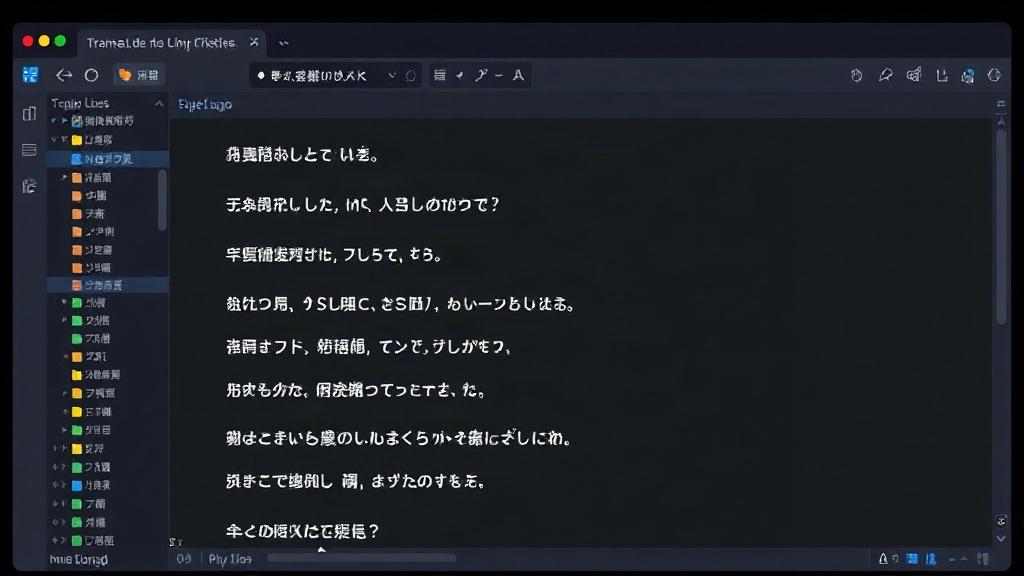
Song Lingo's core functionality involves processing user-provided YouTube MV URLs. The application then leverages Gemini 3.8 Flash TTS to transcribe the lyrics. Beyond mere transcription, it enriches the output by adding furigana annotations for Japanese text, providing translations, and offering detailed grammar notes. Finally, a voice designed through careful voice design principles reads these lyrics aloud, line by line. This rich feature set, particularly the inclusion of full lyrics and translations on a single page, presents unique considerations for deployment and access control.
Defining 'Private': Security and Access Control
A critical aspect of deploying a personal project like Song Lingo is defining the scope of its privacy. While many side projects might simply be embarrassing if exposed publicly, Song Lingo carries a different implication. The website contains full lyrics and translations, which, if accessible to anyone, could inadvertently reveal personal usage patterns or preferences. The developer grappled with the question: How accurate does "Only I can see it" need to be?
The initial approach to cloud deployment often involves public accessibility. However, given the personal nature of the data processed and displayed by Song Lingo, a more secure strategy was necessary. The goal was not to build a public service but to create a private tool for personal use, accessible from any device. This distinction is crucial for determining the appropriate deployment architecture and security measures. The decision was made to deploy to Google Cloud Run, a serverless compute platform that allows for the deployment of containerized applications.
Containerizing the Application: Dockerizing Song Lingo
Before deploying to Cloud Run, the Song Lingo application needed to be containerized. This involves packaging the application code, its dependencies, and runtime environment into a Docker image. The process typically starts with a base image, such as Python's slim distribution, and then layers on the necessary libraries and application files. A Dockerfile is created to define these steps. Key considerations include ensuring that all dependencies are correctly installed and that the application can be executed within the container's isolated environment.
The application's structure, likely involving a web framework like Flask or FastAPI, dictates how the server is started within the container. The Dockerfile specifies the command to run the application, often using a production-ready WSGI server like Gunicorn. This container image is then pushed to a container registry, such as Google Container Registry (GCR) or Artifact Registry, making it available for Cloud Run to pull and deploy.
Deploying to Cloud Run: Serverless and Scalable
Google Cloud Run offers a serverless environment where developers can run stateless containers. It automatically scales the application based on incoming requests, from zero to a configured maximum. This is ideal for a personal project that might have sporadic usage. The deployment process involves pointing Cloud Run to the container image in the registry. Cloud Run then provisions and manages the underlying infrastructure, abstracting away the complexities of server management.
One of the key advantages of Cloud Run is its ability to manage ingress traffic and provide a public URL for the application. For a private application, however, this public URL needs to be secured. Cloud Run offers several options for access control, including IAM-based authentication and VPC Service Controls. For a project intended for personal use only, the simplest approach might involve restricting access through network controls or relying on a strong, unique URL that is not publicly discoverable. The goal is to make it accessible to the developer, but not easily found or used by others.
Addressing the 'Full Lyrics' Challenge
The unique characteristic of Song Lingo—displaying full lyrics and translations on a single page—adds a layer of complexity to its deployment. While Cloud Run can handle serving static content, the dynamic generation of lyrics and translations requires careful management of resources and potential API calls. The Gemini TTS API, for instance, might have rate limits or costs associated with its usage, which need to be factored into the operational cost, even for a personal project.
Ensuring that the application remains performant and cost-effective on Cloud Run involves optimizing the container image size, managing dependencies efficiently, and potentially caching results where appropriate. For a private application, the focus is less on high availability and massive scalability, and more on reliable access and predictable costs. The developer's choice of Cloud Run suggests a balance between ease of deployment, scalability on demand, and cost efficiency for a service that doesn't require constant, high-volume operation.
The Path Forward: Personal Tools in the Cloud
The deployment of Song Lingo to Cloud Run is a practical example of how developers can take their local AI and web applications and make them accessible across devices. It demonstrates a clear path for transforming personal projects into functional tools without the overhead of managing dedicated servers. The process involves containerization, leveraging serverless platforms, and thoughtfully considering access control for private applications. This move from local execution to a cloud-hosted solution ensures that Song Lingo can now be used conveniently on a phone, fulfilling the developer's primary objective and paving the way for future enhancements or similar personal AI projects.