
Jango Tackles Multi-User Testing with AI Agents on macOS
Jango, a company focused on developer tooling, has released a new Mac application designed to address a persistent challenge in software development: testing multi-user workflows. The app allows developers to simulate scenarios involving multiple distinct user accounts, each with its own browser instance, account credentials, defined goals, and independent memory. This capability is crucial for applications where user interactions, state management, and permissions are critical, such as social media feeds, group chat applications, collaborative platforms, marketplaces, and order books.
The core innovation lies in its ability to mimic the complexities that arise when several users interact simultaneously within an application. Traditional end-to-end tests often fall short here, as they typically focus on single-user journeys or fail to accurately replicate the nuanced state and permission issues that only surface under concurrent user activity. Jango's approach provides a more realistic testing environment for these scenarios.
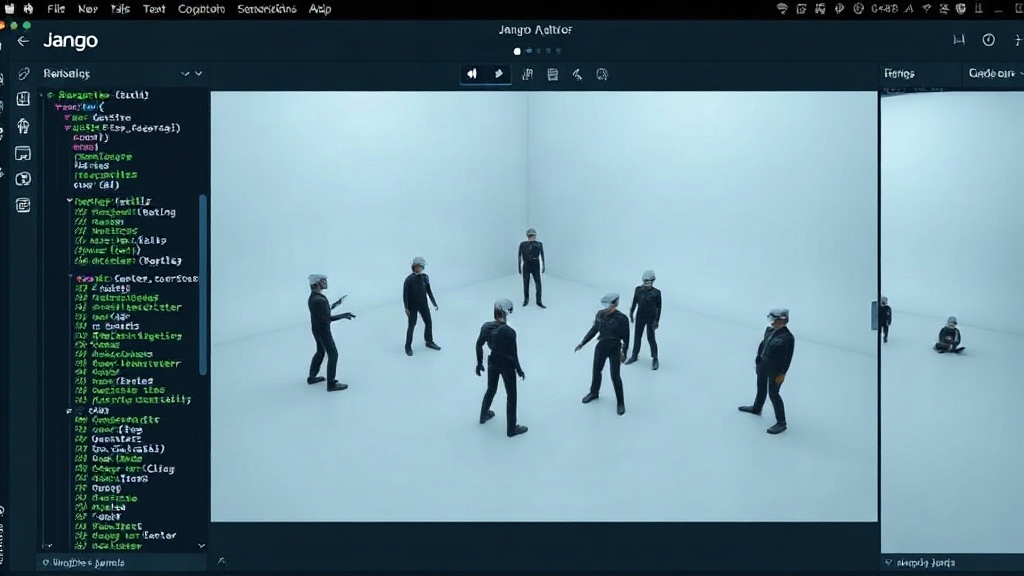
Simulating Diverse User Behaviors
Each AI participant in a Jango test run is configured with a unique profile. This includes a dedicated browser session, ensuring isolation of cookies, local storage, and session data. Furthermore, each agent is assigned a specific account, a clear objective or goal, and a distinct memory state. This granular control over individual agents allows developers to meticulously craft and test intricate multi-user interactions.
For instance, testing a social media feed requires simulating users who are posting, liking, commenting, and following. Jango's agents can be programmed to perform these actions concurrently. In a collaborative document editing scenario, agents could represent users simultaneously typing, making edits, and encountering potential conflicts. For an e-commerce marketplace, agents could act as both buyers and sellers, testing order placement, payment processing, and inventory management under load.
The practical implications are significant. Developers can now proactively identify and resolve issues related to race conditions, data consistency, access control violations, and user experience degradation that might otherwise only surface in production. This shift-left approach to testing complex user interactions can save considerable time and resources, preventing costly bugs and improving the overall quality and reliability of the application.
Interactive Testing and Logging
Jango's application offers several modes for observing and guiding test runs. Developers can watch the AI agents perform their tasks in real-time, directing their actions as needed. It's also possible to join a run as a human participant, experiencing the simulated multi-user environment firsthand. This interactive element provides immediate feedback and allows for exploratory testing alongside automated scenarios.
Post-run analysis is facilitated by comprehensive logging. Each test execution generates detailed action logs, which record every step taken by each AI agent. This is complemented by automated checks, providing pass/fail reports for predefined assertions, and screenshots that capture the state of the application at critical moments. The system also stores reusable app knowledge, potentially allowing agents to learn from past runs or for developers to leverage insights across different test suites.
The application supports integration through a Command Line Interface (CLI) and a Machine Control Protocol (MCP). This enables developers to incorporate Jango tests into their existing CI/CD pipelines and automation frameworks, ensuring that multi-user flow testing becomes a standard part of the development lifecycle.
Current Limitations and Future Outlook
While Jango's new Mac app offers a powerful solution for multi-user testing, it currently has a notable limitation: it is exclusively a local application for macOS. This means that development teams operating on other platforms, such as Windows or Linux, or those with stringent requirements for centralized test data management and control, will need to find alternative solutions or await future cross-platform releases.
The current macOS-only availability might also pose challenges for larger teams where standardized testing environments are crucial. Managing and synchronizing test runs across a distributed team using only a local Mac application could introduce logistical hurdles. Furthermore, organizations with strict data privacy or compliance regulations regarding test data might find a local setup insufficient, preferring server-based or cloud-hosted testing solutions.
Despite these limitations, the launch signifies an important step in developer tooling. The focus on simulating multi-user states and permissions directly addresses a gap in conventional testing strategies. As AI agents become more sophisticated and capable of complex task execution, tools like Jango will become increasingly vital for ensuring the robustness of modern, interactive applications. The company's next steps will likely involve expanding platform support and enhancing the AI capabilities of its agents.