The Challenge of On-Chain Randomness
Building provably fair systems on blockchains requires a robust source of randomness. When developing a fair selection system on Solana, the immediate thought for many, myself included, was to leverage a Verifiable Random Function (VRF). VRFs are designed to produce unpredictable random numbers that can be cryptographically proven after the fact. Services like Switchboard and ORAO offer VRF solutions that address the core fairness requirement: randomness that is unpredictable before it's generated and verifiable afterward.
However, the practical implementation of VRFs on Solana, or any blockchain for that matter, introduces several complexities. These systems typically rely on oracles to fetch and broadcast the random output. This dependency adds a layer of infrastructure that can be a single point of failure or introduce latency. Furthermore, each VRF request usually incurs a fee, which can become a significant operational cost for applications that require frequent randomness. Perhaps most critically, while VRFs offer cryptographic proofs, the actual verification of these proofs is often beyond the technical reach of the average user. Most participants rely on the trustworthiness of the VRF provider rather than performing the verification themselves. This reliance on trust undermines the very principle of provable fairness that blockchain systems aim to embody.
My goal was to create a system where any participant, even someone with no deep understanding of cryptography, could verify the fairness of the random selection directly in their browser's developer console. This required a different approach than the standard VRF model.
Slot Hashes: A Native Solution
Solana's architecture provides a unique primitive that can be repurposed for randomness: the `SlotHashes` sysvar. This system variable stores a list of recent slot hashes. A slot hash is a cryptographic hash of the block data for a given slot (Solana's term for a block). Because block production on Solana is deterministic and has a clear ordering, these slot hashes, when combined with a commit-reveal scheme, can serve as a source of unpredictable, verifiable randomness.
The commit-reveal mechanism works in two phases. In the first phase, participants commit to their actions or choices without revealing them. This commit is typically a hash of their chosen secret and other relevant data. In the second phase, participants reveal their secrets. The randomness is then derived from a combination of these revealed secrets and a source of unpredictable data that is only available after the commitments have been made. In this case, the `SlotHashes` sysvar provides that unpredictable data.
By using the `SlotHashes` sysvar, the randomness generation is tied directly to the Solana blockchain's state. This means the randomness is:
- On-Chain Native: No external oracle or third-party service is required, reducing dependencies and potential points of failure.
- Verifiable by Anyone: The slot hashes are publicly available on the blockchain. Anyone can query the `SlotHashes` sysvar and use the same deterministic algorithm to derive the random outcome. This makes the process transparent and auditable by any user.
- Cost-Effective: Accessing sysvars on Solana is generally free or has negligible transaction costs, unlike the per-request fees associated with VRF services.
The Commit-Reveal Scheme with Slot Hashes
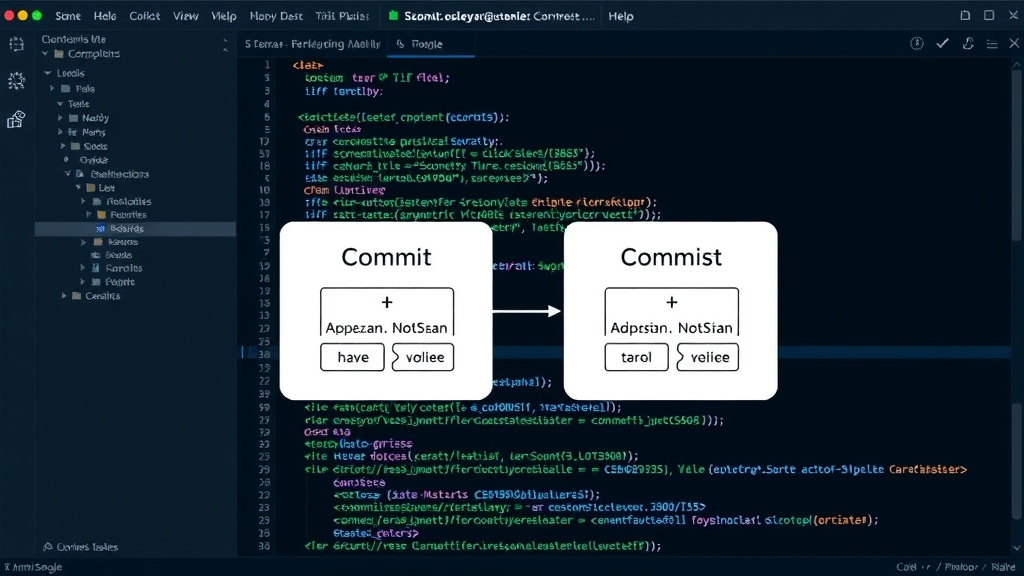
To implement a fair selection system using slot hashes, I adopted a commit-reveal scheme. Here's how it functions:
- Commitment Phase: Each participant generates a secret value and submits a hash of this secret, along with any other necessary data (like their participant ID), to the smart contract. This hash serves as their commitment. They do not reveal their secret at this stage.
- Reveal Phase: After a predetermined period, or after a certain number of blocks have passed, participants reveal their original secret values.
- Randomness Generation: The smart contract then retrieves the latest `SlotHashes` sysvar. It uses a deterministic algorithm to combine the revealed secrets from all participants with the data from the `SlotHashes` sysvar. This combination produces the final, unpredictable random outcome. The key is that the `SlotHashes` sysvar is only finalized and available at a specific point in time, making it impossible to predict the exact hash values that will be used when participants are making their commitments.
- Winner Selection: Based on the generated random number and the participants' data, the smart contract selects the winner(s).
The fairness comes from the fact that participants commit to their secrets before the final randomness is determined by the `SlotHashes` sysvar. They cannot know the outcome beforehand to alter their commitment. Conversely, the randomness source itself (`SlotHashes`) is unpredictable until it's finalized on-chain. Anyone can re-run the entire process with the on-chain data to verify that the outcome was fair and not manipulated.
Trade-offs and Considerations
While the slot hash approach offers significant advantages in terms of accessibility and cost, it's not without its trade-offs compared to dedicated VRF solutions:
- Entropy Source: The randomness derived from `SlotHashes` is tied to the block production of Solana. While generally unpredictable, it's theoretically possible for validators to influence block contents to some degree. However, the `SlotHashes` sysvar aggregates hashes from many recent slots, making it extremely difficult for any single validator or small group of validators to consistently manipulate the outcome for a commit-reveal scheme. It's more about securing a specific future hash value than influencing the entire chain's state.
- Complexity for Developers: Implementing a secure commit-reveal scheme requires careful programming to prevent vulnerabilities, such as participants failing to reveal their secrets or the contract logic being flawed. It demands a deeper understanding of the commit-reveal pattern and Solana's sysvar system than simply integrating a VRF oracle.
- Latency: The commit-reveal scheme inherently involves at least two distinct phases (commit and reveal). This means that the final outcome is not available immediately after the commit phase, introducing a delay that might not be suitable for all applications. VRF services, while requiring oracle round-trips, can sometimes provide a faster single-shot random number if latency is the absolute priority and trust in the oracle is acceptable.
For applications prioritizing transparency, user verifiability, and cost-efficiency, the slot hash method presents a compelling alternative. It democratizes fairness verification, allowing any user to audit the randomness without needing specialized tools or trusting external parties. The trade-off is a slightly more complex implementation and a two-phase process, but for many use cases, this is a worthwhile exchange for true, verifiable, on-chain fairness.