
The Shifting Sands of Software Economics
For years, the narrative around software's economic advantage was clear: marginal cost of reproduction approached zero. Once built, shipping another copy of software cost virtually nothing. This fundamental truth underpinned the growth of SaaS, open-source, and the digital economy. However, recent trends, particularly the escalating costs of cloud infrastructure and the emergent capabilities of AI, are challenging this long-held assumption, forcing a re-evaluation of software's unit economics.
The core of the issue lies in the increasing operational expenses associated with delivering software. While development costs remain significant, the cost of hosting, running, and scaling software in the cloud has become a substantial and often unpredictable line item. This is not a new phenomenon; cloud providers have steadily increased prices or reduced the generosity of free tiers over time. Yet, the acceleration of AI adoption and the associated compute demands are amplifying this trend dramatically. Companies are finding that the very tools enabling new levels of innovation and efficiency also come with a hefty price tag.
The Cloud Cost Conundrum
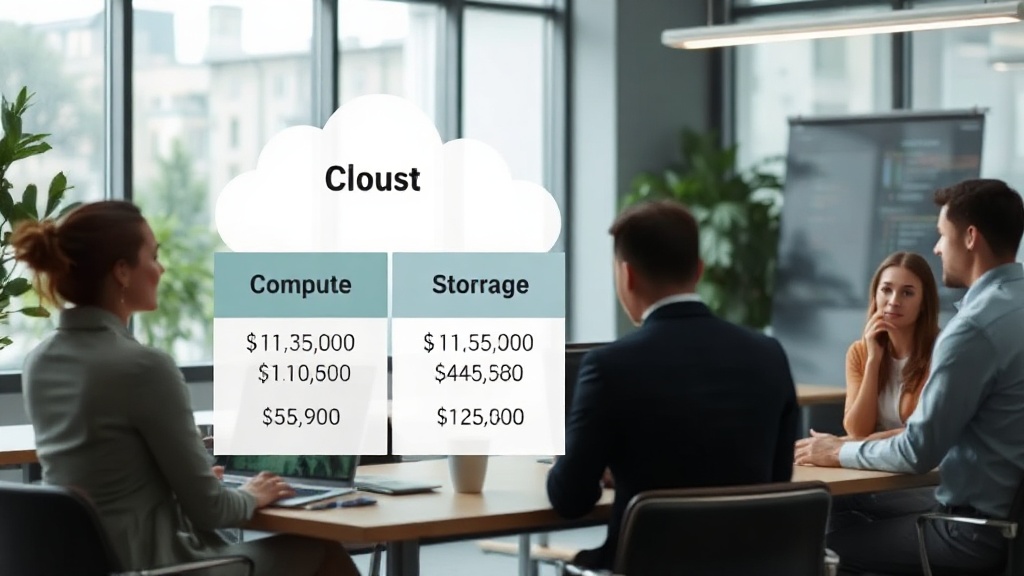
The public cloud, once hailed as the ultimate cost-saver, is now a significant driver of increased operational expenditure for many software companies. As applications become more complex and data-intensive, the demand for compute, storage, and network resources escalates. This demand directly translates into higher bills from providers like AWS, Azure, and GCP. While these platforms offer immense scalability and flexibility, their pricing models can become a drag on profitability, especially for businesses with high-volume, low-margin services. The ability to simply 'throw more servers at the problem' is becoming economically untenable for many.
This isn't just about raw server costs. It extends to managed services, data transfer fees, and specialized hardware like GPUs, which are essential for modern AI workloads. The economics of running a large language model inference service, for instance, are vastly different from serving a simple web application. The sheer energy consumption and specialized hardware requirements mean that the marginal cost of serving one more user or processing one more request can be orders of magnitude higher than previously imagined for traditional software.
AI's Dual Impact: Efficiency and Expense
Artificial intelligence presents a fascinating paradox in this economic shift. On one hand, AI is poised to dramatically improve developer productivity. AI-powered coding assistants, automated testing frameworks, and intelligent debugging tools can accelerate development cycles, reduce the need for extensive manual labor, and potentially lower the upfront engineering investment. This could, in theory, drive down the cost of creating software.
However, the flip side is the immense cost of training and running AI models themselves. The compute power required for advanced AI, particularly deep learning, is staggering. This necessitates significant investment in specialized hardware (like NVIDIA GPUs) and the associated cloud infrastructure. For companies embedding AI directly into their products or relying on AI for core operations, these infrastructure costs can dwarf traditional software operational expenses. A company might save developer hours through AI, only to spend far more on AI inference costs per user.
Consider the developer experience: AI can help write code faster, but the infrastructure to run that code, especially if it involves AI features, is becoming more expensive. This creates a tension where efficiency gains in one area can be offset or even overwhelmed by cost increases in another. The economic model is no longer a simple extrapolation of past trends. It's a complex interplay between human capital, AI-driven productivity, and escalating infrastructure demands.
The Rise of Specialized Infrastructure and Optimization
In response to these evolving economics, a new wave of innovation is emerging. Companies are exploring more specialized infrastructure solutions. This includes optimized hardware, serverless architectures tailored for specific workloads, and even on-premise or hybrid cloud deployments where cost control is paramount. The focus is shifting from simply scaling up to scaling efficiently, understanding the precise cost drivers of each component of the software stack.
Furthermore, the software itself is being re-architected with cost-efficiency in mind. This means more aggressive resource management, intelligent caching strategies, and a deeper understanding of data access patterns to minimize expensive I/O operations and network transfers. Techniques like edge computing, where processing is moved closer to the user, are also gaining traction as a way to manage latency and reduce reliance on centralized, costly cloud resources.
The rise of efficient AI models and inference techniques is also critical. Researchers and engineers are developing smaller, more specialized models that require less compute power, as well as techniques to optimize model execution. This could help to democratize AI's benefits without incurring prohibitive operational costs. Think of it less like running a supercomputer for every task and more like having a highly efficient, specialized tool for each job. This optimization effort is becoming as crucial as the initial product development.
What This Means for the Future
The era of near-zero marginal cost for software delivery is being redefined. While software's inherent value proposition remains strong, the operational costs of delivering it are becoming a more significant factor in business models. Companies that can effectively manage their cloud spend, leverage AI for genuine efficiency gains without runaway infrastructure costs, and innovate in cost-effective delivery mechanisms will have a distinct advantage.
For founders, this means a more rigorous focus on unit economics from day one. The ability to accurately forecast and manage infrastructure costs, particularly as AI integration deepens, will be critical for sustainable growth. For developers, understanding the cost implications of their architectural choices and code efficiency will become increasingly important. The economic story of software is not over; it's entering a more complex, and perhaps more interesting, chapter.