
The Dependency Avalanche
The modern web development landscape is littered with complexity. Shipping a web application, once a relatively straightforward affair, now routinely involves a multi-stage build pipeline. Developers contend with bundlers, CSS processors, linters, and CI/CD configurations, each adding its own layer of dependencies and versioning requirements. This proliferation of tools, while solving specific problems, creates an ecosystem where every dependency is a potential point of failure. A version mismatch, a deprecated package, or an unexpected configuration change can cascade into build failures and deployment nightmares.
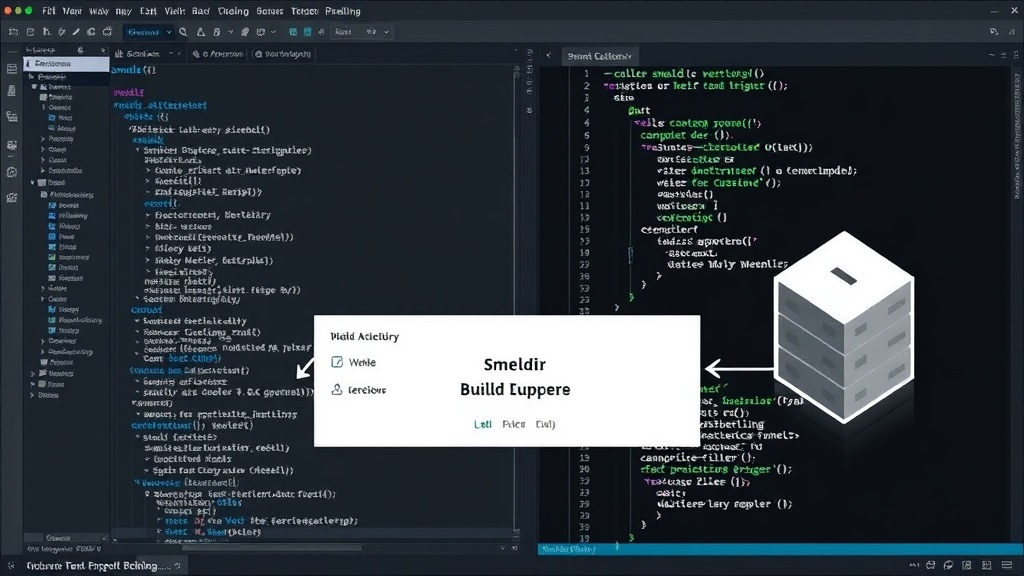
This is the problem Smeldr, a new player in the web application deployment space, is actively choosing to sidestep. Instead of embracing the ecosystem's complexity, Smeldr's founders made a deliberate decision: no build pipeline. Their approach is starkly simple: the entire application, including its dependencies, is compiled into a single, static binary using the standard Go compiler (`go build`). This single binary is the sole artifact shipped and deployed, drastically reducing the surface area for build-related failures.
This philosophy is a radical interpretation of the Keep It Simple, Stupid (KISS) principle. While many projects pay lip service to simplicity, Smeldr takes it to an extreme. Tools like Webpack for module bundling and PostCSS for CSS processing, while powerful, each introduce configuration overhead and potential version conflicts. Smeldr's approach bypasses these entirely. The build tool is `go build`, and the output is a single binary. That's it. The pipeline ends there.
Rethinking Deployment
The implications of this approach are significant. For developers, it means a dramatically simplified workflow. Instead of managing intricate `package.json` files, Webpack configurations, and CI YAMLs, the focus shifts to writing Go code. The deployment process becomes a matter of copying a single executable file to the target server and running it. This eliminates entire classes of errors related to environment mismatches, dependency conflicts, and incorrect build orderings. It’s a return to a more fundamental, direct method of application delivery.
The `go build` command produces a statically linked executable. This means all necessary libraries and runtime components are bundled within the binary itself. There are no external runtime dependencies to manage on the deployment server, beyond the operating system and basic system libraries. This isolation is key to Smeldr's promise of stability. It’s akin to shipping a self-contained, pre-fabricated house unit rather than a pile of lumber, blueprints, and a list of contractors the client must now coordinate.
The Trade-offs and Target Audience
This minimalist approach is not without its trade-offs. Smeldr's target audience is likely developers who prioritize rapid deployment and stability over the flexibility offered by highly configurable, component-based front-end frameworks. For applications where a complex client-side JavaScript build process is not a core requirement, or where the front-end can be served separately (e.g., as static assets generated once), this single-binary model is highly appealing. It’s particularly well-suited for back-end services, APIs, and simpler web applications where the operational overhead of managing a complex build and deployment pipeline outweighs the benefits.
The inherent simplicity also means less customization at the build level. Developers accustomed to fine-grained control over module loading, code splitting, and advanced optimizations offered by tools like Webpack might find this approach restrictive. However, Smeldr’s bet is that for a significant segment of web development, the stability and ease of deployment offered by a single binary are far more valuable than the granular control provided by traditional pipelines. The company’s name itself, Smeldr, evoking a sense of smelting or forging into a single, strong form, reinforces this core tenet.
The decision to forgo a complex build pipeline is a bold stance in an ecosystem that often rewards the adoption of the latest tooling. By focusing on the fundamental deliverable – a working application – Smeldr aims to reduce friction and improve reliability for its users. The challenge will be in convincing developers that simplicity, when taken this seriously, can be a competitive advantage in a crowded market.