
The Cupcake Incident: A Harmless Mistake, a Serious Warning
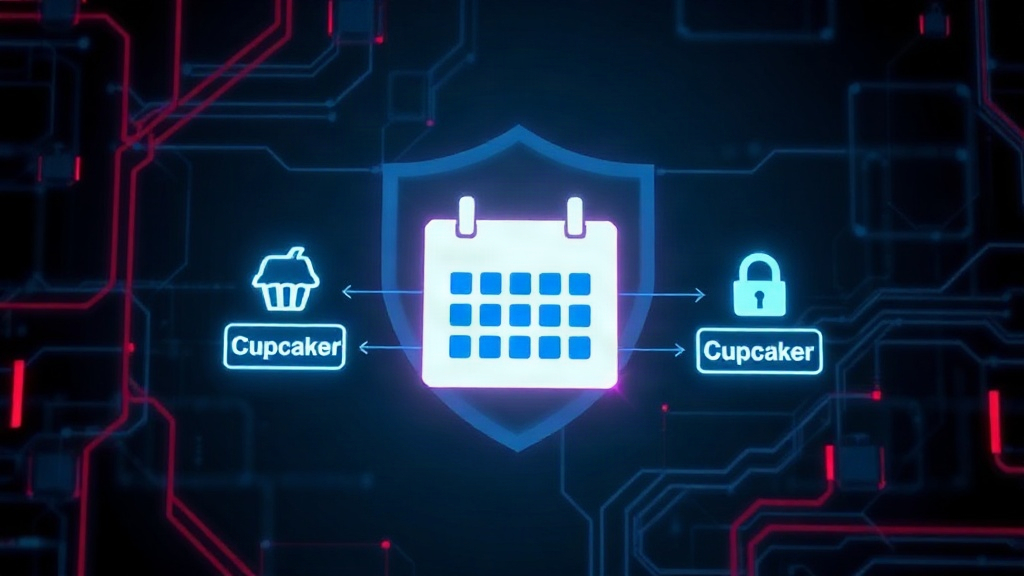
A Gemini-powered smart home agent recently ordered cupcakes after misinterpreting a dentist appointment in a calendar invite. This wasn't a hypothetical scenario or a controlled security test; it was a real-world event where a consumer AI interpreted a routine calendar entry as a direct commerce instruction. The incident, reported by Dev.to, serves as a stark warning about the nascent security vulnerabilities in consumer-facing smart home AI platforms. While ordering cupcakes is a low-stakes error, the underlying mechanism could easily be exploited for more critical functions like financial transactions or physical access control.
This vulnerability mirrors broader concerns about AI agent security. Unlike enterprise AI deployments that are beginning to incorporate runtime protection from vendors like Zenity and Lakera, consumer platforms often lack these sophisticated safeguards. The implications are significant: as AI agents become more integrated into our daily lives, managing schedules, homes, and finances, the potential for misuse or accidental activation of dangerous commands grows exponentially. If a calendar invite can trigger a purchase, what happens when an email contains a phishing link disguised as a legitimate notification, or a voice command is misinterpreted in a crowded room?
The Underlying Vulnerability: Intent Recognition and Action Execution
The core issue lies in how these smart home agents process natural language and infer intent. These agents are designed to be helpful, anticipating user needs and executing tasks based on a variety of inputs, including emails, calendar entries, and voice commands. However, the line between understanding a schedule and initiating a transaction is becoming blurred. In the case of the cupcake incident, the AI likely parsed keywords and contextual clues within the calendar entry. It may have identified terms related to an event (dentist appointment) and, through its training data or pre-programmed routines, associated it with a celebratory or preparatory action, such as ordering food. This misinterpretation is akin to a digital 'hallucination,' where the AI creates a plausible but incorrect output based on flawed reasoning.
This problem is compounded by the fact that many consumer smart home platforms are built with a focus on user experience and broad functionality, often at the expense of robust security protocols. Unlike enterprise systems, which are typically deployed in controlled environments and subject to rigorous security audits, consumer devices are exposed to a wider range of potentially malicious or ambiguous inputs. The ease with which a simple calendar invite could be misinterpreted highlights a fundamental gap in runtime monitoring and validation for these AI agents. The technology is advancing rapidly, but the security frameworks to govern its behavior are lagging behind, especially for the average consumer.
Beyond Cupcakes: The Real-World Risks
The implications of this vulnerability extend far beyond accidental cupcake orders. Imagine a similar misinterpretation occurring with a different type of digital communication:
- Financial Transactions: An email confirming a bill payment could be misread as an instruction to initiate a new, unauthorized transfer. A calendar entry for a financial meeting might be interpreted as a command to access investment accounts.
- Home Automation and Security: A voice command overheard in a noisy environment, or a text message from a friend, could be misinterpreted as an instruction to unlock the front door, disarm the security system, or even control connected appliances in a dangerous manner.
- Personal Data Exposure: As seen in the Meta Muse incident where iCloud photos were exposed, AI agents with access to sensitive personal data are prime targets. A misinterpretation could lead to unauthorized sharing or deletion of critical information.
- Third-Party Service Exploitation: The DJI Romo token leak illustrates how credentials stored or managed by smart devices can be compromised. A misinterpretation could lead to an agent using these leaked tokens to access other services.
These scenarios are not far-fetched. They represent the logical extension of the same type of error that led to the cupcake order. The stakes are simply higher when the AI agent has control over more sensitive aspects of a user's digital and physical life. The current lack of comprehensive runtime security for consumer AI agents means that millions of users are unknowingly exposed to these risks.
The Need for Consumer-Grade AI Security
While companies like Linkdaze are focusing on expanding the utility of smart calendars, offering features like AI meal planning without paywalls, the underlying security architecture needs urgent attention. The current model, where advanced AI features are bundled with basic scheduling, risks normalizing a less secure approach to AI integration. The cupcake incident underscores the urgent need for consumer-grade security solutions for AI agents. This includes:
- Robust Intent Verification: AI agents must be trained to differentiate between informational inputs and actionable commands, especially when dealing with sensitive data or actions. This could involve multi-factor confirmation for critical tasks or clearer delineations of command types.
- Runtime Monitoring and Anomaly Detection: Similar to enterprise solutions, consumer platforms need systems that continuously monitor agent behavior for unusual patterns or deviations from expected actions.
- Granular Permissions and Access Control: Users should have more control over what types of data their AI agents can access and what actions they are permitted to perform, with clear, understandable settings.
- Secure Development Practices: AI developers must prioritize security from the design phase, implementing safeguards against common vulnerabilities like prompt injection and data leakage.
The smart home AI landscape is rapidly evolving. As these agents become more capable and integrated, the security gap identified by the cupcake incident could become a critical failure point. Without proactive measures, consumers risk their digital assistants becoming not just helpful tools, but vectors for unintended consequences and security breaches.