Massive Investment to Address Memory Shortages
South Korea's two titans of memory chip manufacturing, Samsung Electronics and SK Hynix, have pledged a combined investment exceeding $550 billion over the next decade. This colossal commitment is a direct response to the escalating demand for high-bandwidth memory (HBM) and other advanced memory chips, essential components for the rapidly expanding artificial intelligence industry. The move positions South Korea to further cement its dominance in the global semiconductor market, particularly in the critical AI hardware supply chain.
The 'RAMageddon' – a term coined to describe the potential shortfall in memory chip supply driven by AI's voracious appetite – is now being met with an unprecedented show of force from its leading players. This investment is not merely about increasing raw production capacity; it signals a strategic acceleration in the development and manufacturing of next-generation memory technologies. Both companies aim to outpace competitors and secure a dominant share of the burgeoning AI-driven semiconductor market.

Strategic Focus on AI-Specific Memory
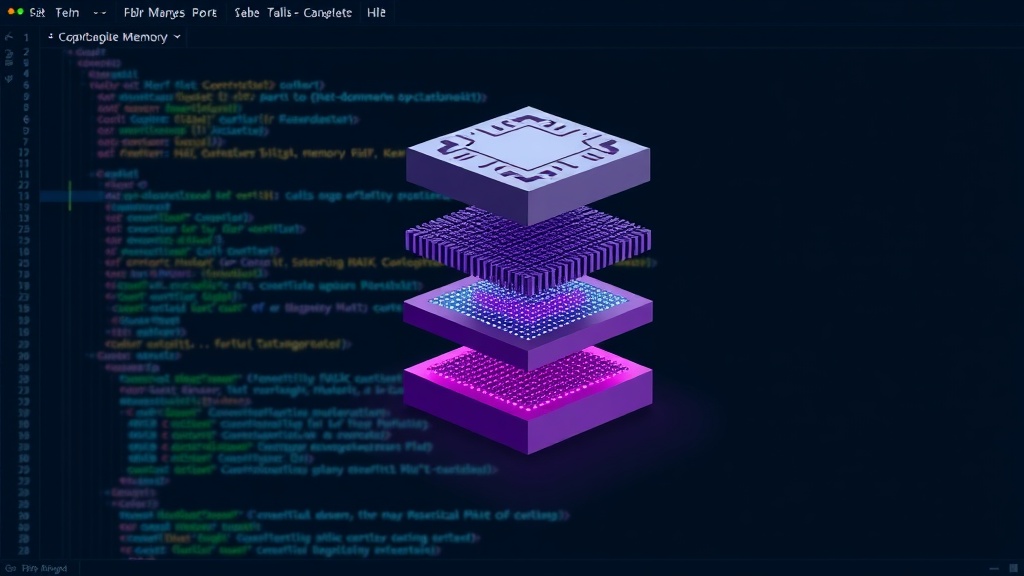
The core of this investment strategy lies in scaling up the production of HBM, a specialized type of DRAM designed for high-performance computing and AI accelerators. HBM's ability to stack multiple DRAM dies vertically, connected by through-silicon vias (TSVs), allows for significantly greater bandwidth and lower power consumption compared to traditional DRAM. NVIDIA's AI GPUs, for instance, heavily rely on HBM, making its supply a critical bottleneck for AI model training and inference.
Samsung and SK Hynix are not just expanding existing HBM production lines; they are also investing heavily in research and development for even more advanced iterations, such as HBM4 and beyond. This includes exploring new materials, advanced packaging techniques, and novel chip architectures to meet the ever-increasing performance demands of AI hardware. The goal is to ensure a steady supply of these cutting-edge memory solutions, which are currently in extremely high demand and command premium pricing.
Beyond HBM, the investments will also bolster the production of other memory types crucial for AI infrastructure, including NAND flash for storage and standard DRAM for general-purpose computing. This comprehensive approach ensures that South Korea's semiconductor industry can support the entire AI ecosystem, from massive data centers to edge AI devices.
Government Support and National Ambitions
This significant private sector commitment is backed by the South Korean government, which has declared the semiconductor industry, particularly AI-related hardware, a national strategic priority. The government is expected to provide policy support, tax incentives, and facilitate R&D initiatives to ensure the success of these ambitious plans. South Korea aims to become not just a manufacturer but a comprehensive AI technology powerhouse, with its chip industry as the bedrock.
The national strategy involves fostering a robust ecosystem that includes not only chip design and manufacturing but also related industries such as advanced materials, components, and equipment. By creating a self-sufficient and globally competitive semiconductor cluster, South Korea intends to reduce its reliance on foreign technology and secure its position in future technological advancements. This coordinated effort between industry and government is crucial for navigating the complex geopolitical landscape surrounding semiconductor supply chains.
Implications for the Global AI Hardware Market
The ripple effects of this $550 billion commitment will be felt globally. By significantly increasing the supply of HBM and other AI-critical memory components, Samsung and SK Hynix aim to alleviate current supply constraints and potentially stabilize pricing in the long term. This will enable AI hardware developers and cloud providers to scale their operations more effectively and accelerate AI deployment across various sectors.
Competitors, particularly those in China and the United States, will face increased pressure to match South Korea's investment and technological advancements. However, the sheer scale of this commitment, coupled with decades of expertise in memory chip manufacturing, gives Samsung and SK Hynix a formidable advantage. The focus on next-generation memory technologies also signals a long-term vision that extends beyond current AI trends, preparing for the even more demanding computational needs of future AI models and applications.
The 'RAMageddon' may be averted through these strategic investments, but the race for AI hardware supremacy is far from over. This move by South Korea's tech giants sets a new benchmark for the industry, emphasizing the critical role of memory in the AI revolution and the immense capital required to lead it.