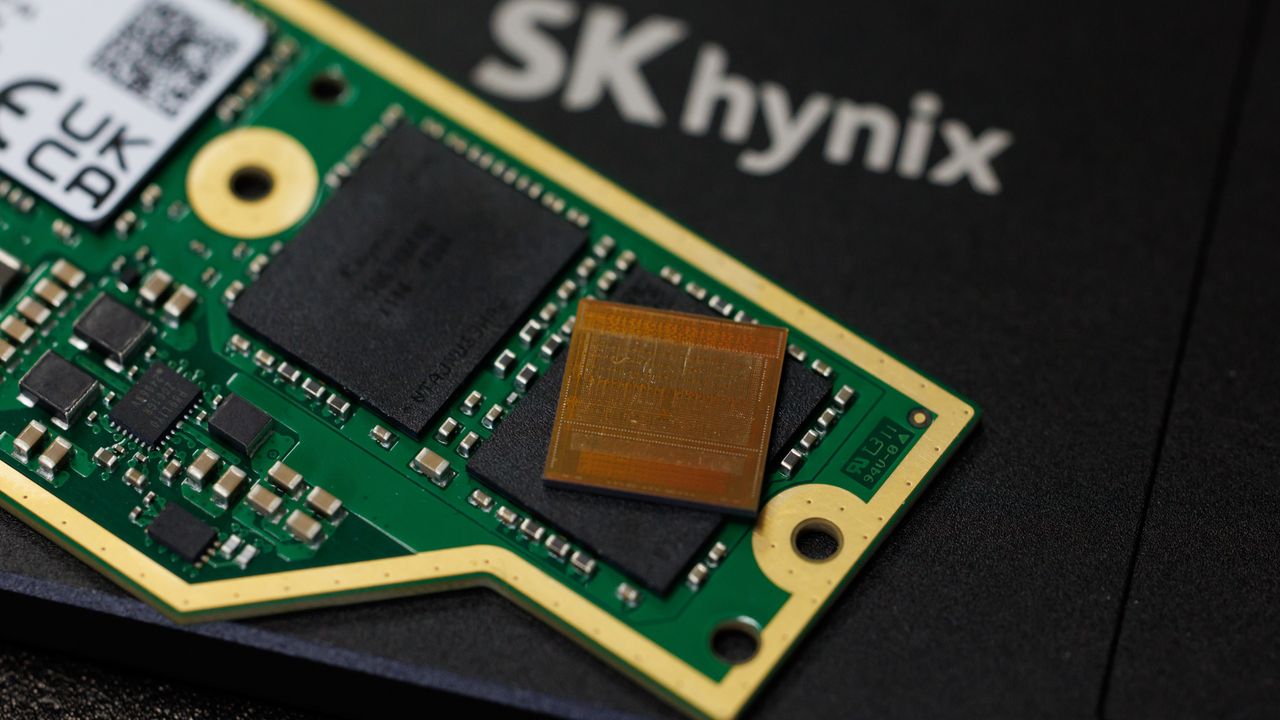
SK Hynix Forecasts Deepening Memory Shortage
SK Hynix CEO Kwak Noh-jung delivered a stark warning regarding the global memory chip market, predicting that 2027 will represent the peak of a significant shortage. Speaking on the day of the company's Nasdaq listing, Kwak indicated that the crunch in DRAM and NAND flash supplies is not a short-term blip but a challenge expected to persist for years, potentially lasting until 2030. This grim outlook suggests that the industry is facing structural supply-demand imbalances that will ripple through the technology sector and beyond.
The CEO's pronouncements come at a critical juncture for the semiconductor industry, which has experienced volatility in demand and supply over the past few years. While recent periods have seen some oversupply in certain memory segments, SK Hynix's forecast points to a future characterized by scarcity. This scarcity is not attributed to a single factor but rather a complex interplay of increasing demand from emerging technologies and constrained production capacity. The implications for everything from consumer electronics to advanced AI infrastructure are substantial.
Drivers of the Projected Shortage
Several underlying trends are fueling SK Hynix's pessimistic projections. The insatiable demand for higher-performance memory is a primary driver. Artificial intelligence, particularly the training and deployment of large language models and other AI workloads, requires massive amounts of high-bandwidth memory (HBM) and dense NAND flash storage. As AI adoption accelerates across industries, the demand for these specialized memory components is expected to surge exponentially. This is not merely an increase in volume but a qualitative shift towards more advanced, power-hungry, and capacity-intensive memory solutions.
Beyond AI, other technological advancements contribute to the growing memory deficit. The proliferation of 5G networks, the expansion of cloud computing and data centers, the increasing sophistication of autonomous driving systems, and the continuous evolution of consumer electronics all place immense pressure on memory supply chains. Each of these sectors demands more memory, faster memory, and more reliable memory, creating a multi-front assault on existing production capacities. The industry's ability to rapidly scale production of advanced nodes and complex packaging required for next-generation memory is being tested.
Furthermore, the capital expenditure required to build and upgrade semiconductor fabrication plants, particularly for cutting-edge memory technologies, is astronomical. These fabs take years to construct and equip, and the lead times for bringing new capacity online are significant. Any miscalculation in forecasting demand or investment in new facilities can lead to prolonged periods of either oversupply or, as SK Hynix predicts, critical undersupply. The cyclical nature of the semiconductor industry, coupled with the long lead times and high costs, makes it exceptionally difficult to perfectly align supply with demand, especially in the face of rapidly evolving technological requirements.
Implications for the Tech Landscape
The forecast of a prolonged memory shortage has far-reaching consequences. For consumers, this could translate into higher prices for devices like smartphones, laptops, and gaming consoles, and potentially longer wait times for new products. The components that have become more commoditized over time may revert to being premium-priced items, impacting affordability and accessibility.
For businesses and developers, the impact could be even more profound. The availability and cost of memory are critical factors in deploying and scaling new technologies. Companies relying on large-scale data processing, AI model training, or high-performance computing may face significant hurdles. This could slow down innovation cycles, delay product launches, and force businesses to re-evaluate their technology roadmaps. The cost of essential components like GPUs, which are heavily reliant on HBM, could skyrocket, making advanced AI research and development prohibitively expensive for smaller players.
The situation also puts immense pressure on the existing players in the memory market, including competitors like Samsung and Micron. These companies will face difficult decisions regarding capital investment, production allocation, and technology development. The race to secure market share and meet demand will intensify, potentially leading to further consolidation or strategic alliances within the industry. The long-term nature of the predicted shortage suggests that companies that can navigate this period of scarcity by securing supply chains and optimizing production will gain a significant competitive advantage.
What remains unaddressed is the potential for this sustained shortage to fundamentally alter the trajectory of AI development. If the cost and availability of essential memory components become a persistent bottleneck, it could force a re-evaluation of current AI architectures, pushing research towards more memory-efficient models or alternative computing paradigms. The current trajectory of AI is heavily predicated on the availability of abundant, high-performance memory; a prolonged scarcity could necessitate a significant pivot.
SK Hynix's Nasdaq Debut and Strategic Position
SK Hynix's listing on the Nasdaq stock exchange, a significant milestone for the South Korean semiconductor giant, provides a platform to access global capital markets and enhance its visibility among international investors. The CEO's candid remarks about the future market conditions, delivered on this high-profile day, could be interpreted as a strategic move to set expectations and highlight the company's crucial role in an increasingly memory-dependent technological ecosystem. By signaling a challenging future, SK Hynix may be positioning itself as a key enabler and beneficiary of the high-demand, high-value memory market.
The company's focus on advanced memory solutions, particularly HBM for AI applications, places it at the forefront of the current technological wave. As demand for AI hardware continues to soar, SK Hynix's strategic investments in this area are poised to pay significant dividends. However, the company, like its peers, must carefully balance aggressive expansion with the inherent risks of the volatile semiconductor market. The CEO's pronouncements serve as a potent reminder that even market leaders face significant uncertainties and must plan for the long haul.
The semiconductor industry operates on long investment cycles and faces geopolitical complexities. Factors such as trade disputes, supply chain disruptions, and the increasing cost of advanced manufacturing can exacerbate existing market imbalances. SK Hynix's forecast suggests that the current demand surge, driven by AI and other advanced technologies, is not a temporary spike but the beginning of a sustained period of high demand that current production capacity will struggle to meet for years to come. This necessitates a proactive and strategic approach from all stakeholders to mitigate the potential fallout and ensure continued technological progress.