
Sim Studio: A New Frontier for AI Agent Development
The landscape of artificial intelligence development is rapidly evolving, with a particular surge in interest around AI agents – autonomous entities capable of performing tasks and interacting with their environment. Developing these agents often involves complex tooling, custom infrastructure, and intricate workflow management. Recognizing this challenge, Sim Studio has emerged as an open-source workspace designed to simplify and accelerate the creation, management, and deployment of AI agents and their associated workflows.
Sim Studio positions itself as a comprehensive environment for developers looking to build sophisticated AI applications. Unlike fragmented toolkits or proprietary platforms, Sim's open-source nature fosters community collaboration and allows for deep customization. The core idea is to provide a unified interface and a robust backend that abstracts away much of the underlying complexity, allowing developers to focus on the logic and intelligence of their agents.
The platform is built with the developer experience in mind. It aims to offer a structured approach to agent development, from initial conceptualization and coding to testing, debugging, and eventual deployment. This includes features for managing agent states, handling memory, integrating with external tools and APIs, and orchestrating sequences of agent actions into complex workflows. The ambition is to make building powerful AI agents as accessible as building other types of software.
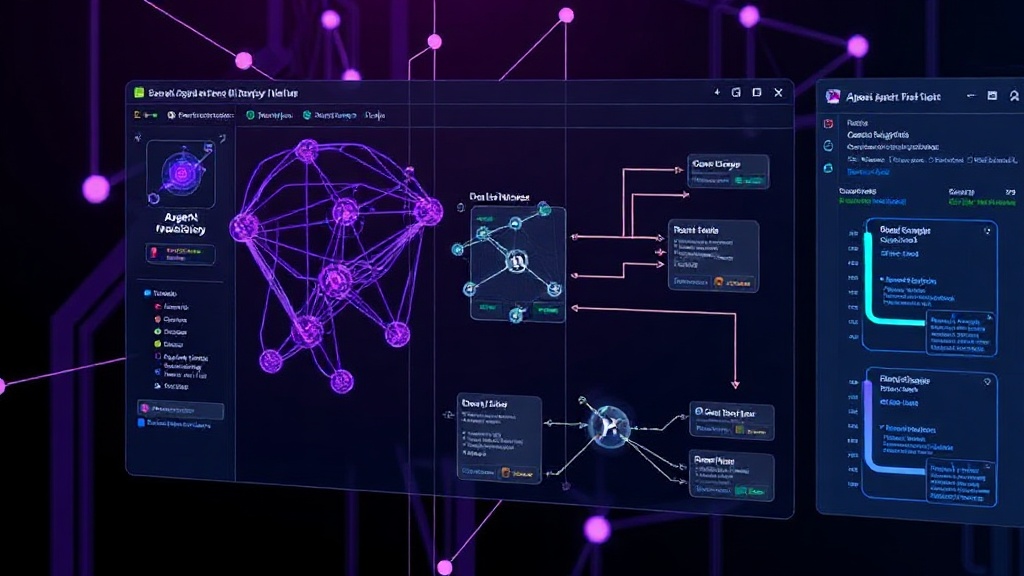
Key Features and Functionality
Sim Studio's architecture is designed to be modular and extensible. At its heart, it provides a framework for defining agents, specifying their capabilities, and managing their lifecycle. This includes:
- Agent Definition: A clear way to define agent roles, personalities, goals, and constraints. This likely involves configuration files or a domain-specific language that allows developers to express agent behavior concisely.
- Workflow Orchestration: Tools to chain agent actions together, create conditional logic, and manage parallel processing. This is crucial for building agents that can perform multi-step tasks or collaborate with other agents. Think of it less like a simple script runner and more like a sophisticated director guiding a cast of AI actors through a complex play.
- Memory Management: Mechanisms for agents to store and retrieve information, enabling them to learn from past interactions and maintain context over time. This is fundamental for building agents that exhibit persistent behavior and adapt to changing circumstances.
- Tool Integration: The ability for agents to interact with external APIs, databases, and other software services. This expands the scope of what agents can achieve, allowing them to leverage existing infrastructure and data sources.
- Open-Source Flexibility: As an open-source project, Sim Studio benefits from community contributions, allowing for rapid iteration and the addition of new features and integrations. This also means users are not locked into a specific vendor's ecosystem.
The choice to go open-source is significant. It democratizes access to advanced AI agent development tools, which were previously often the domain of well-funded research labs or large corporations. By providing these tools freely, Sim Studio aims to foster innovation across a broader spectrum of developers and startups.
The Broader Context: The Rise of Agentic AI
Sim Studio arrives at a pivotal moment for artificial intelligence. The concept of AI agents, while not new, has gained unprecedented traction with the advancements in large language models (LLMs). LLMs provide the foundational intelligence that agents can leverage, enabling them to understand complex instructions, reason, and generate human-like responses. However, LLMs alone are not agents; they are the brains, but they need a body, senses, and the ability to act in the world – this is where platforms like Sim Studio come in.
The development of sophisticated AI agents is seen by many as the next major wave in AI, moving beyond simple prompt-response interactions to systems that can proactively achieve goals. This shift has profound implications for how we interact with technology, automate tasks, and even how businesses operate. Imagine agents that can manage your calendar, conduct market research, write code, or even autonomously operate machinery. The potential is vast, but the technical hurdles are equally significant.
Sim Studio addresses these hurdles by providing a structured environment. It's akin to providing a well-equipped workshop with all the necessary tools and blueprints for a builder, rather than just handing them raw materials. This structured approach is essential for moving AI agents from experimental curiosities to reliable, production-ready systems. The open-source nature further accelerates this transition by allowing the collective intelligence of the developer community to identify and solve problems, build extensions, and share best practices.
Implications for Developers and the AI Ecosystem
For developers, Sim Studio represents a powerful new toolkit. It lowers the barrier to entry for building complex AI agent applications. Instead of spending months building custom infrastructure for agent communication, memory, and tool integration, developers can leverage Sim's pre-built components. This allows them to iterate faster, experiment with more ambitious agent designs, and bring AI-powered products to market more quickly.
The open-source aspect is particularly appealing. It means developers can inspect the code, understand exactly how their agents are functioning, and contribute to the platform's improvement. This transparency is vital for critical applications where understanding an agent's decision-making process is paramount. Furthermore, it prevents vendor lock-in and ensures that the platform will continue to evolve, driven by user needs rather than a single company's roadmap.
What remains to be seen is how well Sim Studio scales to handle the demands of production-level AI agents. Managing state, memory, and thousands of concurrent agent interactions can be computationally intensive. The long-term success of Sim Studio will likely depend on its performance under load, its security features, and the robustness of its community support. The journey from an open-source project to a widely adopted industry standard is challenging, but Sim Studio has laid a promising foundation for the future of agentic AI development.