
The Challenge of Large Language Models on Consumer Hardware
Large Language Models (LLMs) like GLM 5.2 typically demand significant computational resources, often requiring high-end GPUs with substantial VRAM. This has historically placed them out of reach for users with standard or even enthusiast-grade consumer hardware. The sheer size of these models, measured in billions of parameters, translates directly into massive memory footprints and intense processing needs. For a long time, running models of this scale locally meant investing thousands of dollars in specialized hardware or relying on cloud-based APIs, creating a barrier to entry for experimentation, personal use, and development.
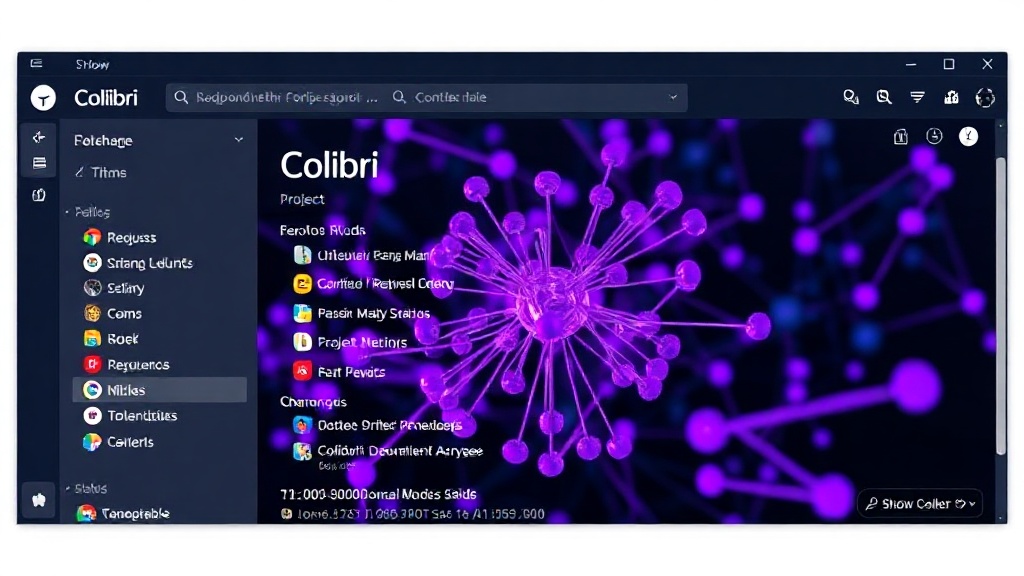
This barrier is precisely what a user on Hacker News, under the username JustVugg, set out to challenge. In a post titled "Show HN: Getting GLM 5.2 running on my slow computer," they presented a project called Colibri, a novel approach to making powerful LLMs accessible on less capable machines. The implication is clear: democratizing access to advanced AI capabilities by optimizing them for everyday hardware.
Introducing Colibri: An Optimization Layer for LLMs
Colibri, the project spearheaded by JustVugg, is not a new LLM architecture. Instead, it functions as an optimization layer, a sophisticated set of tools and techniques designed to reduce the computational and memory overhead of existing large models. The core idea is to strip away unnecessary processes, optimize data transfer, and potentially employ quantization or other memory-saving strategies to allow models that would normally choke a system to run smoothly.
While the specific technical details of Colibri are still emerging from the project's GitHub repository, the user's experience suggests a multi-pronged optimization strategy. This likely includes aggressive memory management, efficient model loading, and perhaps fine-tuning the inference process itself to be less demanding. The surprising detail here is not that someone is trying to optimize LLMs, but that they claim to have successfully run a model as complex as GLM 5.2 on what is described as a "slow computer." This implies a significant leap in efficiency, far beyond standard model loading techniques.
The choice of GLM 5.2 is notable. GLM (General Language Model) is a family of powerful autoregressive language models developed by Tsinghua University, known for their strong performance on various NLP tasks. Making such a model runnable on consumer hardware opens up a vast array of possibilities for individuals and small teams who cannot afford or do not wish to use cloud services.
The Technical Hurdles and Potential Solutions
Running a 5.2 billion parameter model typically requires at least 10-12 GB of VRAM for full precision (FP16), and often more for context. Even with 4-bit quantization, which reduces the memory footprint significantly, a substantial amount of RAM or VRAM is still necessary. A "slow computer" might imply a machine with 8GB or 16GB of RAM, and a GPU with 4GB or 6GB of VRAM, or even just a CPU with no dedicated GPU acceleration.
Colibri appears to tackle this by potentially employing several advanced techniques:
- Quantization: Reducing the precision of model weights from 16-bit or 32-bit floating-point numbers down to 8-bit, 4-bit, or even lower. This drastically reduces memory usage and can speed up inference, though it may come with a slight accuracy degradation.
- Model Pruning and Sparsity: Identifying and removing redundant weights or connections within the neural network, effectively making the model smaller and faster without a significant loss in performance.
- Efficient Offloading: Strategically moving parts of the model between VRAM and system RAM, or even between GPU and CPU, to manage memory constraints. This is often complex and can introduce latency.
- Optimized Inference Kernels: Utilizing highly tuned low-level code (kernels) that are specifically designed to maximize performance on particular hardware architectures, making the most of available CPU or GPU resources.
The success of Colibri suggests that JustVugg has found a way to combine these or similar techniques effectively. The project's GitHub repository, hosted at `github.com/JustVugg/colibri`, is the primary source for understanding the implementation details. Developers interested in replicating this feat can examine the code for insights into how GLM 5.2 was adapted.
Implications for Developers and AI Enthusiasts
This development has significant implications. It signals a potential shift towards greater accessibility in the LLM space. For developers, it means the ability to test, iterate, and even deploy LLM-powered applications on local machines without the cost and complexity of cloud infrastructure. This could accelerate innovation, especially for individual developers, hobbyists, and researchers with limited budgets.
For creators, it opens up new avenues for integrating AI into their workflows. Imagine generating text, code, or creative content locally, on demand, without relying on external services. This offers greater privacy, control, and potentially lower latency for real-time applications.
The broader AI community will be watching closely. If Colibri proves to be a robust and generalizable solution, it could inspire similar optimization efforts for other large models, further lowering the barrier to entry. It challenges the notion that cutting-edge AI is exclusively the domain of well-funded labs and large tech companies.
The unanswered question for the community is the degree of performance degradation and the specific hardware configurations that Colibri truly supports. While the claim is "slow computer," understanding the precise VRAM, RAM, and CPU clock speeds that yield acceptable results will be crucial for widespread adoption. Furthermore, how does Colibri's performance compare to optimized cloud APIs in terms of cost, speed, and accuracy across various tasks?
What This Means for the Future
The "Show HN" post by JustVugg is more than just a technical demonstration; it's a beacon of possibility. It suggests that the relentless pursuit of optimization can yield remarkable results, making powerful AI tools available to a wider audience. As LLMs continue to grow in capability, efforts like Colibri are vital for ensuring that this technology benefits everyone, not just those with access to supercomputing resources. The future of AI might not just be about building bigger models, but also about making them smarter, leaner, and more accessible.