
CodeAlmanac: Your Codebase's Conversational Memory
A new project, unveiled on Hacker News as "Show HN: CodeAlmanac," proposes a novel approach to codebase documentation: turning team conversations into a searchable, AI-powered wiki. The tool, developed by AlmanacCode, aims to capture the tribal knowledge often lost in the ephemeral nature of chat platforms like Slack and Discord.
The core idea behind CodeAlmanac is to act as a persistent memory for a development team's collective understanding of their codebase. Instead of relying solely on static READMEs or scattered documentation, it indexes and processes conversations, extracting relevant code snippets, architectural decisions, and problem-solving discussions. This creates a dynamic, living document that reflects how the code is actually used and understood by its maintainers.
Think of it less like a traditional, meticulously written manual and more like an incredibly organized digital assistant who remembers every coding-related chat you've ever had. When a developer encounters a piece of code or a feature, they can query CodeAlmanac to find discussions related to it. This could surface explanations of why a certain approach was taken, common pitfalls, or even links to relevant commits and pull requests, all derived from natural language discussions.
How CodeAlmanac Works
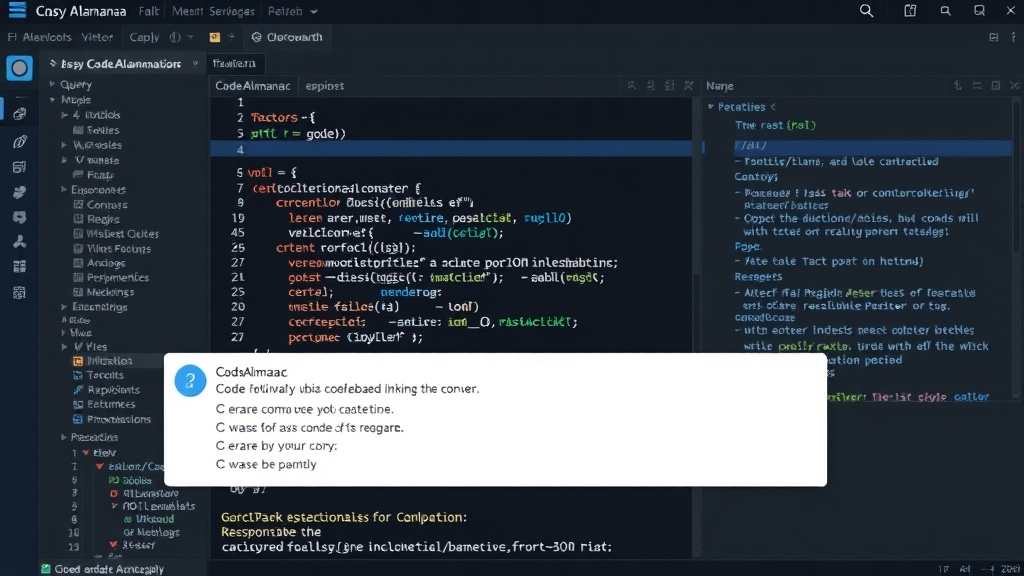
CodeAlmanac integrates with chat platforms and code repositories to build its knowledge base. It processes messages, looking for patterns that indicate code discussions. This includes code blocks, references to files or functions, and explanations of programming concepts. The system then uses AI to understand the context, identify key entities (like function names, variable types, or architectural patterns), and link these to specific code locations or commit hashes.
The project emphasizes a "Karpathy-style" approach, likely referencing the clear, concise, and deeply technical explanations often found in Andrej Karpathy's work. The goal is to provide developers with the information they need to understand, debug, and extend a codebase efficiently, without having to sift through countless hours of chat logs or ask colleagues for repetitive explanations.
Key functionalities include:
- Conversation Indexing: Ingesting and processing messages from integrated chat platforms.
- Code Extraction: Identifying and extracting code snippets and relevant technical terms from discussions.
- Contextual Linking: Associating extracted information with specific lines of code, commits, or pull requests.
- AI-Powered Search: Enabling natural language queries to find relevant documentation and discussions.
The Problem it Solves: Lost Tribal Knowledge
The software development world often struggles with knowledge silos. When experienced engineers leave a company, their deep understanding of the system can be lost. Similarly, onboarding new developers can be a lengthy process of piecing together information from disparate sources. CodeAlmanac directly addresses this by creating a persistent, searchable repository of this distributed knowledge.
The tool's ability to connect conversations to actual code is crucial. It moves beyond simple keyword search. By understanding the semantic meaning of discussions and their relation to the codebase, CodeAlmanac can surface answers to questions like "Why was this API designed this way?" or "What was the rationale behind this refactoring?" This is information that is often discussed casually in Slack but rarely makes it into formal documentation.
Potential and Future Directions
The "Show HN" submission suggests that CodeAlmanac is an open-source project, inviting community contributions and feedback. Its success will likely depend on its ability to accurately parse complex technical discussions, maintain a high signal-to-noise ratio, and integrate seamlessly with common development workflows.
What nobody has addressed yet is how CodeAlmanac will handle the inevitable disagreements and evolving understanding within a team. Will it surface conflicting explanations? How will it prioritize or reconcile different viewpoints expressed over time? These are complex challenges for any AI tasked with synthesizing collective knowledge.
For teams that heavily rely on asynchronous communication and have large, complex codebases, CodeAlmanac could represent a significant step forward in knowledge management. It transforms casual chat into a valuable, structured asset, making codebases more accessible and maintainable.