The Value of Early Feedback
A week ago, I released a preliminary version of PulseWatch, a tool designed to monitor job runs, to real users. This wasn't a polished, feature-complete product; it was intentionally a 'rough, honestly-a-bit-thin version.' The immediate payoff arrived within days. Two different strangers, acting independently and without prompting, identified two significant gaps in its functionality. Neither bug was catastrophic, but both were precisely the kind of issues that only emerge when observing someone else interact with your creation. This is the story of those two bugs and their subsequent fixes, illustrating the undeniable power of early user feedback.
Bug One: The Run That Never Ends
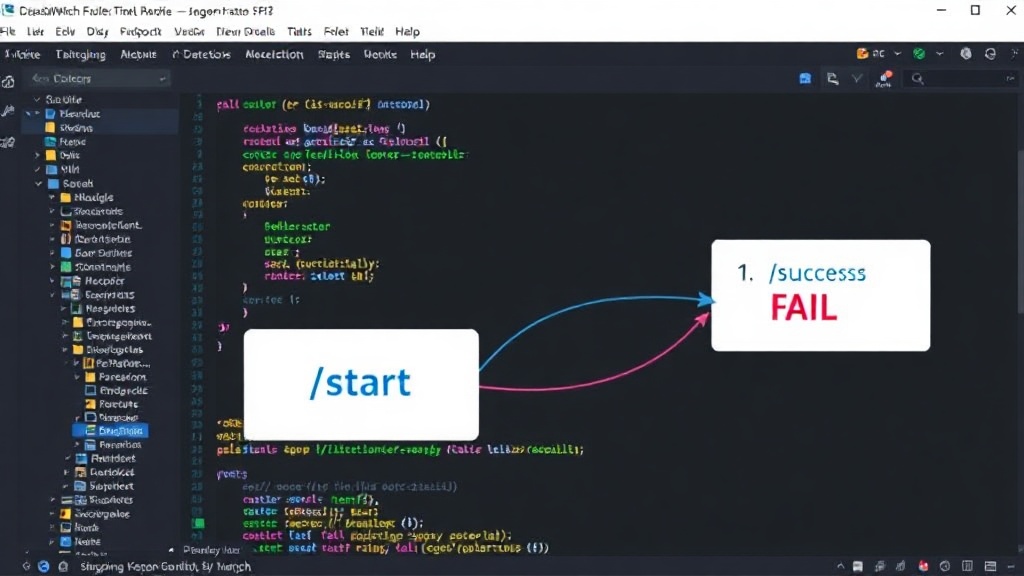
The first bug surfaced thanks to a friend testing PulseWatch with a real-world script. His astute question was simple: 'What happens if start fires twice before end?' At the time, the answer was 'nothing good.' PulseWatch operates on two primary pings: a job endpoint calls /start upon initiation and then either /success or /fail upon completion. The server's role is to track the currently 'open' run for a specific monitor. The vulnerability arose if a job's process unexpectedly restarted mid-run – perhaps due to a crash-and-retry mechanism or a redeploy that caught the job in flight. In such scenarios, the system would incorrectly register a second 'start' ping while an existing run was still technically active. This led to a state where the system was expecting a completion ping for a run that had effectively been superseded, causing the 'run that never ends' scenario. The monitor would remain in an active state indefinitely, failing to report any actual completion or failure, and potentially skewing monitoring metrics.
The fix involved implementing a simple state check on the server. Before accepting a new /start ping, PulseWatch now verifies if a run is already marked as active for that monitor. If an active run is detected, the new /start ping is rejected with an appropriate error code, perhaps a 409 Conflict. This prevents the system from entering the erroneous state. Any subsequent /success or /fail pings associated with the original, now-orphaned run would also be handled gracefully, likely ignored or logged as pertaining to a non-existent active run. This approach ensures that only one run can be 'open' at any given time, maintaining data integrity and preventing the infinite-run state.
Bug Two: The Monitor That Vanished
The second bug was discovered by another user, who encountered it while setting up PulseWatch for a new project. They reported that after creating a new monitor and attempting to configure its settings, the monitor simply disappeared from the list of active monitors. This was particularly perplexing as it happened during the initial setup phase. The root cause, upon investigation, was related to how PulseWatch handled the creation and immediate modification of new monitors. When a user created a new monitor, the system would provision it and add it to the active list. However, if the user immediately proceeded to edit the monitor's settings – perhaps to set thresholds or notification preferences – a race condition could occur. The modification process, in some edge cases, would incorrectly flag the monitor as deleted or inactive before its initial creation was fully committed or indexed in a way that made it consistently discoverable. This meant that while the monitor might have technically existed in the database, it failed to appear in the UI's list view, effectively vanishing from the user's perspective. This issue was particularly insidious because it occurred during the very first interaction a user had with a new monitor, making it seem like a fundamental flaw in the setup process.
The fix here required a more robust handling of the monitor lifecycle. The core issue was the timing and atomicity of the create and update operations. The solution involved ensuring that the monitor's creation was fully committed and that subsequent update operations were properly associated with the existing monitor ID. This could be achieved by refactoring the API endpoints to guarantee that a monitor is definitively present and retrievable in the system's index before any modification requests are processed. A common pattern for this is to perform the creation, then immediately query for the created resource to confirm its existence and retrieve its definitive ID, and only then proceed with applying any subsequent updates. This ensures that the monitor is always in a discoverable state, even if modifications are attempted immediately after creation. Error handling was also improved to provide clearer feedback to the user if such a race condition, however unlikely after the fix, were to occur.
The Unanswered Question: What About Edge Cases?
While these two bugs were valuable discoveries, they highlight a broader question: what other subtle, edge-case bugs lurk undiscovered in PulseWatch? The current testing focused on basic workflows and common failure points. The 'run that never ends' scenario was triggered by a specific sequence of events (double start ping), and the 'vanishing monitor' by a timing issue during initial setup. These are not everyday occurrences for most users. Yet, the fact that two strangers independently found two distinct, non-trivial bugs within days of a minimal release suggests that the surface area for potential issues is far larger than anticipated. What other unusual sequences of user actions, environmental factors, or system interactions might expose deeper, perhaps more critical, flaws?
The Advantage of Early Release
Releasing PulseWatch in this early state, despite its imperfections, provided invaluable insights. Watching real users interact with the tool, even for simple tasks, revealed flaws that internal testing had missed. The 'run that never ends' bug would have continued to silently corrupt monitoring data, and the 'vanishing monitor' bug would have frustrated new users from the outset, potentially leading to abandonment. Shipping early essentially bought time. It allowed these issues to be discovered and fixed *before* they impacted a larger user base or became deeply embedded in the product's architecture. This proactive approach to quality assurance, driven by genuine user interaction, is precisely what makes the 'ship early, ship often' philosophy so powerful. It's not just about getting features out the door; it's about leveraging the collective intelligence of your users to build a more robust and reliable product from the ground up.