
The AI Inventory Gap
Organizations can typically produce a detailed inventory of their web services. However, cataloging their AI systems—including models, fine-tunes, retrieval pipelines, agents, and third-party AI APIs—presents a significant challenge. This asymmetry, where AI adoption has dramatically outpaced oversight, defines the state of AI security in 2026.
Industry reports indicate an 83% year-over-year surge in enterprise AI activity. Yet, governance and visibility have not kept pace. The result is a large, partially mapped attack surface that many organizations cannot fully enumerate, let alone defend. The fundamental principle of mature security programs—you cannot protect what you cannot see—applies equally to artificial intelligence. Before any robust AI security strategy can be implemented, organizations must first gain visibility into their AI footprint.
This 'shadow AI' problem stems from several factors. Firstly, the rapid pace of AI development and adoption means new models and integrations are deployed continuously, often outside of traditional IT procurement and management processes. Teams leverage readily available open-source models, fine-tune them with proprietary data, or integrate with external AI-as-a-service (AIaaS) offerings without formal approval or tracking. This decentralized approach, while fostering innovation, creates blind spots for security and compliance teams.
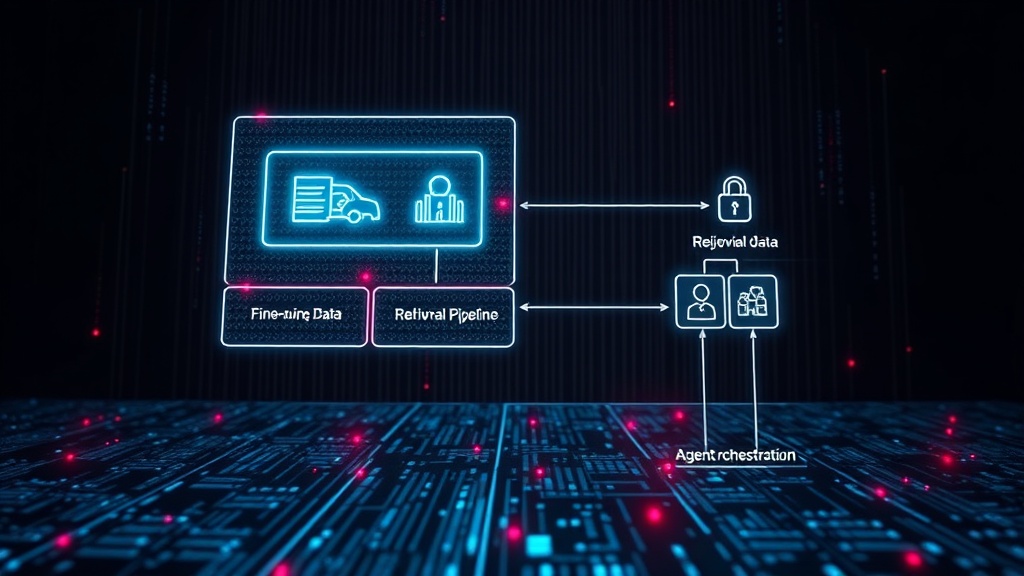
Secondly, the nature of AI systems themselves makes them difficult to inventory. Unlike traditional software services with clear endpoints and dependencies, AI systems can be ephemeral, complex, and deeply embedded. A fine-tuned model might be a collection of weights and biases, a retrieval pipeline involves data ingestion, vector databases, and retrieval algorithms, and agents orchestrate multiple AI calls. Third-party APIs, while seemingly straightforward, introduce risks related to data privacy, model drift, and vendor security practices that are often opaque.
The Consequences of Unseen AI
The lack of visibility into AI systems creates significant security and compliance risks. Without a comprehensive inventory, organizations cannot effectively manage data privacy, intellectual property, or regulatory compliance. Sensitive data used for fine-tuning models might be exposed, or proprietary algorithms could be leaked through insecure third-party integrations. The potential for data exfiltration, model poisoning, or unauthorized access to AI-powered applications is substantial.
Consider the implications for data governance. Many AI models are trained on vast datasets, which may include personally identifiable information (PII) or sensitive business data. If these models are not properly inventoried and audited, organizations risk violating regulations like GDPR or CCPA. The data used for fine-tuning, often more specific and sensitive, presents an even greater risk if not secured and accounted for. This is akin to leaving valuable company assets unsecured in a public space—the risk of theft or misuse is significantly elevated.
Furthermore, the reliance on third-party AI APIs introduces supply chain risks. If an external AI service suffers a breach or experiences model drift that generates incorrect or biased outputs, the impact can cascade through the organization's products and services. Without knowing which AI systems are in use, and by whom, it becomes impossible to assess and mitigate these third-party risks effectively. This is not a hypothetical scenario; incidents involving compromised AI APIs are becoming increasingly common, highlighting the urgency of this problem.
Building an AI Inventory
Addressing the shadow AI problem requires a multi-pronged approach focused on visibility, governance, and automation. The first step is to establish a centralized AI inventory, akin to an asset management system for traditional IT infrastructure. This inventory should capture details about each AI system, including its purpose, owner, data sources, dependencies, third-party integrations, and security controls.
Achieving this requires a combination of technical solutions and policy enforcement. Automated discovery tools can help identify AI models and services running within an organization's cloud environments and applications. These tools can scan for common AI frameworks, libraries, and API endpoints. However, automated discovery alone is insufficient. It must be complemented by clear policies that mandate the registration of all AI systems, whether developed in-house or procured from third parties. This registration process should be integrated into the existing software development lifecycle (SDLC) and procurement workflows.
For developers, this means a shift towards more transparent AI development practices. Code repositories should document AI model usage, data sources, and dependencies. Teams building AI agents or complex pipelines need to ensure that all components, including external API calls, are logged and auditable. This level of detail is crucial for security teams to perform risk assessments and implement appropriate controls.
The challenge also extends to fine-tuned models and custom agents. Organizations need mechanisms to track not just the base model but also the specific data used for fine-tuning and the resulting model artifacts. This includes version control for models and datasets, ensuring that the provenance of AI outputs can be traced back to their origins. This level of traceability is essential for debugging, auditing, and demonstrating compliance.
The Path Forward: AI Governance by Design
Ultimately, securing AI requires integrating security and governance considerations from the outset of AI development and deployment—'AI Governance by Design'. This involves establishing clear roles and responsibilities for AI management, defining acceptable use policies, and implementing security guardrails. For security professionals, this means developing new skills and tools to understand and manage the unique risks associated with AI.
This is the core of building trust in the machine. Without a clear understanding of what AI systems are operating within an organization, and how they are configured and used, the promise of AI cannot be fully realized securely. The inventory problem is not merely an IT challenge; it is a strategic imperative for any organization serious about leveraging AI responsibly and safely in 2026 and beyond.
What remains to be seen is how effectively organizations can automate the discovery and continuous monitoring of these dynamic AI systems. The current manual and policy-driven approaches are unlikely to scale with the projected growth of AI adoption. The industry needs innovation in AI security posture management (AI-SPM) tools that can provide real-time, comprehensive visibility into the entire AI ecosystem.