
The Problem with Direct Serverless Uploads

The standard approach to accepting file uploads involves clients POSTing data directly to your API. Your server then reads these bytes and writes them to an object storage service. While functional for small files and low traffic, this method quickly becomes inefficient. Every upload traverses your infrastructure twice: once from the client to your server, and again from your server to the object storage. During this process, your server must hold the entire file in memory or on disk. This is particularly problematic for serverless functions, which have inherent request size and duration limits that large file uploads can easily exceed, leading to failures and a poor user experience.
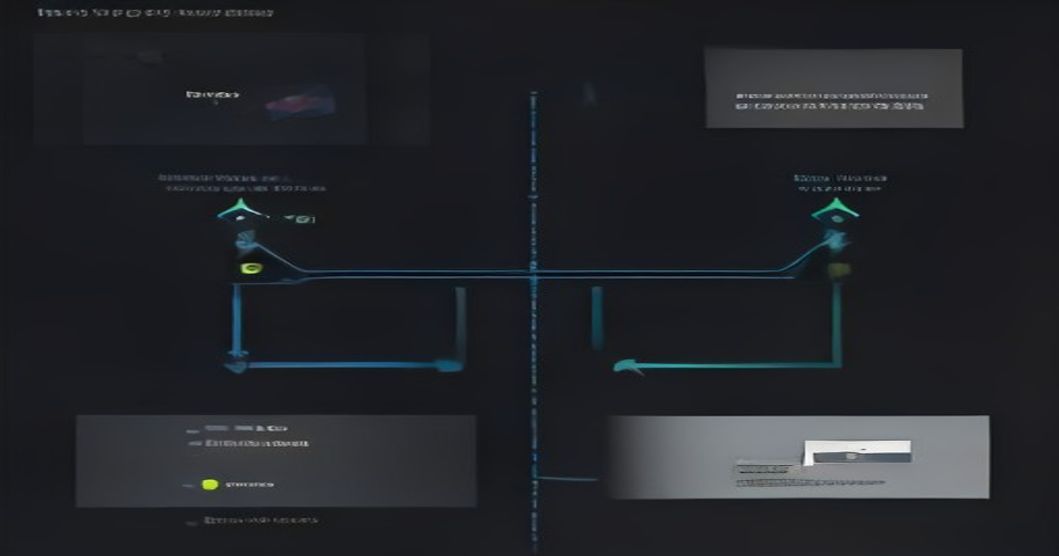
Diagram illustrating inefficient client-to-server-to-storage upload flow

Introducing Presigned URLs for Serverless Uploads

Presigned URLs offer a robust solution to this challenge. This technique predates serverless computing by over a decade and elegantly sidesteps the limitations of direct server handling. Instead of moving file data through your server, your server's only role becomes issuing a short-lived, pre-authorized URL. The client then uses this URL to upload the file directly to the object storage service. Your server's responsibility is reduced to granting upload permission and recording essential metadata about the upload, such as who uploaded what and when. For developers working with services like Neon Functions, which leverage AWS S3 for storage, this integration is seamless. You can utilize the familiar AWS S3 SDK, configuring it to point to your specific storage endpoint within the Neon environment. This allows you to implement direct, efficient uploads without changing your core storage infrastructure or incurring significant server load.

Implementing the Presigned URL Flow

The process typically involves a client request to your serverless function to initiate an upload. The function, upon receiving this request, generates a presigned URL. This URL is pre-configured with the necessary authentication credentials and permissions to upload a specific object to a designated location in your object storage (e.g., an S3 bucket). The function then returns this URL to the client. Once the client possesses the presigned URL, it can directly PUT the file data to the specified object storage endpoint. This bypasses your serverless function entirely for the data transfer phase. The object storage service handles the direct upload, offering greater scalability and performance, especially for large files. After the upload is complete, the client might notify your serverless function to confirm the upload and update its metadata, or the object storage service can trigger an event upon successful upload for further processing.

Benefits and Considerations

The primary advantage of using presigned URLs is the significant reduction in load on your serverless functions and overall infrastructure. By offloading the heavy lifting of file transfer to the object storage service, you avoid hitting request size and duration limits, enabling the handling of much larger files and higher concurrent upload volumes. This also leads to lower operational costs, as your serverless functions are only active for the brief duration of URL generation and metadata recording, rather than processing entire file streams. However, it's crucial to manage the lifecycle of these presigned URLs. They are intentionally short-lived to enhance security. If a client fails to complete an upload within the URL's validity period, a new URL must be generated. Developers also need to consider error handling on the client-side for failed uploads and implement robust mechanisms for associating uploaded files with their respective users or records in your application's database. The security of the presigned URL generation process itself is paramount; ensure that only authenticated and authorized clients can request these URLs, and that the URLs grant the minimum necessary permissions for the intended operation.

Testing the Round Trip

To validate this approach, a complete round-trip test is essential. This involves simulating the entire user experience: initiating an upload request from a client, having a serverless function generate a presigned URL, performing the direct upload to object storage, and then verifying the file's presence and integrity. Such tests ensure that the integration works as expected and that the performance gains are realized under realistic conditions. This includes testing with various file sizes and under simulated concurrent load to confirm the scalability of the solution. The implementation on Neon Functions, using the AWS S3 SDK, simplifies this testing by leveraging well-established tools and patterns for cloud storage interactions.