The shift from raw error data to understanding user behavior is a critical evolution for any application monitoring tool. Sentry, known for its robust error tracking, has introduced a new feature that moves beyond the stacktrace to visualize the user's journey, directly connecting technical issues to business outcomes. This change is significant for teams aiming to improve conversion rates and understand the real-world impact of bugs.
The Problem: Errors Without Context
Before this update, Sentry primarily focused on the technical details of errors. When a TypeError occurred, developers could see the stacktrace, pinpoint the exact line of code, and understand the immediate cause. However, this information often lacked context regarding the user's experience or the business impact. Imagine a dashboard filled with alerts, but no one knows if the issue stems from the payment click, a coupon application, or a frontend pixel loading incorrectly. Multiple similar errors might appear, each seemingly owned by a different team, leading to confusion and delayed resolution. The conversion rate of a critical checkout flow, a key product OKR, remained opaque to the error monitoring system. Sentry was speaking the language of code, not the language of business goals.
The direct consequence was a disconnect. Developers fixed bugs, but the impact on user conversion, a metric vital for product teams and the company's bottom line, was not immediately apparent. The Sentry data, while technically precise, did not translate into actionable insights for product-driven objectives. This meant that while Sentry was excellent at telling you what broke, it struggled to tell you why it mattered in terms of user experience and business performance.
The Solution: Observing the User's Path
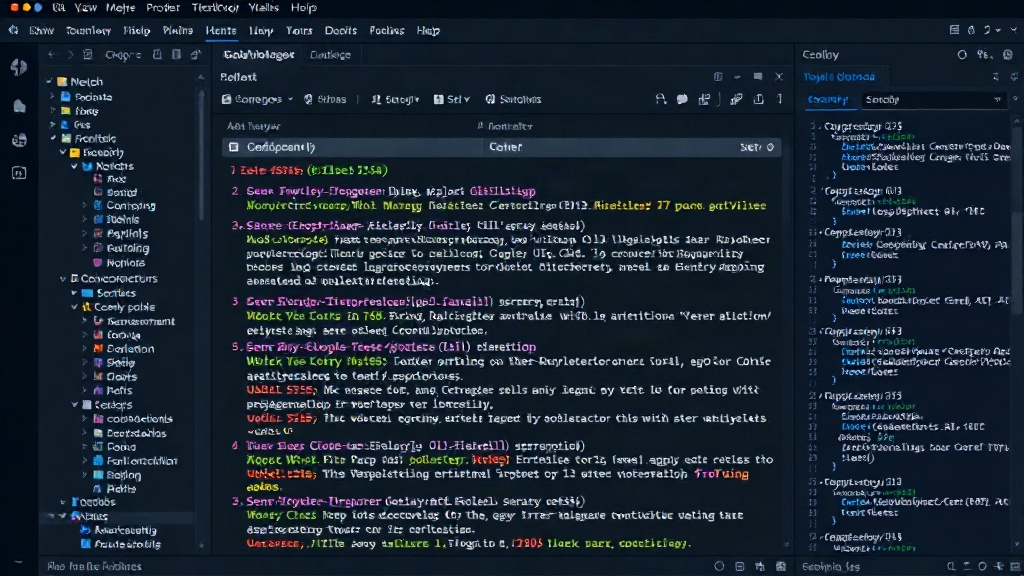
Sentry's new funnel view aims to bridge this gap. It shifts the focus from the SDK installed on a server to the actual user actions being filtered and observed. This means understanding the sequence of events that led to an error, or more importantly, the sequence of events that *didn't* lead to an error but were part of a critical user flow. The goal is to make Sentry speak the same language as business objectives, such as a checkout conversion rate.
This new capability allows teams to see the user's journey before the stacktrace. Instead of just knowing an error occurred, you can now trace the steps a user took: Did they add an item to their cart? Did they attempt to apply a discount code? Did they navigate to the payment page? Understanding this sequence is crucial. For example, if conversion rates drop, this new view can help determine if the drop is due to a technical bug encountered during a specific step in the checkout process, or if it's a more fundamental usability issue. It allows product managers and developers to collaborate more effectively, using the same data to diagnose problems and measure improvements.
This isn't just about fixing bugs faster; it's about understanding the impact of those bugs. A bug that prevents a user from completing a purchase is far more critical than one that causes a minor UI glitch on a rarely visited page. By visualizing the user's path, Sentry now provides the context needed to prioritize fixes based on their potential impact on revenue and user satisfaction. It turns error monitoring into a tool for product improvement, not just technical debugging.
Connecting Technical Debt to Business KPIs
The critical insight here is that observability is not merely about having an SDK installed and reporting errors. True observability, in this new context, is about understanding the user's actions within the application, particularly as they navigate through predefined funnels. This is directly analogous to how product teams track conversion rates – they look at the steps users take from initial interest to final purchase. Sentry's enhancement allows technical teams to align their metrics with these business-critical Key Performance Indicators (KPIs).
Consider a scenario where a product team's OKR is to increase checkout conversion by 10%. Previously, Sentry might have reported a TypeError during the payment step, but without the funnel view, it was hard to quantify the exact revenue lost. Now, Sentry can show that 5% of users encountered this error specifically when trying to finalize their payment, directly impacting the conversion goal. This allows for a data-driven approach to bug fixing, where the effort is prioritized based on its potential to move the needle on business metrics. It’s the difference between seeing a symptom (the error) and understanding the cause and its business consequence.
The process Sentry now enables mirrors a structured problem-solving approach often used in product development: identify the symptom (errors impacting the funnel), diagnose the cause (specific technical issues), implement changes (fix the bugs), measure the impact (re-evaluate conversion rates), and achieve results (meet OKRs). This integration transforms Sentry from a developer-centric tool into a cross-functional platform that supports product, engineering, and even business stakeholders in achieving common goals.
What This Means for Developers and Product Teams
For developers, this means a more holistic view of their work. Instead of just chasing down cryptic error messages, they can now see how their code directly affects the user experience and the business. This can lead to more empathetic and impactful development. The ability to filter errors by user journey steps also allows for more precise debugging. If a bug is only occurring for users who have completed specific actions, developers can more easily replicate and fix it.
Product managers gain a powerful new tool for understanding user drop-off points. They can now correlate technical errors with user abandonment in critical funnels, moving beyond assumptions to data-backed analysis. This allows for more informed product decisions, such as prioritizing bug fixes over new feature development when technical issues are proven to be a significant bottleneck.
The surprising detail here is not that Sentry is adding new features, but that it is fundamentally reframing its value proposition. It's moving from being purely a technical diagnostic tool to an integral part of the product development lifecycle, directly linking code health to business health. This alignment is crucial in today's competitive landscape, where user experience and conversion efficiency are paramount.
What nobody has addressed yet is how this new funnel view will integrate with other user behavior analytics tools. Will it become a replacement, a complement, or a competitor? The potential for overlap and synergy is immense, and the market will be watching closely to see how Sentry positions itself against established players in the product analytics space.