The Problem: A Slowdown Nobody Saw
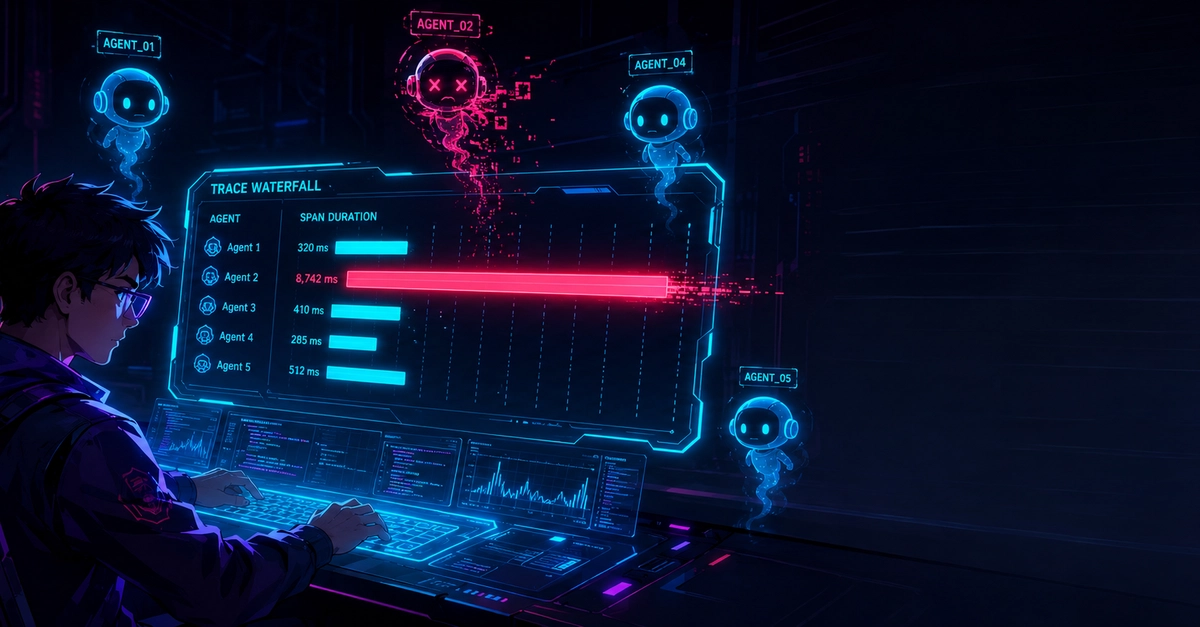
Building a robust AWS security posture agent involves multiple, sequential steps. In this case, a pipeline of five AI agents, orchestrated by CrewAI and powered by Amazon Bedrock Nova Pro, was designed to scan AWS accounts for misconfigurations, map them to CIS benchmarks, score risks, and generate remediation commands. The agents were: ResourceDiscovery, SecurityScanner, ComplianceChecker, RiskScorer, and RemediationPlanner. The expectation was a swift, efficient process. However, performance was sluggish, with individual runs taking significantly longer than anticipated. The root cause remained elusive, masked by the sequential nature of the workflow and the lack of granular visibility into each agent's execution time.
The pipeline's design: ResourceDiscovery inventories AWS resources. SecurityScanner identifies potential misconfigurations. ComplianceChecker cross-references findings with the CIS AWS Foundations Benchmark. RiskScorer assigns a severity score based on blast radius and exploitability. Finally, RemediationPlanner generates AWS CLI commands for fixes. While the logic was sound, the execution revealed a hidden drag.
Enter Sentry: Visibility into the Black Box
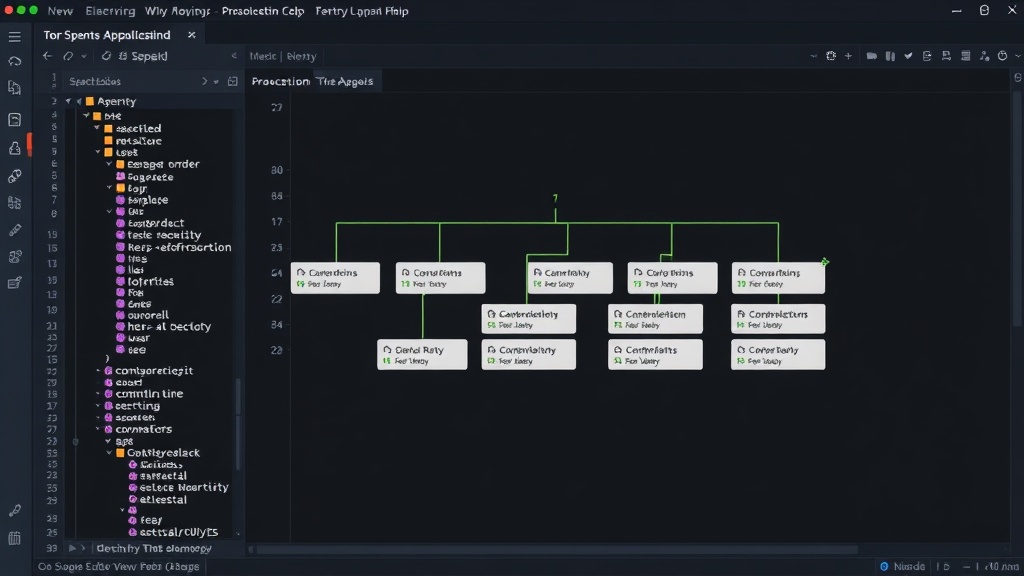
To diagnose the performance issue, Sentry was integrated for application performance monitoring. Sentry's key feature here is its ability to create and visualize a span hierarchy. Think of this less like a traditional log file and more like a meticulously organized family tree for your application's operations. Each 'span' represents a unit of work – an API call, a database query, a function execution. The hierarchy shows how these spans relate to each other, their duration, and their nesting. This provides an invaluable bird's-eye view of where time is being spent across distributed systems or complex sequential processes.
By instrumenting the CrewAI agent execution with Sentry, the developer could observe the lifespan of each agent's operation as a distinct span. The goal was to pinpoint which agent, or which part of its execution, was responsible for the overall delay. Without this granular tracing, the problem would have remained a frustrating mystery, leading to inefficient debugging and prolonged downtime.
Unmasking the Silent Retry
The span hierarchy revealed a startling pattern. While most agents completed their tasks in approximately 5 seconds, one specific span, associated with the RemediationPlanner agent, consistently took around 22.6 seconds to complete. This was the primary bottleneck. Digging deeper into this particular span, the data showed not just a single execution, but a series of retries.
The surprising detail here was not the extended duration itself, but the silent nature of the retries. The CrewAI framework, and the underlying LLM interactions, were configured in a way that masked these repeated attempts. From the perspective of the pipeline's main execution flow, it appeared as a single, albeit slow, operation. The Sentry spans, however, clearly depicted multiple attempts within that single 22.6-second window. This meant that instead of failing fast and potentially surfacing an error that could be addressed, the system was repeatedly attempting the same operation, consuming significant time without achieving success on the first few tries.
The Technical Culprit: LLM Interaction and Timeouts
The root cause of the silent retries was traced back to the interaction with the Amazon Bedrock LLM. Specifically, it appeared that certain prompts or requests sent to the LLM were timing out or failing to yield a satisfactory response within a predefined threshold. Instead of the system immediately reporting an error, the CrewAI orchestration layer, or perhaps an internal retry mechanism within the Bedrock SDK itself, was configured to automatically retry the request. These retries were happening silently from the main pipeline's perspective, but were clearly visible as distinct, nested spans within Sentry's tracing data.
The RemediationPlanner agent's task involved complex prompt engineering to generate accurate AWS CLI commands. When the LLM struggled to parse the input, hallucinated, or simply timed out due to network latency or processing load, the retry loop would engage. This created a cascading effect: each failed attempt added to the total execution time of that specific agent, significantly impacting the overall pipeline performance. The fact that the other four agents completed their tasks in roughly 5 seconds highlighted how isolated this specific retry issue was.
Mitigation and Future-Proofing
The immediate fix involved refining the prompts sent to the LLM and potentially adjusting timeout configurations within the CrewAI or Bedrock SDK. More robust error handling and explicit retry logic with clear logging would prevent such silent failures in the future. Developers can implement strategies like:
- Increased Timeout Durations: If the LLM processing genuinely takes longer for complex tasks, increasing the timeout can prevent unnecessary retries.
- Optimized Prompts: Simplifying or restructuring prompts to be more unambiguous can reduce LLM processing time and improve response quality.
- Circuit Breakers: Implementing circuit breaker patterns can stop repeated calls to a failing service after a certain threshold, preventing cascading failures.
- Explicit Retry Logic: Instead of relying on implicit retries, build explicit retry mechanisms with backoff strategies and clear failure reporting.
The experience underscores the critical importance of detailed observability. Without Sentry's span hierarchy, diagnosing this silent retry would have been akin to searching for a needle in a haystack. The ability to visualize the execution flow and identify these nested, time-consuming operations is essential for maintaining high-performance, reliable AI-powered applications.
What nobody has addressed yet is how common these silent LLM retries are across various orchestration frameworks and LLM providers. Developers building complex AI workflows often rely on abstractions that can hide these performance pitfalls. Understanding and mitigating them requires deep visibility, tools like Sentry, and a proactive approach to error handling.