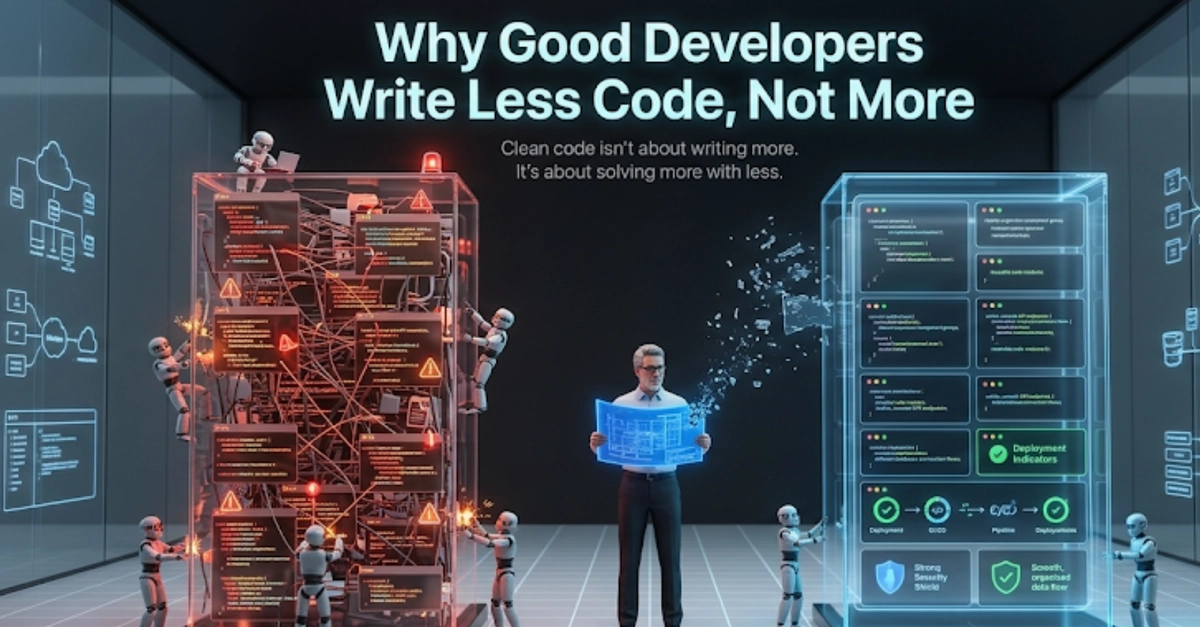
The Cost of Complexity: A Personal Reckoning
Years into a software development career, a common rite of passage involves revisiting past work. For one developer, this meant returning to a solo project built eighteen months prior. The initial pride in its custom state management, multiple abstraction layers, self-assembled utility library, and what was then perceived as a "robust architecture" quickly evaporated. Upon re-examination, the code revealed a tangled mess. Logic was scattered across four files, abstractions nested bewilderingly, two functions performed nearly identical tasks with only minor naming differences, and a third function was demonstrably unused. The realization was stark: a simpler solution, achievable in a single day, could have accomplished the same goals with a fraction of the complexity and maintenance burden. This experience served as a more profound lesson than any formal training or industry event.
This personal epiphany highlights a critical shift in perspective that defines experienced developers. They learn to value conciseness and clarity, understanding that the true measure of good code is not its volume or intricate design, but its effectiveness, maintainability, and the ease with which others (or their future selves) can understand and modify it. The drive to write less code is not about laziness; it's about strategic engineering. It stems from a deep understanding of the long-term costs associated with complexity: increased bug potential, slower development cycles, and higher maintenance overhead.
The Principles of Lean Code
What does it mean for a developer to write less code? It's a multifaceted discipline encompassing several key principles:
- Simplicity Over Premature Abstraction: Instead of building elaborate frameworks or abstracting every possible future need, experienced developers favor straightforward solutions. They ask: "What is the simplest way to solve the problem at hand?" Abstractions are introduced only when a clear, repeated pattern emerges and the cost of duplication outweighs the cost of abstraction.
- Readability and Maintainability: Code is read far more often than it is written. Good developers prioritize making their code easy to understand. This means clear variable names, logical function structures, minimal nesting, and consistent formatting. They write code for humans first, machines second.
- Leveraging Existing Tools and Libraries: Reinventing the wheel is often a sign of inexperience. Senior developers are adept at identifying and utilizing existing, well-tested libraries and frameworks. This not only reduces the amount of code they need to write but also leverages battle-hardened solutions, often improving reliability and security.
- Focus on Business Value: The ultimate goal of software is to deliver business value. Developers who write less code are typically those who deeply understand the business requirements and focus their efforts on implementing features that directly address those needs, avoiding unnecessary complexity or speculative functionality.
- Refactoring and Continuous Improvement: Writing less code is an ongoing process. Experienced developers continuously refactor their code, identifying opportunities to simplify, remove duplication, and improve clarity. They view code as a living entity that requires regular tending.
The Hidden Costs of Bloated Code
The temptation to write more code can stem from a desire to showcase technical prowess, over-engineering solutions for perceived future needs, or a lack of experience in identifying simpler alternatives. However, the long-term consequences are significant:
- Increased Bug Surface Area: More code means more potential places for bugs to hide. Complex logic, numerous dependencies, and intricate control flows dramatically increase the likelihood of errors.
- Slower Development Velocity: As a codebase grows and becomes more complex, adding new features or modifying existing ones takes longer. Developers spend more time deciphering existing code, navigating dependencies, and ensuring their changes don't break something else.
- Higher Maintenance Costs: Maintaining a large, complex codebase is expensive. Debugging issues, onboarding new team members, and performing routine updates become arduous tasks. The technical debt incurred by overly complex code can cripple a project over time.
- Reduced Agility: In a rapidly changing market, agility is key. Projects burdened by complex code struggle to adapt to new requirements or pivot strategies. The time and effort required to make changes can render a business unable to compete effectively.
Consider a well-maintained bicycle versus a car built from scratch with custom-machined parts for every component. The bicycle, using standardized, readily available parts, is far easier and cheaper to repair. If a single part fails, a replacement is quick to find. The custom car, while perhaps a marvel of engineering, would be a nightmare to fix; a single broken part might require fabricating a new one, halting the vehicle indefinitely. Software development often mirrors this: leveraging standard, well-understood components (libraries, frameworks, simple patterns) leads to more resilient and maintainable systems than building everything from first principles for every minor variation.
The Mindset Shift: From Quantity to Quality
The transition from writing a lot of code to writing less code is fundamentally a mindset shift. It moves the focus from the act of coding to the outcome of engineering. It requires discipline, a willingness to challenge one's own initial solutions, and a deep respect for the craft of software development. Experienced developers understand that their value lies not in the lines of code they produce, but in the elegant, efficient, and maintainable solutions they architect. They learn to ask critical questions: "Is this necessary?" "Is there a simpler way?" "What is the true cost of this complexity?"
This pursuit of less code is an ongoing journey. It involves embracing feedback, learning from mistakes, and constantly seeking to improve the clarity and efficiency of the software being built. It's a hallmark of true craftsmanship in the field of software engineering, distinguishing those who merely code from those who engineer.