The Crisis of Conflicting Metrics
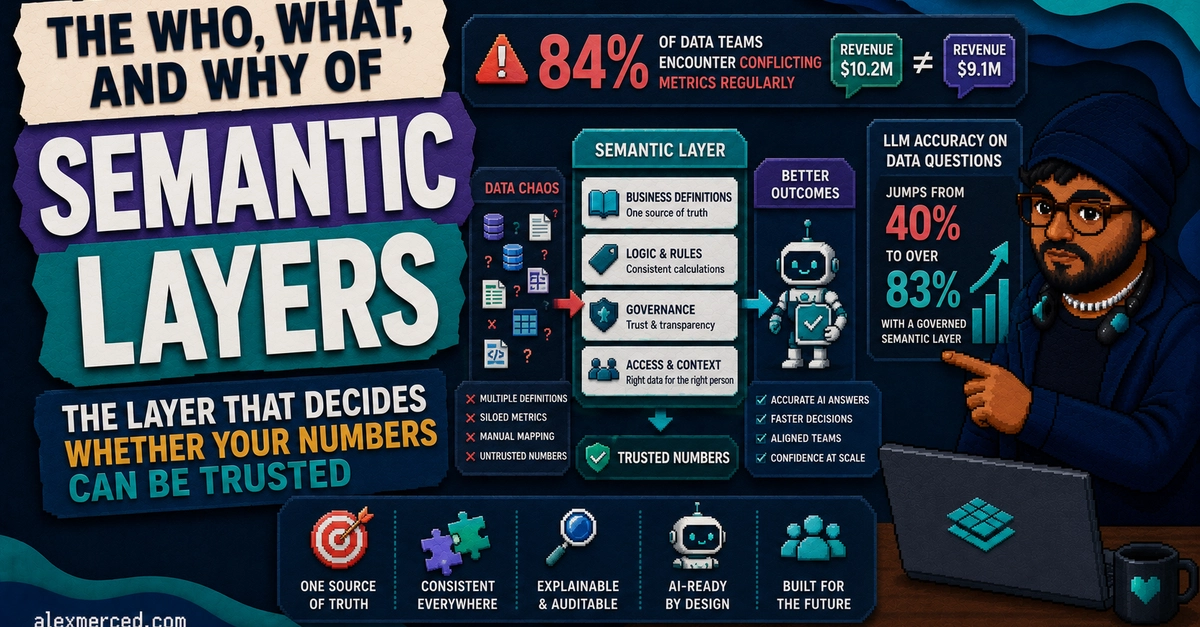
Data teams are drowning in disagreement. A stark statistic reveals that 84 percent of data teams regularly encounter conflicting versions of the same metric. This isn't a minor inconvenience; it's a systemic issue that plagues reporting cycles, sparking debates over fundamental definitions: Is revenue gross or net? Does churn count seats or accounts? Can this week's performance truly be compared to last week's? This pervasive inconsistency erodes trust in data and hinders effective decision-making.
For decades, the industry has pointed to a single solution for this problem: the semantic layer. Traditionally, semantic layers resided quietly within Business Intelligence (BI) tools. They were the domain of a few specialized modelers, largely invisible to the broader user base. This era of benign neglect has ended abruptly. The proliferation of AI agents tasked with querying data on behalf of humans has elevated the semantic layer from a 'nice-to-have' to an indispensable component. It is now the deciding factor between AI agents that deliver accurate, trustworthy answers and those that produce plausible-sounding but ultimately incorrect outputs.
What Exactly is a Semantic Layer?
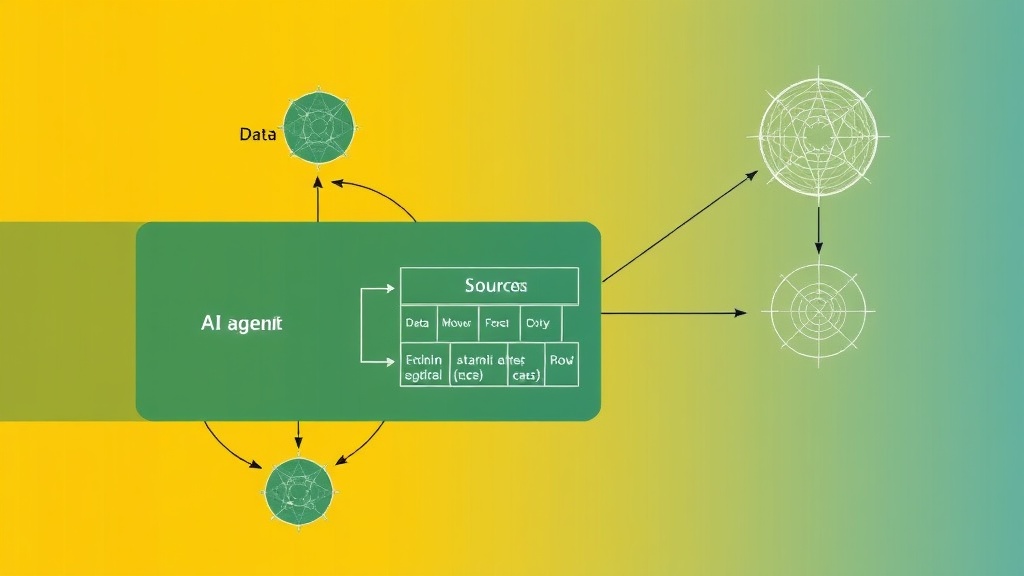
At its core, a semantic layer acts as a business-friendly abstraction over raw, technical data. Instead of users needing to understand complex database schemas, SQL queries, and table joins, the semantic layer translates these technical constructs into familiar business terms. It defines metrics, dimensions, and hierarchies in a way that aligns with how business users think and speak about their operations.
Think of it less like a database and more like a highly organized and knowledgeable concierge for your data. You ask the concierge for "total revenue for Q3," and they know precisely which underlying tables and calculations to access, how to filter for the correct period, and how to aggregate the results, presenting you with a clear, unambiguous number. They also ensure that everyone asking for "total revenue for Q3" gets the exact same answer, derived from the same defined logic.
This abstraction is crucial for several reasons:
- Consistency: It enforces a single source of truth for key business metrics, eliminating discrepancies.
- Accessibility: It democratizes data access by shielding users from technical complexity.
- Governance: It allows organizations to define and enforce data quality rules, security policies, and business logic in one central place.
- Agility: It enables faster development of reports and analyses, as business logic is managed centrally rather than being embedded in individual queries or dashboards.
The AI Imperative: Why Now?
The sudden urgency surrounding semantic layers is directly tied to the explosion of generative AI and AI agents. These agents, designed to interact with data through natural language, require a highly structured and unambiguous data environment to function reliably. Without a semantic layer, an AI agent might interpret "customer" in multiple ways – as an individual user, a company account, or a subscription plan – leading to wildly different and incorrect results for the same query.
When an AI agent queries data through a semantic layer, it's not just executing a SQL command; it's interacting with a curated and governed data model. The semantic layer provides the context, definitions, and business rules that the AI needs to understand the user's intent and translate it into accurate data retrieval. It's the difference between an AI agent that can confidently tell you your company's net revenue, and one that might confidently invent a number based on a flawed interpretation of your data.
This is why the stakes are so high. The reliability of AI-driven insights and autonomous data analysis hinges on the quality and consistency of the underlying data definitions. A flawed semantic layer leads to flawed AI outputs, which can have significant business repercussions. The ability to trust the numbers generated by AI is directly proportional to the robustness of the semantic layer it consults.
Evolution of the Semantic Layer
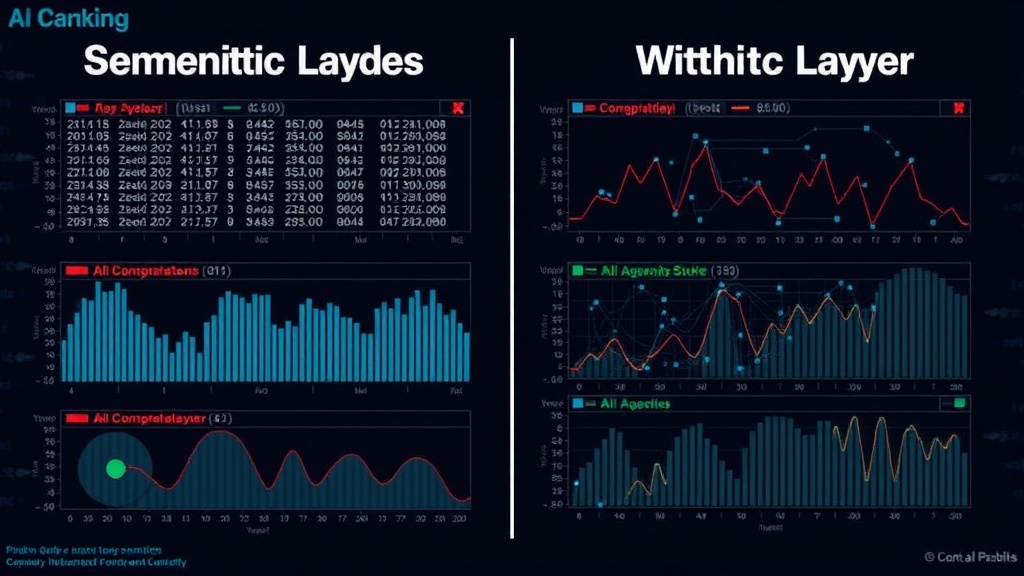
Historically, semantic layers were tightly coupled with specific BI platforms like Tableau, Power BI, or Looker. While these platforms provided robust modeling capabilities, they often created data silos. If a company used multiple BI tools, they would likely end up with multiple, potentially conflicting, semantic models.
The modern approach is shifting towards more platform-agnostic semantic layers. These solutions aim to provide a centralized semantic model that can serve multiple downstream tools, including BI platforms, data science notebooks, and AI applications. This centralization addresses the fragmentation issue and ensures a unified view of business logic across the organization.
Key characteristics of modern semantic layers include:
- Cloud-Native Architecture: Designed to integrate seamlessly with modern cloud data warehouses and lakehouses.
- API-First Design: Exposing data models and metrics through APIs to be consumed by a wide range of applications.
- Enhanced Governance Features: Including lineage tracking, access control, and data quality monitoring.
- Support for Complex Modeling: Ability to define sophisticated calculations, hierarchies, and relationships.
The Future is Governed Data
As organizations increasingly rely on data for strategic decisions and empower AI to automate analytical tasks, the role of the semantic layer will only grow in importance. It is no longer an internal modeling detail; it is a critical piece of data infrastructure that underpins trust and accuracy in both human-driven analytics and AI-powered insights.
What nobody has fully addressed yet is the operational overhead of maintaining these increasingly complex semantic models. As more AI agents and applications depend on them, the pressure to keep them updated, accurate, and performant will be immense. The success of AI in data analysis is not just about powerful models, but about the foundational data governance that ensures those models are fed with reliable truths.