
The Ambiguity of Churn in SaaS
Churn, a fundamental metric for Software as a Service (SaaS) businesses, often suffers from a lack of standardization. Unlike Generally Accepted Accounting Principles (GAAP) metrics, churn doesn't have a universally agreed-upon definition. This ambiguity allows both public companies and startups to define and report churn in ways that can obscure underlying performance, making direct comparisons challenging. As a former B2B CEO, I experienced this firsthand when attempting to benchmark our performance against the only public company in our sector. Their reported churn figures, while seemingly positive, masked a more complex reality when dissected.
The core issue lies in what constitutes "churn." Does it include voluntary cancellations only, or also involuntary churn due to failed payments? What about downgrades – are they considered churn, or a separate category? How is revenue churn (Net Revenue Retention or NRR) calculated versus customer churn? Without clear, consistent definitions, companies can present a rosier picture than the data supports. This lack of transparency is not merely an academic problem; it directly impacts strategic decision-making, investor relations, and the ability to accurately forecast future revenue.
Why Segmenting Churn is Crucial
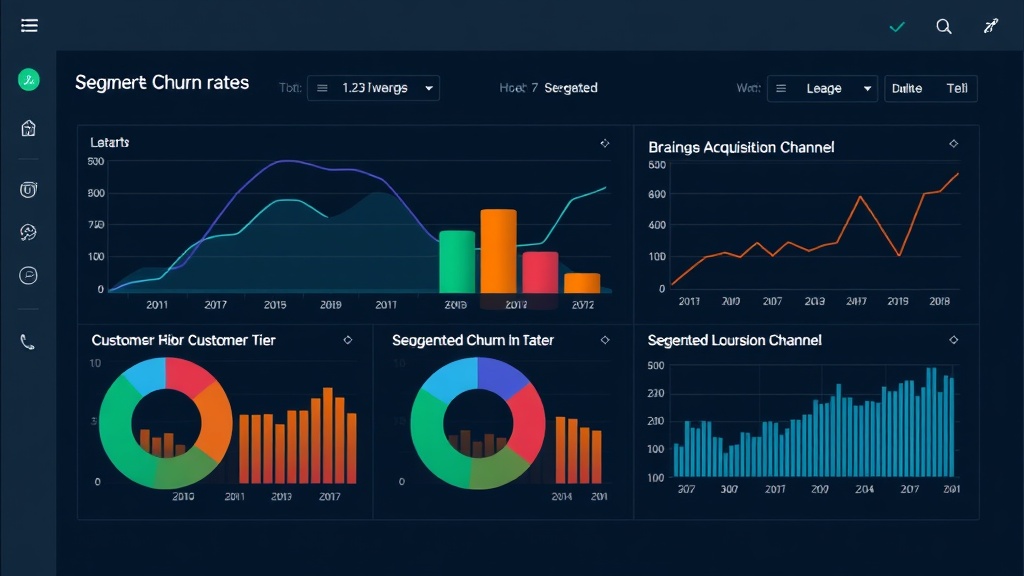
The real power in understanding churn comes not from a single, aggregated number, but from segmenting it. Breaking down churn by various dimensions provides granular insights that a top-line figure simply cannot convey. This segmentation allows businesses to identify specific customer groups that are more prone to leaving, understand the reasons behind their departure, and implement targeted retention strategies.
Consider these critical segmentation dimensions:
- Customer Size/Tier: Are high-value enterprise clients churning at a higher rate than SMB customers, or vice versa? This can indicate issues with product-market fit for specific segments, pricing sensitivity, or the effectiveness of account management.
- Acquisition Channel: Customers acquired through different channels may have different expectations or levels of engagement. High churn from a specific channel might signal misaligned marketing messaging or a poor fit for the acquired customer profile.
- Product Usage/Feature Adoption: Customers who don't utilize key features or engage with the product regularly are far more likely to churn. This points to potential issues with user onboarding, product stickiness, or perceived value.
- Contract Length: Are customers on shorter annual contracts churning more than those on multi-year deals? This can inform pricing and packaging strategies.
- Geographic Region: Differences in market maturity, competition, or customer support effectiveness could lead to varying churn rates by region.
- Onboarding Completion: Customers who fail to complete onboarding are a high-risk group. This highlights the critical importance of a robust and effective onboarding process.
By analyzing churn across these segments, a company can move beyond simply knowing "we are losing X% of customers" to understanding "we are losing Y% of enterprise clients who signed up via paid search because they aren't adopting feature Z within the first 30 days." This level of detail is invaluable for pinpointing problems and opportunities.
Uncovering Hidden Learnings and Patterns
When you segment churn, you start to see patterns that are invisible in aggregated data. For instance, a company might observe that while overall churn is moderate, a specific cohort of customers acquired during a particular promotional period churns at an alarmingly high rate. This insight suggests that the promotion attracted customers who were not a good long-term fit, or that their expectations were set incorrectly. Addressing this requires not just a change in marketing, but potentially a re-evaluation of the ideal customer profile.
Another common finding is that customers who experience issues during onboarding or fail to reach key activation milestones are disproportionately likely to churn. This isn't surprising in isolation, but when quantified through segmentation, it underscores the ROI of investing in better onboarding tools, documentation, and customer success interventions in the early stages of the customer lifecycle. Think of onboarding less as a one-time event and more as a critical, ongoing process that continuously proves the product's value to a new user, much like a skilled guide showing a newcomer the best paths through an unfamiliar city.
Furthermore, analyzing churn by revenue (Net Revenue Retention) alongside customer churn provides a more nuanced view. A company might have a high customer churn rate but a strong NRR if the churning customers were smaller accounts, and the remaining larger accounts are expanding their usage. Conversely, low customer churn but declining NRR indicates that while customers are staying, they are not growing, or are even shrinking their spend. This points to potential issues with upselling, cross-selling, or a lack of perceived ongoing value.
The Implications for Strategy and Growth
The insights derived from segmented churn analysis have direct implications for every aspect of a SaaS business:
- Product Development: Identifying features that correlate with retention or churn can guide the product roadmap. If low adoption of a key feature is linked to churn, the product team should focus on improving its discoverability or usability.
- Marketing and Sales: Understanding which customer segments churn most helps refine targeting and messaging. Sales teams can be trained to identify and qualify leads more effectively, avoiding those likely to churn.
- Customer Success: Proactive interventions can be directed towards high-risk segments. Customer success managers can focus their efforts on driving adoption and demonstrating value to customers showing early warning signs.
- Pricing and Packaging: Analyzing churn by contract length or feature usage can inform adjustments to pricing tiers and package offerings to better align with customer value perception and commitment.
What remains unaddressed by many companies is the strategic decision of how to define and track churn internally. Without a clear, consistent, and transparent definition that is understood across departments, efforts to analyze and reduce churn will be hampered. This isn't just a reporting issue; it's a fundamental operational challenge that requires executive leadership buy-in to standardize.
For founders and executives, embracing segmented churn analysis is not an optional extra; it's a necessity for sustainable growth. It transforms churn from a dreaded, abstract problem into a series of actionable insights. By looking beyond the aggregated number and digging into the details of who is leaving and why, companies can unlock significant opportunities to improve retention, increase customer lifetime value, and ultimately, drive more predictable and robust revenue growth.