SeaweedFS: The Distributed Giant for Billions of Small Objects
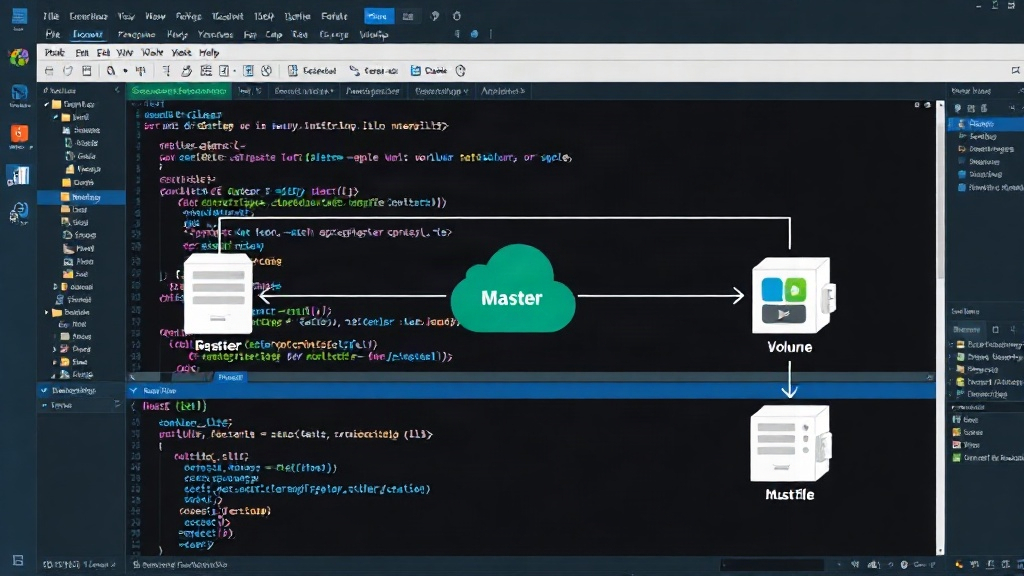
SeaweedFS emerges as a powerful, distributed file system designed for extreme scale, particularly when dealing with billions of small files. Its core innovation lies in its highly efficient 16-byte per-object index, managed by a single master node. This architecture allows it to track an immense number of objects without succumbing to memory limitations that plague traditional distributed systems. This isn't just a theoretical advantage; it translates into practical benefits for specific use cases.
One of SeaweedFS's standout features is its dual nature: it functions as a distributed file system that also speaks S3. This means developers can leverage its robust, scalable backend while interacting with it through familiar S3 APIs. Beyond S3, SeaweedFS offers a POSIX/FUSE mount, enabling it to be mounted like a traditional file system. This capability is invaluable for applications that expect a file system interface but can benefit from the scalability and resilience of a distributed object store.
Furthermore, SeaweedFS has positioned itself as a strong contender for data lakehouse architectures, specifically supporting Apache Iceberg. This integration allows for efficient management and querying of large analytical datasets, combining the strengths of object storage with the structure and performance of data warehousing. The ability to handle billions of small files, coupled with its support for diverse interfaces like S3, POSIX, and Iceberg, makes SeaweedFS a compelling choice for scenarios demanding high performance and flexibility at massive scale.
RustFS: The S3-Native, Minimalist Alternative
RustFS, on the other hand, carves out its niche by focusing on simplicity and S3 compatibility. It is a purpose-built, S3-compatible object store that aims to be a drop-in replacement for MinIO. The primary goal of RustFS is to provide a straightforward, easy-to-deploy solution for users who primarily interact with storage via S3 APIs. Its design prioritizes a minimal footprint and ease of use, often encapsulated within a single Docker container for rapid deployment.
Unlike SeaweedFS, RustFS does not offer POSIX mounts or direct support for data lakehouse formats like Iceberg out of the box. Its strength lies in its adherence to the S3 protocol. This makes it an attractive option for applications already built around S3, where the objective is to deploy a reliable and performant object store with minimal configuration overhead. The project's commitment to being MinIO-compatible means that existing MinIO workflows and tooling can often be migrated to RustFS with little to no modification.
The operational simplicity of RustFS is a key differentiator. The ability to get a fully functional S3-compatible store running with a single `docker run` command significantly lowers the barrier to entry. While SeaweedFS excels in handling an enormous quantity of diverse objects and offering multiple access methods, RustFS targets users who need a single, efficient S3 endpoint and nothing more. The absence of an explicitly published in-memory index size per object suggests a different architectural approach, likely optimized for its specific S3 workload rather than the broader scope of SeaweedFS.
When to Choose Which: A Footprint-Driven Decision
The decision between SeaweedFS and RustFS hinges entirely on your specific requirements and technical constraints. If your primary need is to manage billions of small files with a highly efficient index, require a POSIX/FUSE mount for legacy applications, or are building an Iceberg lakehouse, SeaweedFS is the clear leader. Its distributed nature and multi-interface support provide the flexibility and scale needed for these complex scenarios.
Consider SeaweedFS when you anticipate explosive growth in object count, need to serve data through multiple protocols, or want to integrate with advanced analytics platforms. The 16-byte index per blob is a critical piece of its efficiency, allowing it to scale horizontally and manage metadata effectively. This makes it suitable for large-scale cloud-native applications, content delivery networks, and big data analytics pipelines that process vast numbers of individual data points.
Conversely, if your use case is strictly S3-based, and you are looking for a simple, performant, and easily deployable object store that can act as a direct MinIO replacement, RustFS is the more appropriate choice. Its strength lies in its focused implementation of the S3 API, minimizing complexity and operational overhead. If your application ecosystem is already standardized on S3, and you value a single-binary, easy-to-manage solution that can be spun up quickly, RustFS offers a compellingly small footprint and straightforward operation. The lack of published index details for RustFS might indicate an architecture that scales differently, perhaps more monolithically or with a different approach to metadata management, which is acceptable if the S3 interface is the sole requirement.
Ultimately, the Referenced Sources