Automating Database Documentation for Modern Workflows
Keeping database documentation in sync with live production schemas has long been a manual, error-prone chore. Teams typically fall into one of two camps: painstakingly crafting manual documentation that quickly becomes outdated, or generating documentation that is difficult to read, challenging to compare across versions, or lacks reusability. SchemaCrawler Scribe directly addresses this persistent problem by generating structured documentation from live schema metadata, specifically formatted for both human consumption and AI agents.
The core innovation lies in its integration with the Google Open Knowledge Format (OKF). OKF is designed to represent knowledge in a machine-readable, structured way, making it ideal for AI systems. By outputting documentation in this format, SchemaCrawler Scribe ensures that database schemas are not just documented, but also readily understandable and actionable by AI tools. This eliminates the need for a separate documentation workflow for AI, streamlining processes for development teams.
The SchemaCrawler Scribe project is an extension of the broader SchemaCrawler tool, a popular Java library for analyzing and exploring database schemas. Scribe focuses specifically on the documentation generation aspect, enhancing its capabilities with the OKF standard.
How SchemaCrawler Scribe Works
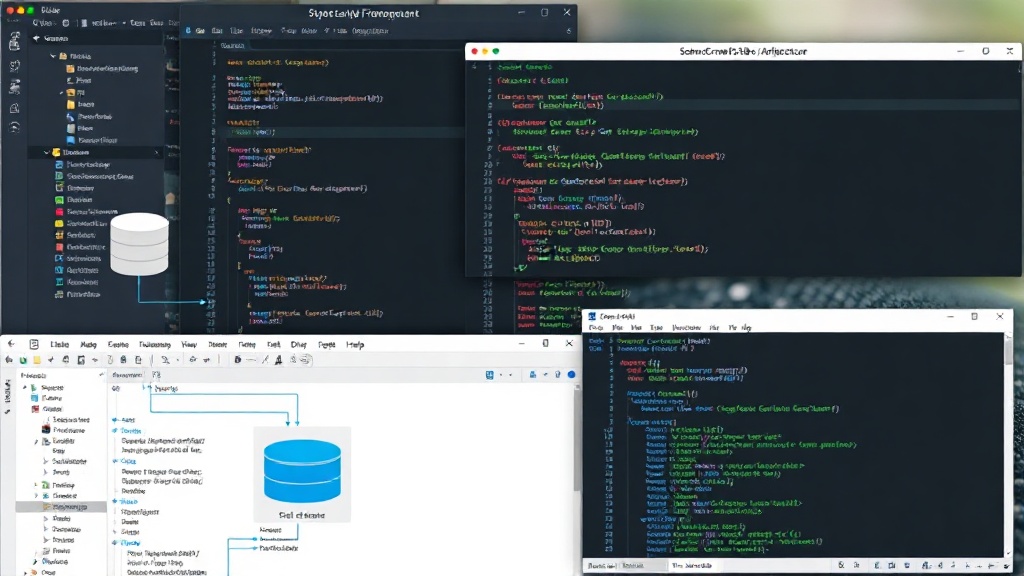
SchemaCrawler Scribe operates by querying the live metadata of a database. It connects to various database systems, including popular relational databases like PostgreSQL, MySQL, SQL Server, Oracle, and others. Once connected, it introspects the database schema, gathering information about tables, columns, data types, constraints, indexes, and relationships.
This raw metadata is then processed and transformed into the Google Open Knowledge Format (OKF). OKF structures this information hierarchically and relationally, enabling a deep understanding of the database's design. For instance, a table definition in OKF would include its name, description, and a list of its columns. Each column would detail its name, data type, nullability, default value, and any associated constraints or indexes. Relationships, such as foreign keys, are also explicitly defined, mapping source tables and columns to their target counterparts.
The output is typically a set of JSON files adhering to the OKF specification. These files can be stored directly in a Git repository alongside application code. This version-controlled approach means that documentation changes can be tracked, reviewed, and rolled back just like any other code change. Developers can leverage familiar Git workflows for managing their database documentation, ensuring a single source of truth that evolves with the database itself.
The tool is built on Java and can be integrated into CI/CD pipelines. This allows for automated documentation generation on schema changes, ensuring that documentation is always up-to-date with the deployed database version. The command-line interface (CLI) provided by SchemaCrawler Scribe makes it easy to invoke the generation process, providing parameters for database connection details, output directory, and specific schema elements to include.
The Benefits of AI-Ready, Git-Managed Documentation
The integration of OKF into SchemaCrawler Scribe unlocks significant benefits for modern development and data science teams. AI agents, from large language models to specialized data analysis tools, can now ingest and understand database schemas with unprecedented accuracy. This enables a range of powerful applications:
- Automated Data Analysis: AI can query and analyze data more effectively when it understands the underlying schema structure, relationships, and data types.
- Intelligent Code Generation: AI-powered tools can generate boilerplate code for data access layers, ORMs, or database migration scripts with greater precision.
- Enhanced Data Discovery: Developers and data scientists can use AI to quickly find relevant tables and columns for their tasks, reducing the time spent on schema exploration.
- Improved Data Governance: AI can help identify potential data quality issues, enforce naming conventions, or suggest improvements to schema design based on best practices.
Storing this structured documentation in Git provides further advantages. Version control for documentation means that historical changes are preserved, providing an audit trail and allowing teams to revert to previous states if necessary. Pull requests and code reviews can be extended to include documentation changes, fostering collaboration and ensuring quality. This GitOps approach to documentation aligns with modern DevOps practices, treating documentation as a first-class citizen alongside application code and infrastructure configuration.
The problem of documentation drift is fundamentally solved. Instead of relying on developers to remember to update separate documents, the documentation is automatically generated from the source of truth – the database schema itself. This ensures that the documentation always reflects the actual state of the database, eliminating the confusion and errors that arise from outdated information.
Use Cases and Target Audience
SchemaCrawler Scribe is particularly valuable for teams working with complex or rapidly evolving database schemas. This includes startups that iterate quickly on their product, enterprises managing large, legacy databases, and organizations adopting microservices architectures where database schemas can become distributed and intricate.
Developers gain a reliable, always-up-to-date source of truth for database structures, reducing the friction in building applications that interact with the database. They can trust that the documentation accurately represents the schema, saving debugging time and preventing integration issues.
Data Scientists and Analysts benefit from enhanced data discoverability and a clearer understanding of data relationships, enabling them to perform their analysis more efficiently and accurately. AI tools trained on this structured data can provide more insightful results.
DevOps and Platform Engineers can integrate SchemaCrawler Scribe into their CI/CD pipelines to automate documentation updates, ensuring that documentation is always synchronized with deployed environments. This fits seamlessly into a GitOps workflow.
AI Engineers and ML Developers can leverage the OKF-formatted output to train or fine-tune models that understand database schemas, or to build AI-powered tools that interact with databases.
The tool's open-source nature, with its code hosted on GitHub, further encourages adoption and contribution from the community. This collaborative approach suggests a commitment to evolving the tool to meet the growing demands for intelligent, automated documentation in the software development lifecycle.