Rethinking the Inbox: Scape's Mission to Modernize Email
For more than a decade, the digital world has grappled with an interface that, despite its ubiquity, feels increasingly archaic: email. Professionals worldwide spend the bulk of their workday sifting through digital correspondence, yet the fundamental design of the email client has remained largely unchanged for a quarter of a century. This stagnation has created a significant productivity bottleneck and a fertile ground for innovation. Enter Scape, a Y Combinator-backed startup that today emerges from stealth with $3.2 million in seed funding, aiming to fundamentally rethink how we interact with our inboxes.
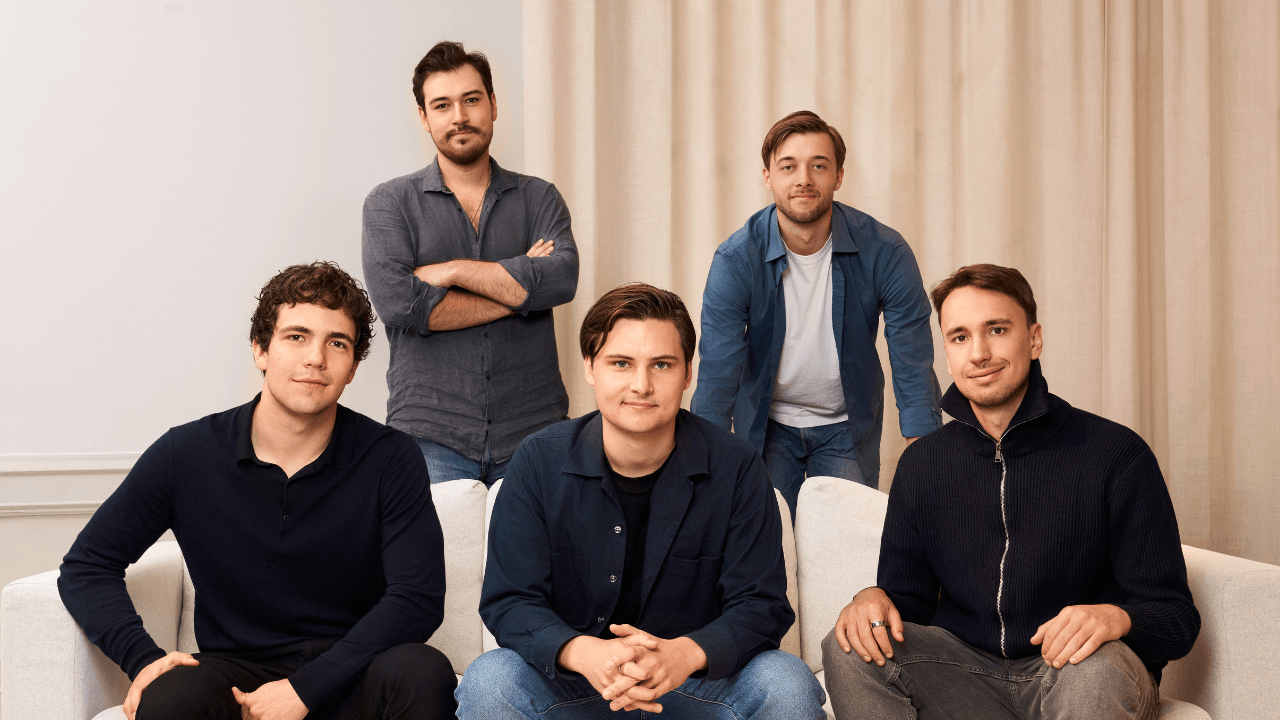
Founded by two 23-year-old Swedish entrepreneurs, Scape's ambition is not to build another email client in the traditional sense, but to create a new paradigm for managing digital communication. The company’s core thesis is that the current email system, with its linear threads and overwhelming volume, is ill-suited for the demands of modern professional collaboration. Scape proposes a shift from a message-centric view to a task- or project-centric approach, aiming to transform email from a passive receptacle of information into an active tool for getting work done.
The $3.2 million funding round was led by Atomico, with participation from notable angel investors including early employees of Stripe and Meta. This significant backing signals strong investor confidence in Scape’s vision and its potential to disrupt a market dominated by entrenched players like Google's Gmail and Microsoft Outlook. The funds will be used to accelerate product development, expand the engineering team, and scale user acquisition efforts.

The Problem with Today's Email
Email’s enduring presence is a testament to its foundational role in digital communication. However, its limitations are becoming increasingly apparent. The sheer volume of messages, the difficulty in prioritizing, and the constant context-switching required to manage threads all contribute to significant productivity losses. Information gets buried, important tasks are missed, and the inbox often becomes a source of stress rather than a tool for efficiency. Scape’s founders, drawing from their own experiences and observing the broader professional landscape, identified this as a critical area ripe for disruption.
The current email model forces users to adapt to its structure, rather than the other way around. This often means relying on external tools for task management, project tracking, and collaboration, leading to a fragmented workflow. Scape aims to consolidate these functions within a reimagined communication platform, reducing the need for users to jump between multiple applications. This approach is less about redesigning the look of an email client and more about fundamentally changing the underlying architecture and user experience to align with how modern teams actually work.
Scape's Proposed Solution: A Task-Centric Approach
Scape's innovation lies in its departure from the traditional chronological thread. Instead, the platform is designed to group communications around specific projects, tasks, or topics. Imagine an email thread related to a specific marketing campaign. In Scape, all communications, documents, and action items pertaining to that campaign would be consolidated into a single, easily accessible hub. This allows users to quickly grasp the context, identify outstanding action items, and contribute to the relevant discussion without getting lost in a sea of unrelated messages.
This task-centric methodology is akin to organizing a physical workspace by project rather than by the date a piece of paper arrived. Instead of a sprawling inbox, users are presented with a dashboard of active projects, each containing its relevant communication history, attached files, and defined tasks. This organizational shift promises to significantly reduce the cognitive load associated with managing email, enabling professionals to focus on execution rather than on the mechanics of information retrieval.
The platform’s underlying technology is designed to intelligently parse incoming messages, identify key action items, and suggest relevant groupings. This AI-driven approach automates much of the organizational work that currently falls on the user, further enhancing efficiency. Scape is not just building a new interface; it's building a smarter system that understands the intent and context of digital communication.
Market Context and Investor Sentiment
The productivity software market is vast and highly competitive, but the persistent challenges with email management indicate a significant unmet need. While many startups have attempted to build ‘email killers,’ few have succeeded in displacing the dominant players. Scape's differentiated approach, focusing on task-centric organization rather than a direct replacement of existing email infrastructure, could provide a path to success. By integrating with existing email providers rather than trying to replace them entirely, Scape can offer a less disruptive, more immediately valuable solution for professionals.
Atomico’s lead investment is particularly noteworthy. The firm, co-founded by Skype co-founder Niklas Zennström, has a strong track record of backing ambitious technology companies with global potential. Their involvement suggests a belief that Scape can achieve significant scale and impact. The participation of angel investors with deep experience at companies like Stripe and Meta further validates the team’s technical prowess and market understanding. These investors are not just betting on a new app; they are betting on a fundamental shift in how digital work is organized.
What remains to be seen is how quickly Scape can onboard users and demonstrate tangible productivity gains. The transition from a familiar, albeit flawed, system like email to a new paradigm requires a compelling value proposition and a seamless user experience. The company faces the challenge of educating the market and overcoming the inertia associated with changing deeply ingrained professional habits. However, with a clear vision, strong backing, and a focus on solving a universal problem, Scape is poised to make a significant impact on the future of professional communication.