
The Hidden Friction in AI Agent Deployment
While public discourse around AI agents often fixates on high-profile issues like model hallucinations or complex state management, a more fundamental and pervasive challenge is emerging: the sheer difficulty of deploying and scaling these agents into production environments. Developers are increasingly reporting that the foundational steps required to move an AI agent from a testing sandbox to a live, operational system are fraught with friction, often obscured by the fanfare surrounding advanced AI capabilities. This isn't just about sophisticated AI logic; it's about the unglamorous, yet critical, infrastructure and operational groundwork that underpins any scalable software system.
The frustration stems from a gap between the promise of accessible AI platforms and the reality of production deployment. Many platforms tout ease of use for testing and experimentation, but this often masks the intricate setup required for robust, reliable, and scalable operation. For individual developers or small teams, the process can feel like wrestling with a system that is more complex than its advertised simplicity suggests. This leads to a common question: is this a universal problem, or is it a reflection of insufficient technical expertise on the part of the user? The consensus from developer forums and discussions indicates it's a widespread issue, affecting even those with considerable technical backgrounds.
Beyond Hallucinations: The Practicalities of Production
The conversation around AI agent development tends to gravitate towards the 'intelligence' aspects – how to make agents smarter, more coherent, and less prone to errors like hallucinations. However, the journey to production introduces a different set of problems. These include:
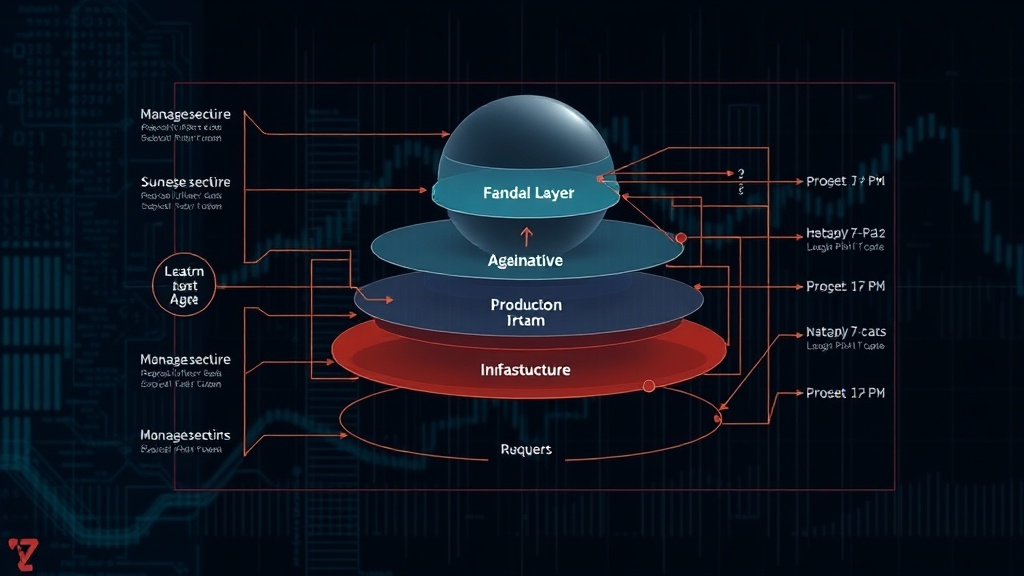
- Infrastructure Management: Ensuring the underlying compute resources are sufficient, auto-scaling effectively, and remain cost-efficient under varying loads. This involves managing cloud services, container orchestration (like Kubernetes), and monitoring tools, which are standard for web applications but add complexity when integrated with dynamic AI workloads.
- State Management at Scale: While often discussed, the 'state management' problem becomes exponentially harder in production. Agents need to maintain context across numerous concurrent user sessions, handle potential failures gracefully, and ensure data consistency without becoming a performance bottleneck. This is far beyond the scope of simple in-memory storage used during development.
- Integration with Existing Systems: Production AI agents rarely operate in isolation. They need to interface with databases, APIs, legacy systems, and other microservices. Designing secure, efficient, and reliable integration points requires careful architectural planning and robust error handling.
- Monitoring and Observability: Understanding how an AI agent is performing in the wild is crucial. This means not just tracking uptime and resource usage, but also monitoring the quality of agent outputs, identifying performance degradations, and diagnosing issues in a complex, distributed system. Traditional logging and monitoring tools may not be sufficient for the nuanced behavior of AI agents.
- Security and Compliance: Production environments demand stringent security measures. This includes protecting sensitive data the agent might process, securing API endpoints, and ensuring compliance with regulations like GDPR or HIPAA. The dynamic nature of AI models can introduce new attack vectors that require specialized security considerations.
Think of it less like setting up a simple script and more like building a miniature, intelligent microservice. The tools and platforms designed for rapid AI prototyping often abstract away these operational concerns, leaving developers to piece together the production-ready infrastructure themselves.
The Naming Dilemma: A Microcosm of Production Friction
The challenges in deploying AI agents are mirrored in other seemingly simple aspects of bringing AI products to market. Consider the process of naming an AI-powered product. Founders often leverage AI itself to generate brand names, expecting a seamless creative process. However, a common, frustrating bottleneck emerges: domain name availability. As one developer noted, after extensive AI-assisted brainstorming and multiple rounds of checks, a staggering 84% of seemingly perfect names were unavailable as .com domains. This isn't a failure of the AI's naming capability, but a failure of the *process* – the AI generates names based on meaning and aesthetics, but it cannot 'see' the real-time availability in domain registries.
This disconnect between AI's generative power and real-world constraints is a recurring theme. Founders fall in love with AI-generated names, invest time in mock logos, only to be met with the harsh reality of domain squatting or prior ownership. The result is a loop of re-prompting, re-evaluating, and re-designing, delaying product launches or forcing the adoption of awkward, hard-to-spell names. This 'filter problem' – the lack of a real-time availability check integrated into the AI naming tool – highlights how even basic go-to-market steps can become unexpectedly complex when dealing with AI-driven workflows that don't account for external, practical limitations.
The Path Forward: Bridging the Gap
Addressing the deployment and scaling friction requires a multi-faceted approach. On the platform side, vendors need to offer more robust, integrated solutions for production environments. This means providing tools for:
- Automated infrastructure provisioning and management.
- Advanced state management solutions designed for AI workloads.
- Integrated monitoring and observability specifically tailored for AI agent behavior.
- Built-in security best practices and compliance features.
For developers, the key is to approach AI agent development with a production-first mindset, even during the early stages. This involves:
- Adopting MLOps principles: Applying best practices from machine learning operations to manage the lifecycle of AI models and agents.
- Leveraging specialized frameworks: Utilizing tools like LangChain or LlamaIndex, which are designed to abstract some of the complexities of agent orchestration, but understanding their limitations for true production scaling.
- Focusing on modularity and testability: Designing agents as a series of smaller, testable components rather than monolithic applications.
- Investing in infrastructure skills: Developers may need to augment their AI expertise with stronger skills in cloud infrastructure, DevOps, and distributed systems.
The frustration is real, and it signals a maturing of the AI landscape. As AI agents move from research labs and hobby projects into mission-critical business applications, the operational challenges will only become more pronounced. Successfully navigating this requires a pragmatic focus on the engineering fundamentals that have always underpinned reliable software, applied to the unique demands of artificial intelligence.