
Decentralized AI for Battlefield Drones
Scaleout, a startup backed by NATO, is pioneering the use of small, decentralized artificial intelligence models to enable drones to autonomously identify and attack targets on the battlefield. This approach moves AI processing from centralized cloud servers directly onto the drone or at forward military bases, significantly reducing latency and increasing operational responsiveness.
The core innovation lies in adapting large AI models into smaller, more efficient versions. These compact models can run on the limited computational resources of drones, which are often constrained by power, size, and weight. By processing data locally, drones can make real-time decisions without constant communication with a ground control station. This is critical in contested electromagnetic environments where communication links can be jammed or disrupted.
Scaleout's system focuses on two primary functions: reconnaissance and attack. During reconnaissance missions, the AI analyzes sensor data (like optical or infrared imagery) to detect, classify, and track potential targets. Once a target is identified and verified against mission parameters, the AI can autonomously engage it or provide targeting data to a human operator for final authorization. The decentralized nature means that even if a drone loses contact with its command, it can continue to operate effectively within its programmed mission parameters.
Think of it less like a central command center dictating every move, and more like a highly trained soldier on the ground who can assess a situation and act decisively based on their training and immediate surroundings. This distributed intelligence allows for swarms of drones to coordinate actions or for individual units to operate with unprecedented autonomy.
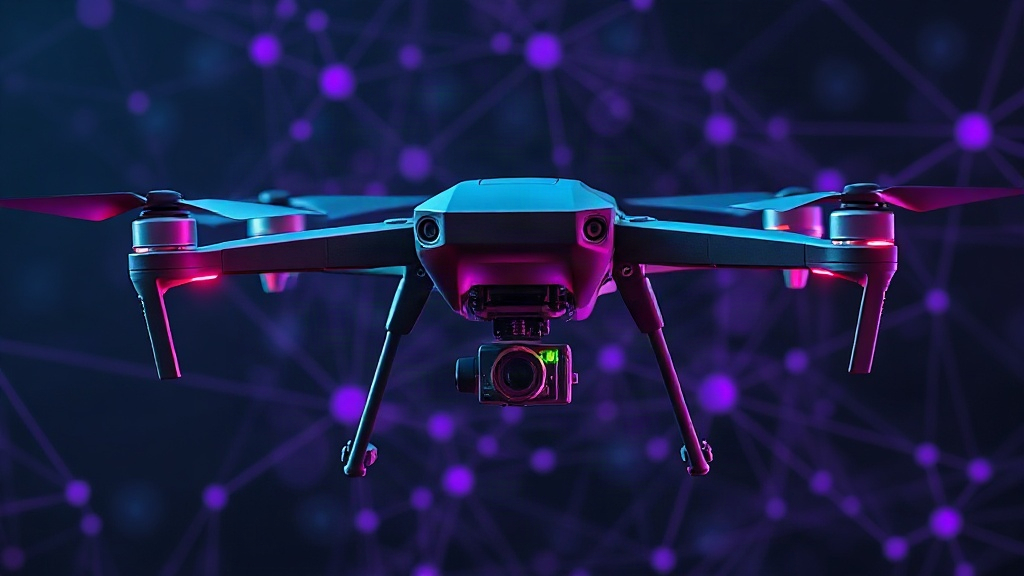
Adapting AI for Military Constraints
Developing AI for military applications presents unique challenges. Unlike consumer AI applications, military AI must operate reliably in harsh, unpredictable environments, under severe time constraints, and with extremely high stakes. The AI models must be robust enough to handle noisy sensor data, adversarial conditions, and rapidly evolving situations.
Scaleout's approach addresses these challenges by leveraging techniques such as federated learning and model compression. Federated learning allows AI models to be trained across multiple drones or bases without sharing raw sensitive data. Each unit trains its local model, and then only the model updates are aggregated, preserving data privacy and security. Model compression techniques, like quantization and pruning, reduce the size and computational requirements of the AI models, making them suitable for edge deployment on drones.
The company claims its AI can achieve high accuracy in target identification, even with limited sensor input or in cluttered environments. This is a significant leap from traditional drone operations, which often rely on human operators to manually scan hours of footage or interpret sensor readings. The autonomous capability promises to accelerate the kill chain – the sequence of actions from target detection to engagement – dramatically.
Implications for Modern Warfare
The implications of autonomous drone systems are profound. For military forces, it means the potential for increased operational tempo, reduced risk to human soldiers, and enhanced effectiveness in complex scenarios. Drones equipped with this AI can perform persistent surveillance, react instantly to threats, and operate in areas too dangerous for human personnel.
However, the deployment of autonomous weapons systems also raises significant ethical and strategic questions. The decision to grant machines the authority to identify and engage targets autonomously is a complex one, involving considerations of accountability, unintended escalation, and the potential for algorithmic bias. While Scaleout emphasizes human oversight in its current deployment models, the trajectory of AI development suggests a continued push towards greater autonomy.
The success of Scaleout's decentralized AI approach could signal a broader shift in military technology, where edge computing and AI are integrated at the tactical level, enabling smaller, more agile, and more intelligent unmanned systems to operate with greater independence. This could fundamentally alter battlefield dynamics, making future conflicts faster, more complex, and potentially more lethal.
What nobody has fully addressed yet is the long-term impact on the human-machine teaming dynamic. As AI becomes more capable and autonomous, how do human operators maintain situational awareness, trust, and effective control over these increasingly independent systems? The psychological and operational frameworks for this new era of warfare are still very much in development.