The Problem: AI Agents Struggle with Codebase Complexity
Most AI coding agents can search files. This capability, however, falls short when dealing with the intricate structure of real-world codebases. These repositories are not mere collections of flat text files. They contain symbols, define ownership boundaries, utilize wrappers and callees, include stale or generated files, and often spread logic across numerous directories. Without this structured context, AI agents are forced to build an understanding of the codebase inefficiently. They often pull large, broad file dumps, consuming valuable tokens without grasping the complete picture. This can lead to them guessing file ownership or missing crucial relationships between code components like related callers, wrappers, or legacy paths. This inefficiency is particularly costly for frontier AI models and even more so for smaller, local, or non-frontier models where token budgets are extremely constrained.
Hamza, the creator of Satori, recognized this fundamental limitation. He observed that AI agents were burning tokens and still failing to gain a comprehensive understanding of code relationships, leading to suboptimal performance and increased operational costs.
Introducing Satori: A Read-Only Codebase Map
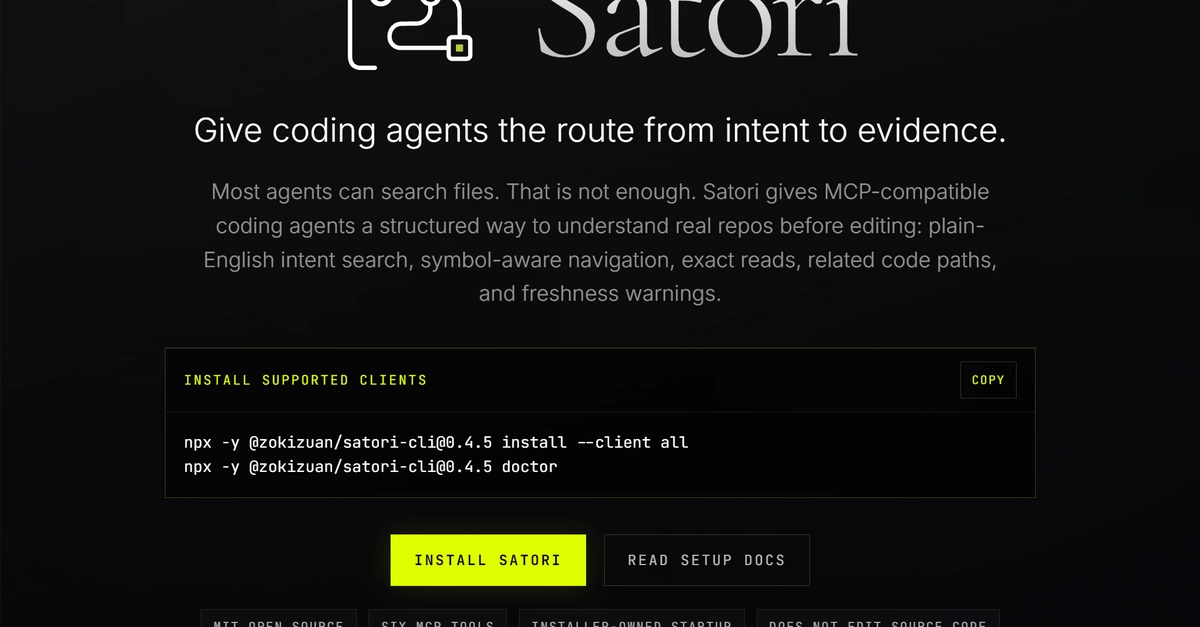
To address these challenges, Hamza developed Satori. Satori is an open-source, read-only codebase map designed specifically to provide AI coding agents with a more efficient investigation path before they begin modifying or even fully analyzing code. It aims to offer a structured representation of the codebase, analogous to how a human developer navigates and understands a complex project. Instead of treating a repository as a simple document archive, Satori maps out the inherent relationships and structures that define the project.
The goal is to equip agents with a high-level overview, allowing them to pinpoint relevant code sections, understand dependencies, and identify ownership more effectively. This structured context significantly reduces the need for broad file retrieval, thereby conserving tokens and improving the accuracy of the agent's initial understanding. Satori is built to be compatible with current coding agent frameworks, specifically mentioning MCP (Multi-Agent Conversation Protocol) compatibility, implying a focus on agents that coordinate and communicate to solve complex tasks.
Satori's Core Functionality and Benefits
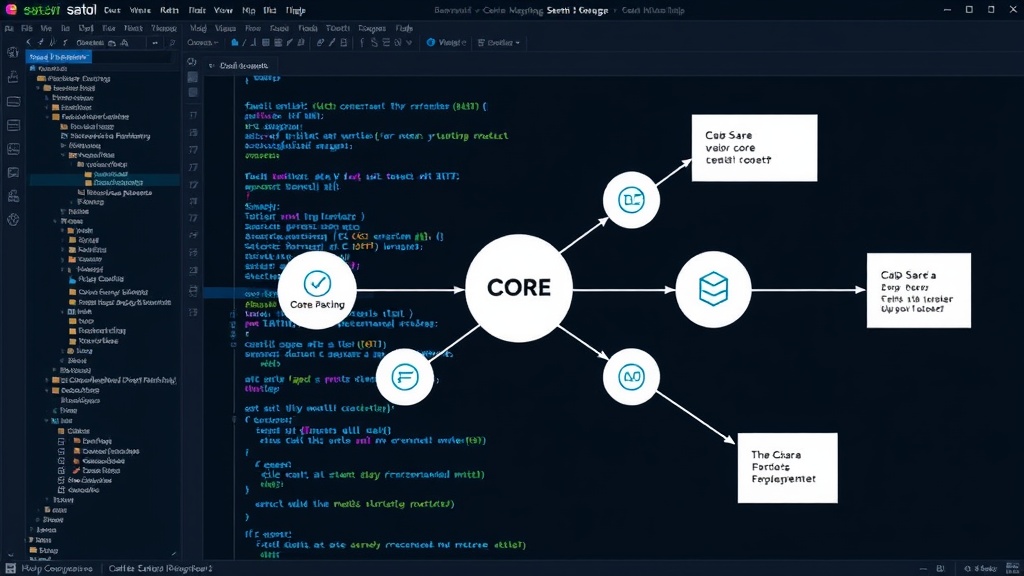
At its core, Satori functions by analyzing a codebase and generating a structured map. This map captures key relationships and metadata that are typically lost in simple file searches. While the exact technical implementation details are not fully elaborated in the provided excerpts, the concept implies an analysis layer that understands code structure beyond mere text content. This could involve parsing Abstract Syntax Trees (ASTs), identifying function calls, tracking variable definitions and usages, and understanding module dependencies.
The primary benefit of Satori is enhanced efficiency for AI coding agents. By providing a pre-computed map, agents can avoid the costly process of repeatedly scanning and inferring relationships from raw code. This translates to:
- Token Savings: Reduced consumption of expensive model tokens by minimizing unnecessary file retrieval and analysis.
- Improved Contextual Understanding: Agents gain a clearer picture of code ownership, dependencies, and behavior from the outset.
- Faster Investigation: Agents can more quickly identify relevant code sections, leading to quicker task completion.
- Support for Smaller Models: Critical for local or less powerful models where token efficiency is paramount.
Broader Implications for AI Coding and Development
The development of tools like Satori highlights a critical evolution in how we interact with and leverage AI for software development. As AI coding agents become more sophisticated, the bottleneck is shifting from raw code generation to efficient code understanding and navigation within complex environments.
The insights from the Databricks codebase benchmarking, as seen on Reddit, underscore this trend. The finding that the Pareto frontier for coding tasks includes a mix of models, and that open-source models are now capable of high-difficulty tasks, suggests an increasing demand for efficient and performant AI tools. The observation that token price is a poor indicator of actual end-to-end costs further validates the need for solutions like Satori that optimize the entire process, not just individual model calls. If larger models can be more cost-effective due to better contextual understanding, then tools that provide that understanding upfront become invaluable.
Satori directly tackles this by providing structured context. This is not just about saving tokens; it's about enabling AI agents to operate more like experienced developers who possess an intuitive understanding of a project's architecture. This could lead to more reliable code suggestions, more accurate bug fixes, and a smoother integration of AI into the software development lifecycle. The open-source nature of Satori also suggests a move towards community-driven solutions for common AI agent challenges, fostering broader adoption and improvement.
The Future of AI Code Navigation
Satori represents a step towards more intelligent and efficient AI coding agents. By abstracting the complexity of codebase navigation into a structured map, it allows agents to focus on problem-solving rather than on the laborious task of understanding the code's layout and relationships. This approach could pave the way for more advanced AI capabilities, enabling agents to tackle larger, more complex projects with greater accuracy and efficiency. The ongoing research in benchmarking and optimizing AI coding agents, as evidenced by the Databricks analysis, indicates a strong market pull for such foundational tools. What remains to be seen is how seamlessly Satori and similar tools will integrate with the rapidly evolving landscape of AI agent frameworks and whether they can adapt to the dynamic nature of modern software development where codebases are constantly changing.