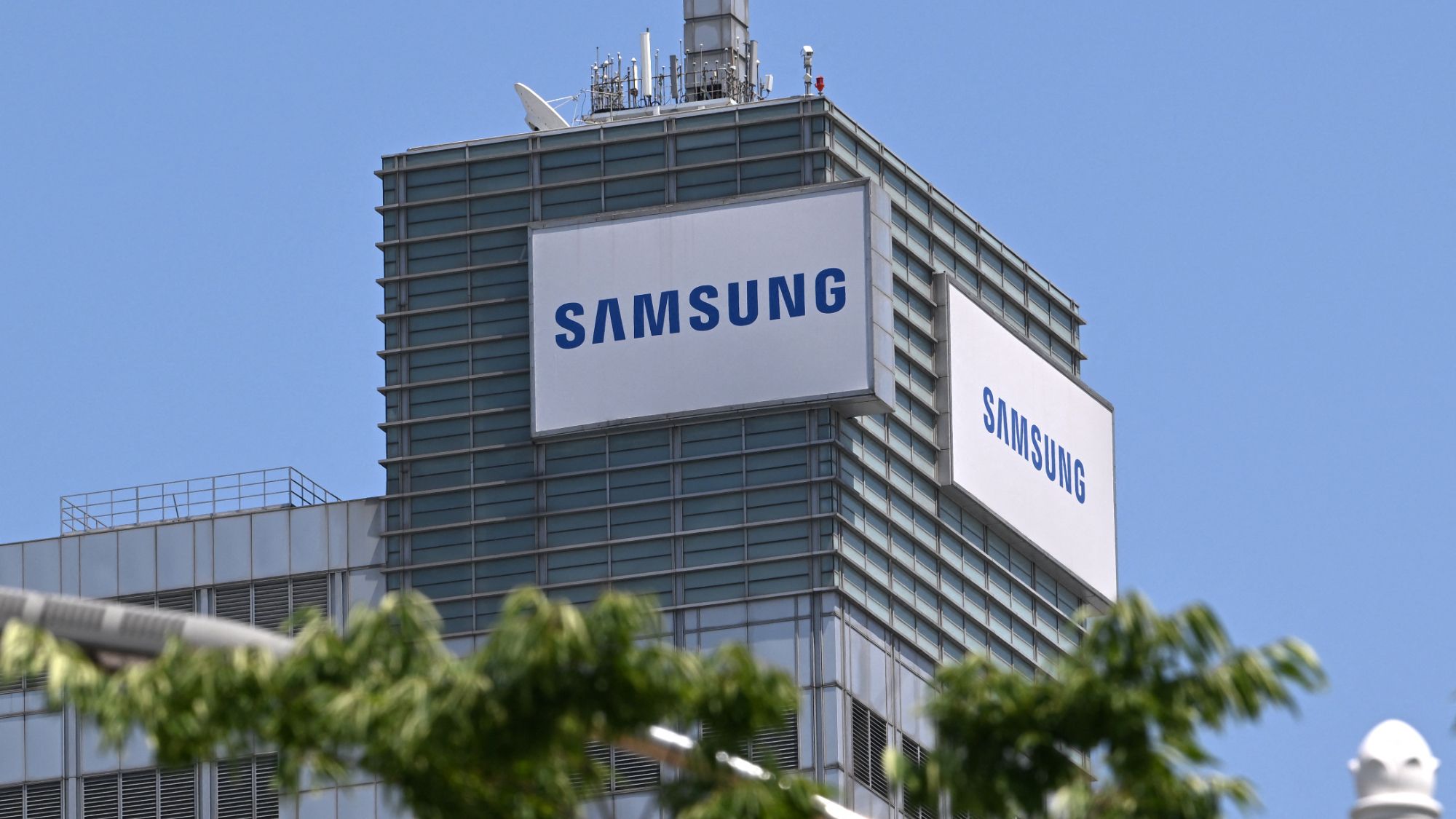
A New Era of Profitability for Samsung Semiconductors
Samsung's semiconductor division is poised for an extraordinary leap in profitability, with projections indicating that its earnings in 2026 alone will surpass the combined profits of its entire 40-year history. This dramatic forecast, driven by a confluence of market demand for advanced memory and AI-driven chip needs, positions Samsung to not only redefine its own financial benchmarks but also to potentially overtake industry leader Nvidia in terms of sheer profit generation.
Brokerage consensus estimates place Samsung's full-year operating profit for 2026 at an astounding 300 trillion won (approximately $215 billion USD). This figure represents a monumental achievement, dwarfing previous performance metrics and signaling a fundamental shift in the semiconductor landscape. The driving force behind this surge is the insatiable global demand for high-bandwidth memory (HBM) and other advanced semiconductor components essential for artificial intelligence, data centers, and next-generation computing infrastructure.
For decades, Samsung has been a titan in memory chip manufacturing, consistently ranking among the top global players. However, the current market dynamics, particularly the explosive growth in AI, have created a unique opportunity. The computational power required for training and deploying sophisticated AI models necessitates vast amounts of high-performance memory, a segment where Samsung has strategically invested and is now reaping significant rewards. This isn't merely an incremental gain; it's a paradigm shift that leverages Samsung's established manufacturing prowess and R&D capabilities to meet a demand that is growing exponentially.
The comparison to Nvidia is particularly telling. Nvidia has dominated the AI chip market with its high-performance GPUs, commanding premium pricing and market share. However, Samsung's strength lies in its integrated approach, encompassing not just the cutting-edge memory solutions that are critical complements to GPUs, but also its foundry services. As more companies seek to build custom AI chips, Samsung's ability to offer both advanced memory and the manufacturing capacity to produce these complex designs gives it a unique advantage. The projected profit figures suggest that the sheer volume and high value of its memory products, coupled with its foundry business, will allow it to eclipse Nvidia's profitability, even if Nvidia maintains a lead in specific high-end GPU segments.
The Market Forces Driving Unprecedented Profits
Several key factors are converging to create this perfect storm of profitability for Samsung's chip division. The primary catalyst is the artificial intelligence revolution. AI models, especially large language models and generative AI applications, require immense computational resources. This translates directly into a massive demand for high-performance memory, such as HBM, which allows for faster data transfer between the processor and memory. Samsung has been a leader in developing and mass-producing HBM, including its latest HBM3E technology, positioning it to capture a significant share of this lucrative market.
Beyond AI, the broader digitalization trend continues to fuel demand for semiconductors. Data centers, cloud computing, and advanced networking infrastructure all require sophisticated chips. Furthermore, the automotive sector's increasing reliance on advanced electronics, from autonomous driving systems to in-car infotainment, adds another layer of demand. Samsung's diversified product portfolio, spanning memory, logic, and foundry services, allows it to capitalize on these multiple growth vectors simultaneously.
The company's strategic investments in advanced manufacturing processes and R&D have been crucial. Samsung has consistently pushed the boundaries of semiconductor fabrication, investing heavily in cutting-edge lithography technologies and yield improvements. This commitment to innovation ensures that it can produce the most advanced and competitive chips at scale, a critical factor in a market where performance and cost-effectiveness are paramount. The ability to achieve high yields on complex, multi-layer memory chips is a testament to its manufacturing expertise.
The global geopolitical landscape and supply chain realignments have also played a role. Concerns about supply chain resilience have led many companies to diversify their chip sourcing, often leading them to consider multiple suppliers. Samsung, with its massive production capacity and established reputation, benefits from this trend, securing long-term contracts and partnerships.
Strategic Implications and Future Outlook
The projected financial performance of Samsung's semiconductor division has profound implications for the global tech industry. It signals a potential shift in market leadership, moving beyond the traditional focus on CPU or GPU dominance to highlight the critical role of memory and integrated semiconductor solutions.
For developers and engineers, this means continued innovation in memory technologies. The demand for faster, more efficient memory will drive the development of new architectures and interfaces. Understanding the capabilities and limitations of HBM and other advanced memory types will become increasingly important for optimizing AI workloads and high-performance computing applications. The reliance on these advanced components will likely spur new software optimizations aimed at maximizing data throughput and minimizing latency.
Referenced Sources