
AI Agents Must Exceed Human Performance

The most striking takeaway from the SaaStr AI Annual AMA is the elevated bar for AI agents in B2B operations. The consensus is clear: AI agents should not merely match the performance of your best human representatives; they must surpass it. This isn't about incremental improvement; it's about fundamentally redefining what's possible. The speed at which software and business processes evolve today means that traditional playbooks, once sufficient, are now too slow to remain competitive. Relying on AI to simply replicate existing human workflows will lead to obsolescence. Instead, businesses must architect their AI strategies around agents capable of achieving superior outcomes, faster and more effectively than their human counterparts ever could.
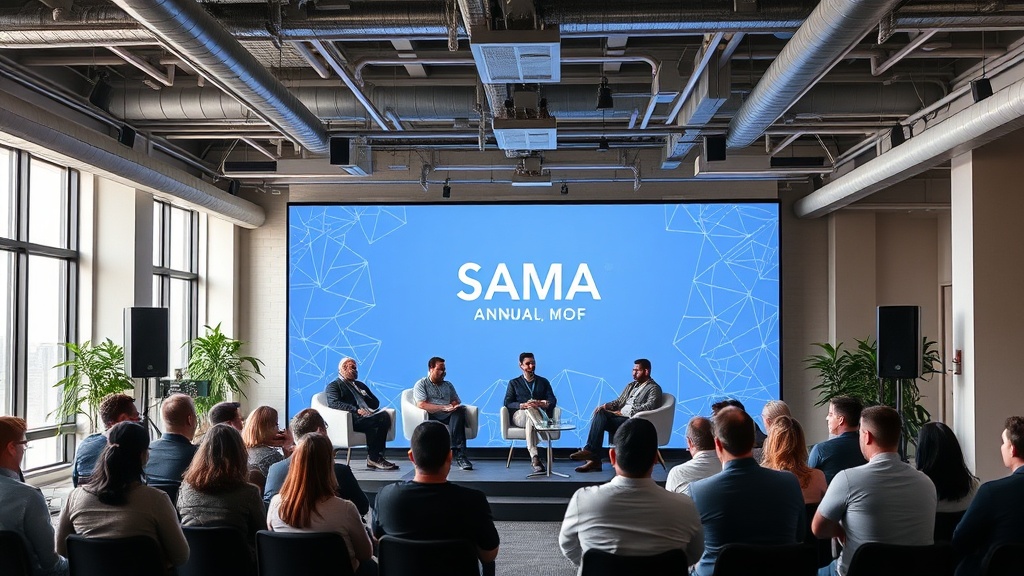
SaaStr AI Annual AMA stage with speakers discussing AI in B2B

The Pace of Change Demands Agility

Software development and deployment cycles have accelerated dramatically. What once took years of planning and iterative development can now happen in months, or even weeks. This relentless pace means that strategies, tools, and even entire product roadmaps must be fluid. Static, long-term planning is a relic of a bygone era. Companies that cling to outdated, slow-moving planning cycles will inevitably fall behind. The AMA highlighted that the primary challenge for B2B companies today is not the availability of AI technology, but the organizational agility to adapt to its rapid evolution. This necessitates a shift from rigid, annual planning to continuous, agile adaptation, embracing a mindset where change is the only constant.

AI in Sales: Beyond Augmentation to Autonomy

In B2B sales, the conversation has moved beyond AI as a mere assistant. The expectation is that AI-powered agents will handle significant portions of the sales cycle autonomously, and with greater efficacy than human reps. This means AI must not only understand customer needs but also strategize, negotiate, and close deals. The implication is that sales teams will transform, with humans focusing on higher-level strategy, complex problem-solving, and relationship building that AI cannot replicate, rather than on routine tasks. The true value of AI in sales lies in its potential to unlock new levels of productivity and revenue by operating at a scale and speed humans cannot achieve.

Customer Support: Proactive Problem Solving

For customer support, AI agents are expected to move beyond reactive problem-solving to proactive issue identification and resolution. This involves analyzing vast amounts of customer data to anticipate potential problems before they arise, reaching out to customers with solutions, and optimizing the support experience. The goal is to reduce inbound support tickets by addressing issues at their root cause, thereby improving customer satisfaction and loyalty. This proactive stance is a significant departure from traditional support models, where agents primarily react to customer-initiated queries.

Product Development: AI-Driven Iteration

The AMA also touched upon AI's role in product development. The rapid iteration cycle means that AI can be instrumental in analyzing user feedback, identifying bugs, and even suggesting new features or product improvements. This allows development teams to respond more quickly to market demands and user needs, ensuring products remain relevant and competitive. AI can accelerate the feedback loop, enabling product managers and engineers to make data-informed decisions at an unprecedented speed, turning raw data into actionable product enhancements.

The Human Element in an AI-Driven World

Despite the emphasis on AI surpassing human capabilities, the human element remains crucial. The AMA stressed that AI should augment, not replace, human strategic thinking. In B2B, where complex relationships and nuanced negotiations are common, human oversight and strategic direction are indispensable. The role of human professionals will shift towards higher-value tasks: setting AI strategy, interpreting complex AI outputs, managing exceptions, and building deep, trust-based relationships that AI currently cannot foster. The future lies in a symbiotic relationship where AI handles the scale and speed, and humans provide the strategic judgment and emotional intelligence.

Data Strategy: The Foundation for AI Success

A robust data strategy is paramount for any B2B company leveraging AI. The AMA underscored that the quality, accessibility, and organization of data directly dictate the effectiveness of AI agents. Without clean, relevant, and well-structured data, AI models will underperform, leading to flawed decisions and missed opportunities. Companies must invest in data governance, data engineering, and data science capabilities to ensure their AI initiatives are built on a solid foundation. This includes not only collecting data but also understanding how to process, label, and utilize it effectively to train and deploy AI models that deliver tangible business value.

AI Adoption: Overcoming Inertia

The biggest hurdle for many B2B companies isn't the technology itself, but the organizational inertia and resistance to change. Implementing AI effectively requires a cultural shift, a willingness to abandon old methods, and a commitment to continuous learning. Leadership must champion AI initiatives, foster a data-driven culture, and provide the necessary training and resources for employees to adapt. The AMA revealed that successful AI adoption hinges on proactive change management, clear communication of AI's benefits, and a willingness to experiment and learn from failures.

The Future of B2B AI: Continuous Evolution

The overarching theme of the SaaStr AI AMA is that the landscape of AI in B2B is in a state of perpetual evolution. What is cutting-edge today will be standard tomorrow, and obsolete the day after. Companies must therefore build for continuous adaptation. This means investing in flexible architectures, fostering a culture of experimentation, and staying abreast of the latest advancements. The 15 hard truths shared at the AMA serve as a critical roadmap for navigating this dynamic environment, emphasizing that success in B2B AI is not a destination, but an ongoing journey of learning and adaptation.