
Malicious Software Masquerades as Legitimate Tools
A financially motivated Russian threat actor, identified as UAT-11795, is actively distributing a new backdoor malware dubbed Starland RAT. The attackers achieve this by trojanizing legitimate software, specifically targeting users of popular communication and collaboration platforms like Cisco Webex and Zoom. The primary objective of this campaign is to steal sensitive user credentials and cryptocurrency.
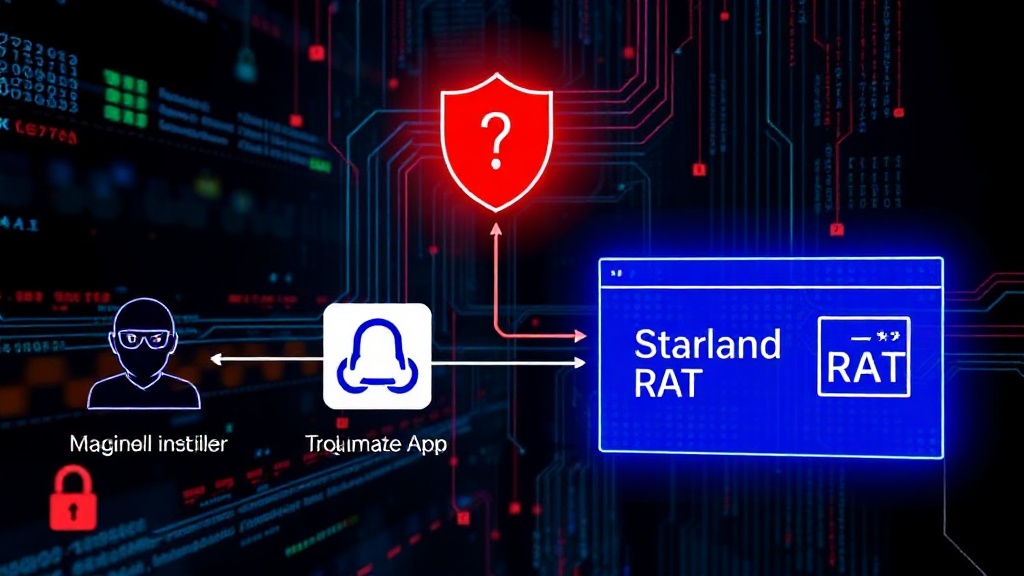
The attackers are employing a sophisticated social engineering tactic. They are reportedly distributing links that, when clicked, lead to the download of what appears to be the official installer for WebEx or Zoom. However, the downloaded package is a carefully crafted malicious installer. Once executed, it installs the legitimate application alongside the Starland RAT, creating a stealthy presence on the victim's system.
This method is particularly effective because it leverages the trust users place in well-known software providers. Many users, especially those in corporate environments, regularly download and install these applications. The attackers exploit this routine behavior by presenting a seemingly harmless download that carries a hidden payload. The Starland RAT, once installed, operates in the background, silently gathering information and awaiting further commands from its operators.
Starland RAT Capabilities and Objectives
The Starland RAT is a newly identified piece of malware with a range of capabilities designed for espionage and financial gain. Its core function is to establish a persistent backdoor into the compromised system, allowing the attackers to maintain access and control. Once established, the malware can perform several malicious actions:
- Credential Theft: Starland RAT is equipped to harvest login credentials from various applications and services installed on the victim's machine. This includes credentials for web browsers, email clients, and potentially other sensitive accounts.
- Cryptocurrency Theft: A significant objective is the exfiltration of cryptocurrency. This could involve stealing wallet details, intercepting transactions, or gaining access to cryptocurrency exchange accounts.
- Information Gathering: The malware can collect a wide array of information about the compromised system, including system configuration, user activity, and network details. This data can be used for further targeting or sold on underground forums.
- Remote Access and Control: As a Remote Access Trojan (RAT), Starland allows attackers to execute commands remotely, download and run additional malware, and essentially take full control of the infected machine.
The precise methods for cryptocurrency theft are still under investigation, but the inclusion of this capability highlights the financially motivated nature of UAT-11795. This threat actor is not merely interested in data exfiltration but is actively seeking direct financial profit through illicit means.
Distribution Tactics and Social Engineering
The distribution mechanism employed by UAT-11795 is a critical component of their attack strategy. Instead of relying on traditional exploit kits or mass phishing campaigns, they are using a more targeted social engineering approach. The attackers likely obtain or generate links to malicious installers through various channels, potentially including compromised websites, malicious advertisements, or direct communication with potential victims.
The trojanized installers are designed to mimic the official installation packages of WebEx and Zoom. This involves replicating the look and feel of the legitimate installers, often including similar branding and user interface elements. When a user attempts to install the software, the malicious installer proceeds with the installation of both the legitimate application and the Starland RAT. The RAT is typically installed in a manner that makes it difficult for the user to detect, often running as a background process with a seemingly innocuous name.
The reliance on trojanized installers for widely used communication software is a concerning trend. It suggests that threat actors are becoming increasingly adept at exploiting user trust and the ubiquitously of these tools in modern work environments. The success of this campaign hinges on the user's willingness to download and execute software from sources that may not be thoroughly vetted, especially if the source appears legitimate or is presented through a trusted channel.
Attribution and Threat Actor Profile
The threat actor behind this campaign is tracked as UAT-11795. While the provided information points to a Russian origin, the specific motivations appear to be primarily financial. This aligns with a broader trend of financially motivated cybercrime groups originating from Eastern Europe, who often leverage sophisticated malware and social engineering tactics to achieve their goals.
The development and deployment of a new RAT like Starland indicate a level of technical proficiency and resources. The fact that this actor is actively targeting widely used enterprise software suggests a calculated approach to maximize their impact and reach. The use of trojanized installers points to an understanding of user behavior and common IT practices. This actor is not just a script kiddie; they are a persistent and evolving threat.
The emergence of Starland RAT and its distribution via trojanized WebEx and Zoom installers represent a significant development in the landscape of credential and cryptocurrency theft. Organizations and individuals using these collaboration tools must remain vigilant, ensuring they download software only from official sources and exercise caution with any unsolicited software downloads.