Runway Pivots to Infrastructure Layer for Generative Media
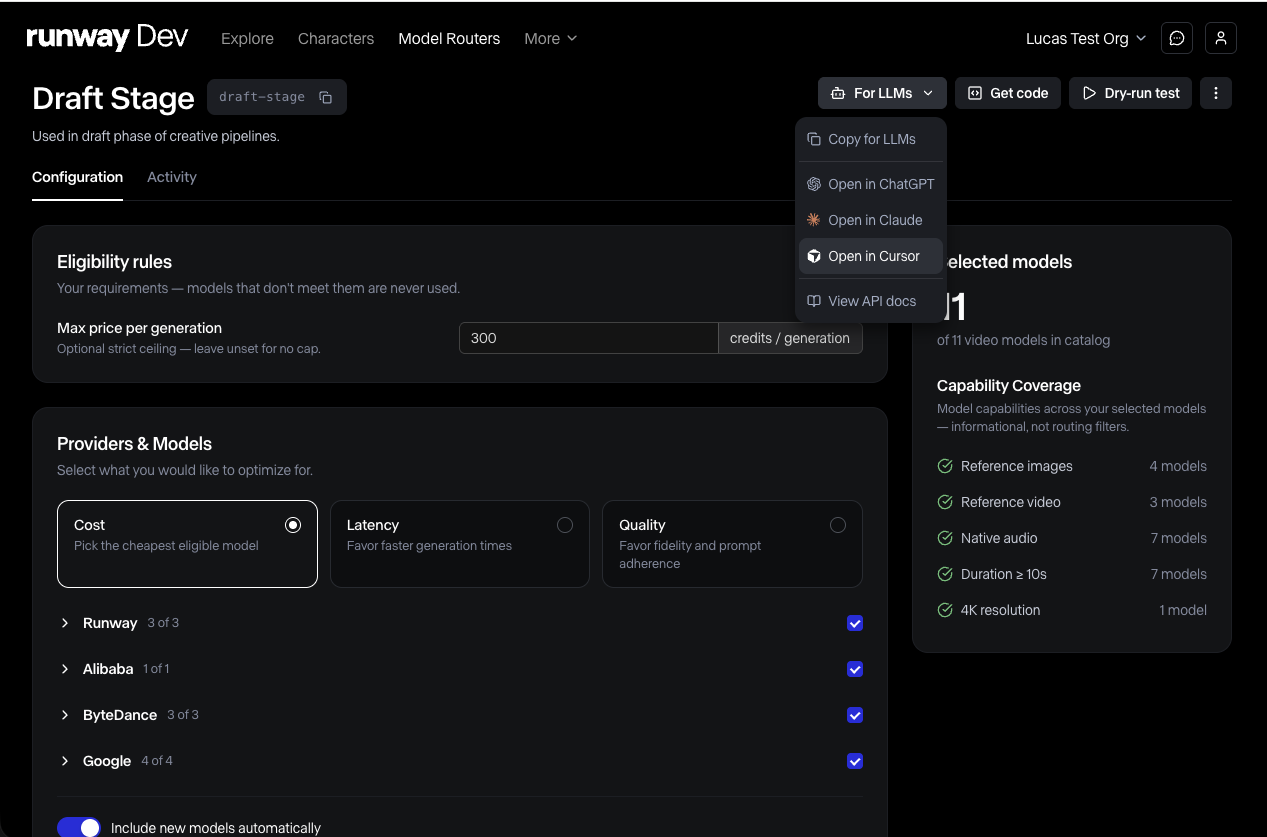
Runway, a company known for its AI-powered video editing tools, is making a significant strategic pivot. Instead of competing directly with other generative AI model developers, Runway aims to become the foundational infrastructure for the rapidly expanding generative media landscape. This shift was announced with the launch of the Runway Media Router, a key component of its new developer platform, Runway Dev.
The generative media space is becoming increasingly crowded, with numerous companies releasing specialized models for image, video, and audio generation. Runway’s new strategy positions it not as just another model provider, but as a central hub that connects creators and developers to a diverse ecosystem of AI tools. The Runway Media Router acts as an intelligent layer that can select and route user requests to the most appropriate third-party AI model based on task, quality, and cost parameters.
This move is reminiscent of how cloud providers offer access to a variety of compute and storage services, abstracting away the complexities of managing individual hardware. For developers and creators, this means they can leverage a wide array of generative AI capabilities without needing to integrate each model individually. Runway is effectively building the plumbing for the next generation of AI-driven content creation.
The company’s decision to focus on infrastructure is a calculated response to market dynamics. As more powerful and specialized models emerge, the challenge for users is not a lack of options, but an overwhelming complexity in choosing and deploying them. Runway seeks to simplify this by offering a unified API and a smart routing system. This approach allows Runway to capture value by enabling the broader ecosystem, rather than trying to own every piece of the generative stack.
Runway Dev: Unifying Generative AI Access
The launch of Runway Dev, which includes the Media Router, signifies a commitment to empowering developers. The platform provides API access to a curated selection of third-party image, video, and audio models. This roster is expected to grow, reflecting Runway's ambition to be the go-to integration point for generative AI tools.
Consider the process of creating a complex piece of generative media. Traditionally, a developer might need to integrate APIs from multiple vendors for different tasks: one for realistic image generation, another for stylized video clips, and perhaps a third for voice synthesis. Each integration requires separate authentication, understanding of different model parameters, and management of distinct usage terms and pricing. Runway Media Router aims to collapse this complexity into a single point of interaction.
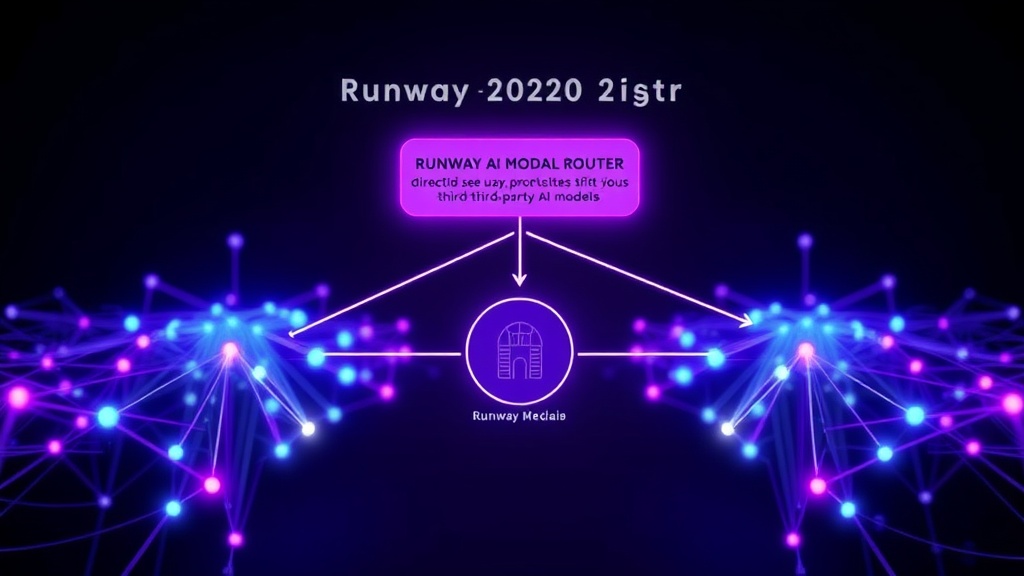
The router intelligently analyzes a user's request – for example, “generate a photorealistic scene of a cat playing piano” – and determines the best model or combination of models to fulfill it. This could involve selecting a state-of-the-art image generation model for the core visual, potentially a specialized style transfer model if a particular aesthetic is requested, and even a text-to-speech model if accompanying audio is needed. The router’s decision-making process is informed by factors such as model performance benchmarks, real-time availability, and cost-effectiveness. This is analogous to a travel booking site that compares flights across multiple airlines to find the best option for a traveler, rather than a single airline’s website.
Early access to Runway Dev and its associated APIs has been extended to select partners, indicating a phased rollout strategy. The company is likely to gather extensive feedback from these early adopters to refine the router’s capabilities and expand its model integrations. This collaborative approach is crucial for building a robust infrastructure layer that can adapt to the fast-paced evolution of AI models.
Market Implications and Competitive Landscape
Runway’s strategic pivot places it in a unique position within the generative AI market. While companies like OpenAI, Stability AI, and Midjourney continue to focus on developing and releasing ever-more-powerful proprietary models, Runway is carving out a niche as an enabler. This strategy can be less capital-intensive in the long run than continuous model research and development, and it allows Runway to benefit from the innovation happening across the entire industry.
The competitive landscape for generative media infrastructure is still nascent. However, cloud providers like AWS and Google Cloud are increasingly offering managed AI services, and platforms focused on creative workflows are also exploring similar integration strategies. Runway’s advantage lies in its deep understanding of the creator workflow and its existing user base within the creative community. By leveraging this expertise, Runway can tailor its infrastructure solutions to meet the specific needs of artists, designers, filmmakers, and other content creators.
The success of the Runway Media Router will depend on its ability to offer superior routing logic, seamless integration with a wide range of high-quality models, and a developer experience that rivals or surpasses direct model APIs. Developers will be looking for reliability, scalability, and transparent pricing. If Runway can deliver on these fronts, it could establish itself as a critical piece of infrastructure, much like a rendering farm or a content delivery network, but for the dynamic world of AI-generated media.
What remains to be seen is how effectively Runway can maintain neutrality as a platform provider while also continuing to innovate with its own proprietary models. Balancing these two potentially conflicting roles will be key to building trust within the developer community and ensuring the long-term viability of its infrastructure play. The company’s commitment to transparency and its ability to foster a vibrant ecosystem of integrated models will be closely watched.
The Future of Generative Media Workflows
The launch of the Runway Media Router signals a maturing of the generative AI market. As the underlying models become more commoditized and specialized, the value shifts towards platforms that can abstract complexity, facilitate access, and optimize performance. Runway's strategic bet is that creators and developers will prioritize ease of use and comprehensive access over managing multiple disparate AI tools.
For creators, this means a future where they can experiment with a vast array of AI capabilities through a single interface or API, enabling more fluid and iterative content creation processes. Imagine generating a short film where different scenes are powered by the best available AI for photorealism, stylized animation, or even specific character performance, all orchestrated seamlessly by Runway’s router. This democratizes access to advanced creative tooling.
The implications for developers are equally significant. Instead of deep-diving into the nuances of dozens of AI models, they can focus on building compelling applications and user experiences that leverage these powerful tools. The Runway Dev platform, with its model router, abstracts away much of the operational overhead, allowing developers to concentrate on innovation and product differentiation.
Runway's move is a bold step toward defining the future architecture of generative media. By positioning itself as the intelligent connective tissue between AI models and their users, the company is aiming for a central role in the ongoing explosion of AI-driven creativity. This strategy, if successful, could redefine how generative AI tools are accessed and utilized by millions worldwide.