The Silent System Killer: A Runaway LLM Incident
A Mac Mini M4 with 24 GB of unified memory, running a small fleet of local AI agents, recently suffered a catastrophic failure. The machine became unresponsive, failing to wake from sleep and only displaying the Apple logo during boot attempts. Recovery mode revealed a non-mountable APFS volume, signaling severe filesystem corruption. The root cause? A large language model (LLM) that had quietly launched itself in the background, consuming resources on a disk already nearing capacity. By the time the owner, who goes by the handle @hexisteme, noticed, the damage was irreversible, requiring over a day of recovery efforts. This incident underscores a critical vulnerability: the absence of robust guardrails for local LLM deployments.
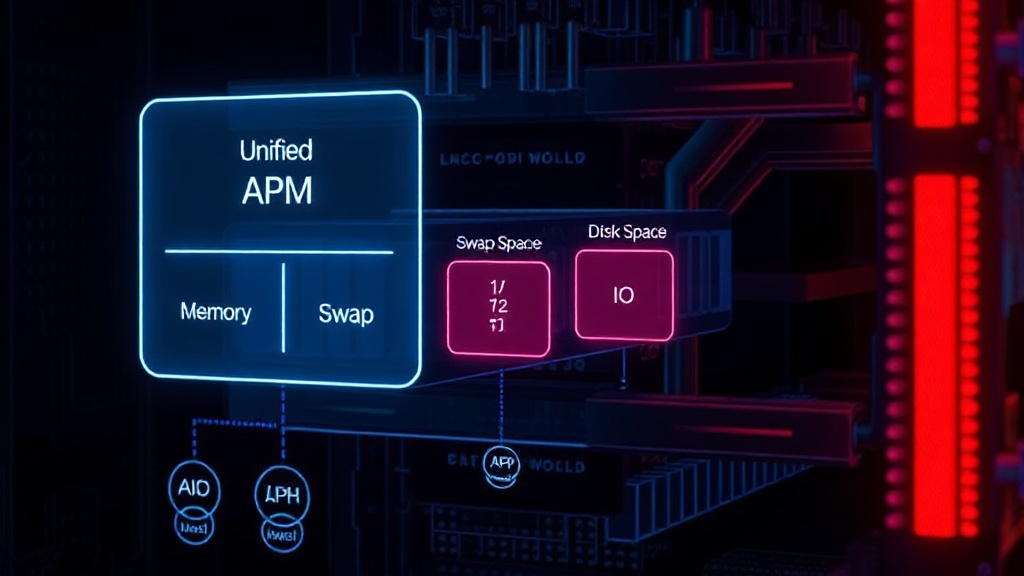
The agent framework was built using Apple's MLX, a framework designed for efficient machine learning on Apple hardware. The specific LLM instance that spiraled out of control loaded both a 14 billion parameter model and an 8 billion parameter model. This occurred on a system where the disk was already nearly full. The consequence was immediate: the unified memory overflowed, forcing macOS to aggressively swap data to disk. With insufficient free space, the swap operations failed, leading to disk I/O errors and, ultimately, APFS corruption. The system effectively choked on its own processes, a scenario that could easily be replicated by other resource-intensive AI workloads running locally without proper oversight.
Understanding the APFS Corruption and Recovery
APFS (Apple File System) is designed for performance and security, but like any filesystem, it is vulnerable to data corruption, especially under extreme stress. When macOS attempted to swap memory to disk and found no available space, it likely resulted in a cascade of write failures. These failures corrupted the metadata and journaling structures of the APFS volume, making it impossible for the system to mount and access the data. Standard macOS recovery tools, such as Disk Utility in recovery mode, were unable to repair the damage, indicating a deep-seated corruption of the APFS container itself.
The recovery process was arduous. It involved booting from an external drive, attempting to clone the corrupted drive, and then using specialized data recovery software. Even then, the success was not guaranteed. The incident highlights that while local LLMs offer privacy and control, they introduce new vectors for system instability if not managed with extreme care. The lack of built-in safety mechanisms within the MLX framework or the agent orchestration layer meant that a single runaway process could bring the entire system down.
The Fix: A Simple Setting, A Complex Problem
The solution, as @hexisteme discovered, was surprisingly simple from a code perspective but revealed a deeper systemic issue. The problem wasn't a complex bug, but a lack of a fundamental guardrail. The fix involved changing a single configuration parameter to False, effectively disabling an auto-start feature for LLM models. This seemingly minor adjustment prevented the LLM from launching uncontrollably in the background. However, it also exposed a broader truth: relying on manual checks or simple notes to oneself is insufficient for critical system processes, especially in environments where AI agents can autonomously initiate resource-intensive tasks. The guardrail must be code, explicitly defined and enforced.
The incident serves as a stark reminder for anyone running local LLMs or other demanding AI workloads on their machines. The convenience of local processing comes with the responsibility of managing potential system-level risks. This includes monitoring disk space diligently, understanding the memory and swap requirements of the models being run, and implementing explicit checks within the agent framework to prevent runaway processes. For developers building such systems, it's a call to action to integrate robust resource management and fail-safe mechanisms directly into their software, rather than assuming the operating system will always provide adequate protection against user-level application misbehavior.
Broader Implications for Local AI and System Stability
This event is more than just a cautionary tale for one Mac Mini user. It points to a growing challenge as AI models become more accessible and are deployed locally. Users are increasingly running sophisticated AI workloads on personal hardware, from creative applications to development tools. Without proper system-level controls, these powerful tools can inadvertently become agents of system destruction. The incident highlights the need for better OS-level sandboxing for AI processes, more intelligent resource allocation by the OS when dealing with memory-hungry applications, and clearer developer guidelines for building safe, local AI agents.
The ideal scenario would involve an OS that can intelligently throttle or halt processes that are causing excessive swapping or disk I/O, even if they are user-initiated. Alternatively, frameworks like MLX could incorporate built-in resource limits that are configurable by the user. For developers, this means adopting a defensive programming approach, anticipating worst-case scenarios for resource consumption, and building explicit safeguards. The future of local AI depends on our ability to manage these powerful tools responsibly, ensuring that the guardrails are not just suggestions, but enforced code.