Row-Bot's Advanced Agent Orchestration Architecture
Row-Bot has introduced significant updates to its agent orchestration capabilities, enabling the system to tackle larger and more complex tasks than before. The core innovation lies in its ability to distribute work across multiple agents while maintaining centralized control and ensuring the integrity of the final outcome. This new architecture allows for parallel processing of research, coding, and review tasks, dramatically speeding up complex project timelines.
The previous limitations of single-agent processing have been overcome. Now, Row-Bot can break down a substantial job into smaller, manageable components. These components are then assigned to specialized agents. This distributed approach means that different aspects of a project can be worked on concurrently. For instance, while one agent is busy conducting in-depth research for a specific feature, another can simultaneously begin writing the foundational code for that feature, and a third can start drafting the review documentation. This parallel execution is a critical step towards automating more sophisticated workflows.
Resilience and State Management
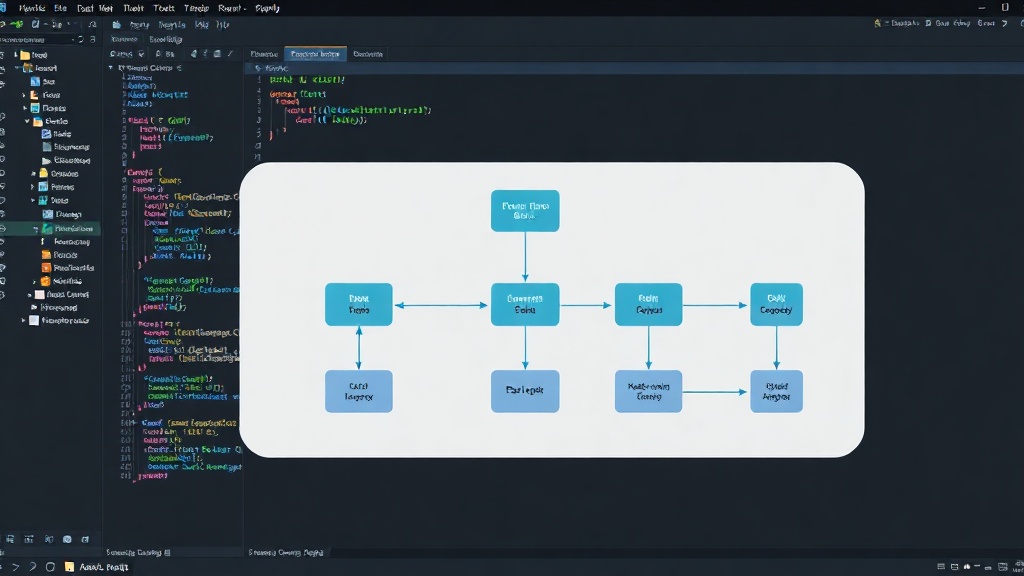
A key benefit of the updated system is its enhanced resilience. In the event of a failure in any of the distributed tasks, Row-Bot offers granular control. Users can choose to retry only the failed component, effectively isolating the issue without disrupting the progress of other agents. Alternatively, a failing task can be stopped entirely, again without jeopardizing the work completed by other parts of the system. This level of control minimizes wasted effort and resources.
Furthermore, Row-Bot now incorporates robust state management. If the entire Row-Bot system restarts mid-process, it can seamlessly resume operations from its last saved state. This is a significant departure from systems that would require a complete restart from the beginning, leading to lost time and progress. The ability to pick up where it left off ensures continuity and reliability, especially for long-running or critical tasks. The parent agent plays a crucial role here, constantly monitoring the status of sub-tasks and managing the overall workflow, including checkpointing and recovery procedures.
Parent Agent's Central Role
Throughout this complex orchestration, the parent agent remains the central authority. It is responsible for the initial task decomposition, assigning specific sub-tasks to appropriate worker agents, and defining the parameters for each agent's operation. The parent agent doesn't just delegate; it actively plans the entire workflow, anticipates potential bottlenecks, and orchestrates the parallel execution. Its continuous oversight ensures that all agents are working towards the common goal and that their outputs are compatible.
This hierarchical structure, with a single parent agent overseeing multiple specialized child agents, provides a clear command and control mechanism. The parent agent receives the final output from each worker agent, integrates it, and produces the consolidated, final result. This ensures that even with distributed processing, there is a unified vision and a single point of accountability for the overall task completion. The parent agent's planning capabilities are sophisticated, allowing it to adapt to dynamic conditions and manage dependencies between tasks effectively. This is not merely task distribution; it's intelligent workflow management designed for complexity and scale.
Implications for Complex Workflows
The architectural improvements in Row-Bot directly address the growing demand for automation in increasingly complex domains. By enabling parallel execution and robust state management, Row-Bot is now better equipped to handle large-scale software development projects, extensive data analysis pipelines, and comprehensive research initiatives. The ability to retry individual tasks without losing overall progress represents a substantial efficiency gain, making automated workflows more practical and less prone to costly setbacks.
The implication for users is a significant increase in the scope and complexity of tasks that can be reliably automated. Projects that were previously too large or too intricate to be managed by a single automated agent can now be undertaken with Row-Bot. This opens up new possibilities for leveraging AI in areas requiring intricate planning, parallel execution, and resilient operation. The system's ability to recover from restarts and manage state ensures that even long-duration processes are feasible, reducing the operational overhead and human supervision required.
The sophistication of the parent agent's planning and oversight ensures that the benefits of parallel processing are realized without sacrificing coherence. This means that developers, researchers, and data scientists can offload more significant portions of their work to Row-Bot, trusting that the system can manage the intricacies of distributed execution and deliver a cohesive final product. The architecture moves beyond simple task delegation to a more intelligent, adaptive system capable of managing complex, multi-stage processes.