The Problem: API Drift and Its Cost
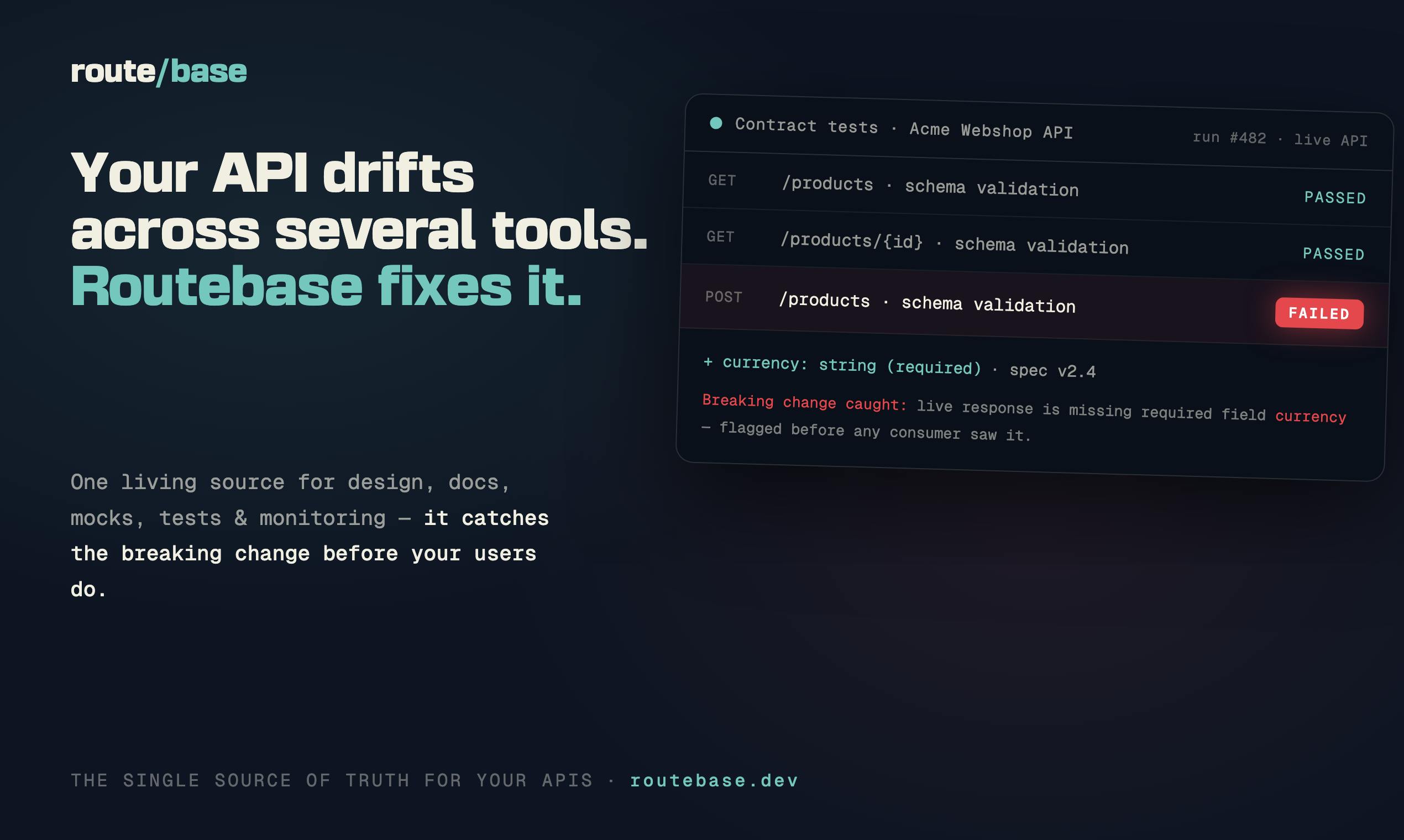
Software applications increasingly rely on external APIs for critical functionality. From payment processing and mapping services to social media integrations and cloud infrastructure, businesses integrate third-party services to accelerate development and offer richer features. However, these external dependencies introduce a significant risk: API drift. When an API provider makes undocumented or poorly communicated changes to their service – a common occurrence – it can break the integrations in dependent applications. This breakage often goes unnoticed by the application’s internal teams until customers report errors, leading to lost revenue, damaged reputation, and urgent, costly fixes.
Routebase emerges as a solution designed to tackle this pervasive problem head-on. The platform positions itself as an early warning system, aiming to give developers and businesses a crucial heads-up about impending API changes before they impact end-users.
How Routebase Works
At its core, Routebase monitors the behavior and structure of external APIs that an application relies on. It acts like a vigilant guardian, continuously observing these endpoints for any deviations from their established patterns. This monitoring isn't just about checking if an API is online; it delves deeper into the specifics of API interactions.
The platform's methodology involves establishing a baseline of normal API behavior. This baseline includes aspects like response times, data formats, the presence and order of fields in responses, and even error code patterns. By understanding what constitutes 'normal,' Routebase can then detect anomalies. When an API begins to behave differently – perhaps a field is removed, its data type changes, or a new, unexpected error response appears – Routebase flags it.
The key differentiator for Routebase is its proactive nature. Instead of waiting for an integration to fail and trigger an alert, it aims to identify the *potential* for failure by spotting the subtle shifts that precede a complete breakdown. This allows development teams to investigate and adapt to changes *before* they cause customer-facing issues.

Key Features and Benefits
Routebase offers several key features designed to provide comprehensive API drift detection:
- Proactive Monitoring: The platform continuously monitors specified external API endpoints. This includes tracking response structures, data types, status codes, and latency.
- Drift Detection: It employs sophisticated algorithms to identify subtle changes in API behavior that could indicate an upcoming breaking change. This is akin to a doctor noticing a slight change in vital signs before a patient becomes seriously ill.
- Alerting System: When potential drift is detected, Routebase sends timely alerts to designated team members via preferred channels (e.g., Slack, email). This ensures that the right people are informed immediately.
- Change Analysis: Routebase aims to provide context around the detected changes, helping developers understand the nature and potential impact of the drift.
- Integration with CI/CD: The ability to integrate alerts into CI/CD pipelines means that potential API regressions can be caught early in the development lifecycle, preventing them from reaching production.
The primary benefit of using Routebase is the significant reduction in the risk of unexpected application downtime caused by external API changes. This translates to improved customer satisfaction, reduced operational costs associated with emergency fixes, and more stable application performance. For businesses that depend heavily on third-party services, this level of visibility into their integration health is invaluable.
Who Should Use Routebase?
Routebase is particularly relevant for companies and development teams that:
- Rely heavily on third-party APIs for core business functions.
- Operate in environments where API stability is paramount (e.g., FinTech, e-commerce, SaaS platforms).
- Have experienced costly outages or customer complaints due to unannounced API changes in the past.
- Are looking to improve their application resilience and reduce the operational burden of monitoring external dependencies.
- Wish to empower their developers to focus on building new features rather than firefighting integration issues.
The platform offers a way to outsource the complex and often tedious task of monitoring API contracts, freeing up valuable engineering resources.
The Broader Impact on Software Development
The rise of microservices and the increasing reliance on SaaS platforms mean that modern software architectures are inherently distributed and dependent on external services. API drift is not a fringe issue; it's a systemic challenge in building robust, scalable applications. Tools like Routebase highlight a growing need for solutions that manage the complexity and fragility of these interconnected systems.
By providing a layer of abstraction and proactive monitoring over external APIs, Routebase helps shift the paradigm from reactive problem-solving to proactive risk management. This approach is crucial for maintaining the integrity and reliability of software in an increasingly interconnected digital landscape. The question is not *if* an external API will change unexpectedly, but *when*. Routebase aims to ensure that when that 'when' arrives, your team is already prepared.