The Illusion of Container Root
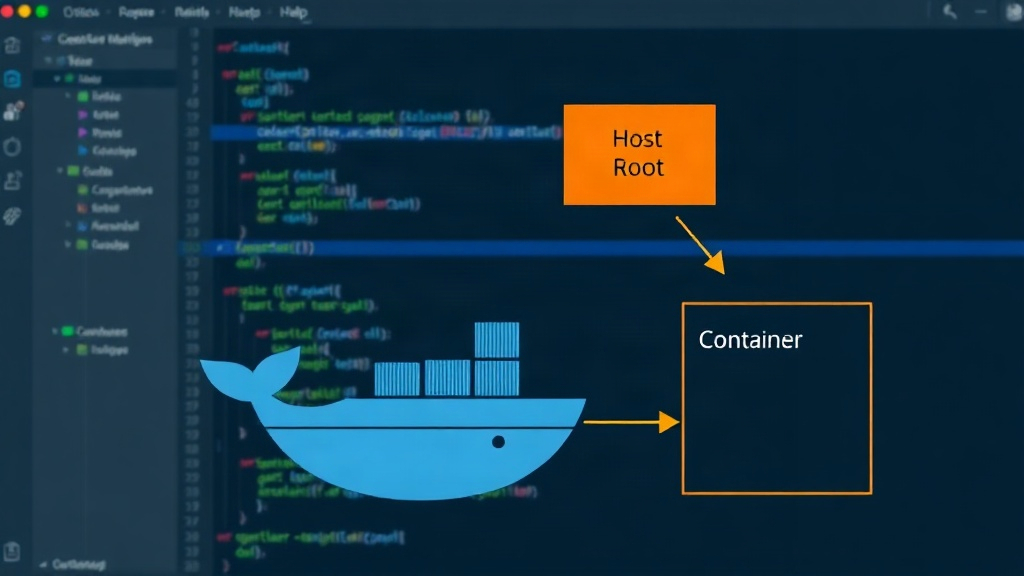
When you execute a command like docker run nginx, the user running that command might perceive that they are operating within an isolated environment. However, the concept of 'root' within a container is often misunderstood. It's crucial to distinguish between the root user inside the container, the root user on the host system, and the user running the Docker daemon itself. These are not interchangeable, and their separation is fundamental to container security.
Traditionally, the Docker daemon has required root privileges to function. This is because it needs to manage low-level system resources, create network interfaces, manipulate file systems, and enforce security policies. This elevated access grants the Docker daemon significant power over the host system. Any compromise of the Docker daemon, or a vulnerability exploited through a container that escalates privileges, could potentially lead to a full compromise of the host system.
Introducing Rootless Docker
Rootless Docker addresses this by enabling the Docker daemon and its containers to run as a non-root user. This significantly reduces the attack surface. If the Docker daemon or a container within it is compromised, the attacker gains the privileges of the unprivileged user running Docker, not the root user of the host system. This is a critical security enhancement.
The technology behind Rootless Docker leverages several Linux kernel features. User namespaces are central to this. A user namespace allows a process to have a different set of user and group IDs inside the namespace than outside. When Docker runs in rootless mode, it creates a user namespace for the daemon and its containers. This means that the 'root' user (UID 0) inside the container is actually mapped to a non-privileged user on the host system. This user is typically allocated a range of UIDs and GIDs by the subuid and subgid mechanisms on the host.
Think of it like having a set of master keys to a hotel. Normally, the hotel manager (root on host) has the master key to every room (all containers). In rootless mode, the manager gives a *different* master key to a trusted concierge (non-root user running Docker). This concierge can unlock any room assigned to them (their containers), but they cannot unlock the manager's office (host system resources) or rooms assigned to other concierges.
Technical Underpinnings and Limitations
Rootless Docker utilizes technologies like user namespaces, cgroups, and network namespaces to achieve isolation without requiring host root privileges. However, this architecture introduces certain limitations compared to traditional Docker installations:
- Networking: Rootless Docker typically uses a user-mode network stack (like slirp4netns) which can have performance implications and limitations compared to native bridge networking managed by root. Direct exposure of privileged ports (below 1024) is not possible without additional configuration or workarounds.
- Storage Drivers: Not all storage drivers are supported in rootless mode. OverlayFS, a common and performant driver, requires specific kernel configurations and capabilities that might not be available to a non-root user. Other drivers like vfs or native snapshots might be used instead.
- Docker Compose and Swarm: While support has improved, some advanced features or configurations of Docker Compose and Docker Swarm might not function identically or at all in rootless mode due to the underlying privilege differences.
- Daemon Management: The Docker daemon in rootless mode is managed by the user, often via systemd user services, rather than the system-wide init system. This means daemon startup, shutdown, and logging are handled differently.
- Privileged Operations: Operations that inherently require root privileges on the host, such as direct manipulation of host kernel modules, low-level hardware access, or modifying system-wide network configurations outside the container's namespace, remain inaccessible.
Despite these limitations, for many common use cases, Rootless Docker offers a compelling security advantage. Developers can run Docker on their local machines, CI/CD environments, or even shared development servers without granting a potentially vulnerable daemon full root access to the underlying operating system.
The Security Implications
The primary benefit of Rootless Docker is the drastic reduction in the blast radius of a security incident. If an attacker compromises a container running under rootless Docker, they are confined to the privileges of the user who launched the Docker daemon. This user does not have the ability to:
- Install system-wide software.
- Modify critical system files.
- Access sensitive information outside their home directory or allocated storage.
- Escalate privileges to the host root user.
This significantly enhances the security posture of development environments and even some production deployments where the risk of a container breakout is a primary concern. It aligns with the principle of least privilege, ensuring that processes only have the permissions they absolutely need to function.
However, it's not a silver bullet. A sophisticated attacker might still find ways to exploit vulnerabilities within the user namespace implementation or other components. Furthermore, if the user running the rootless Docker daemon is itself a highly privileged user (though not root), the risk is still elevated. True security relies on a defense-in-depth strategy, where rootless containers are one layer among many.
Which Root Matters?
The core takeaway is that the 'root' inside a container is an abstraction. The 'root' that controls the Docker daemon has significant host privileges. Rootless Docker effectively decouples these, allowing the daemon to run under a user-level 'root' that is, in reality, an unprivileged user on the host. This fundamental shift in privilege management is what makes Rootless Docker a powerful tool for enhancing security in modern development workflows.